You’ve pictured it a hundred times: bare feet on warm sand, ocean breeze in your hair, the person you love standing across from you. But then you start shopping for a dress, and suddenly every bridal boutique is pushing cathedral trains and 40 pounds of beaded satin. Here’s the truth about beach wedding dress styles: the right one should feel as effortless as the setting itself. That means choosing based on where you’re getting married, what the wind will actually do to your skirt, and how the fabric performs when it’s 85 degrees and humid.
This guide goes beyond a pretty Pinterest board. We’re matching each style to specific destinations, climates, and real-world challenges so you can make a confident choice, not just an inspired one. If you’re still in the early stages, our beach wedding checklist walks you through every planning milestone from 18 months out.
What Makes a Beach Wedding Dress Different From a Traditional Bridal Gown?
Beach wedding dresses prioritize lightweight, breathable construction over heavy structure and ornamentation. The difference comes down to how a dress performs outdoors.
Traditional bridal gowns are designed for climate-controlled ballrooms. They rely on boning, layers of tulle, heavy satin, and long trains that look stunning on marble floors. Take that same dress to a beach in Cancun or Hawaii, and you’ll be fighting sand in your hem, sweat under your bodice, and a train that acts like a sail.
According to The Bridal Collection, beach dresses emphasize chiffon, crepe, organza, and lightweight lace for heat, humidity, and ocean breezes. They favor open backs, thin straps, shorter trains (or no train at all), and silhouettes that let you move freely on uneven terrain.
That doesn’t mean simple or boring. It means intentional. A well-chosen beach gown looks effortless because every detail was chosen with the setting in mind.
According to Grace Loves Lace, beach dresses prioritize short or no trains, open backs, and tea-length hems for practicality in wind and sand. And according to Flares Bridal, sheath and empire waist styles dominate beach preferences for their slim, flowy fit that emphasizes mobility over structure.
One common misconception: beach dresses must be short. They don’t. Long gowns work beautifully if the fabric is lightweight and the silhouette doesn’t fight the elements.
The 12 Best Beach Wedding Dress Styles (Ranked by Versatility)
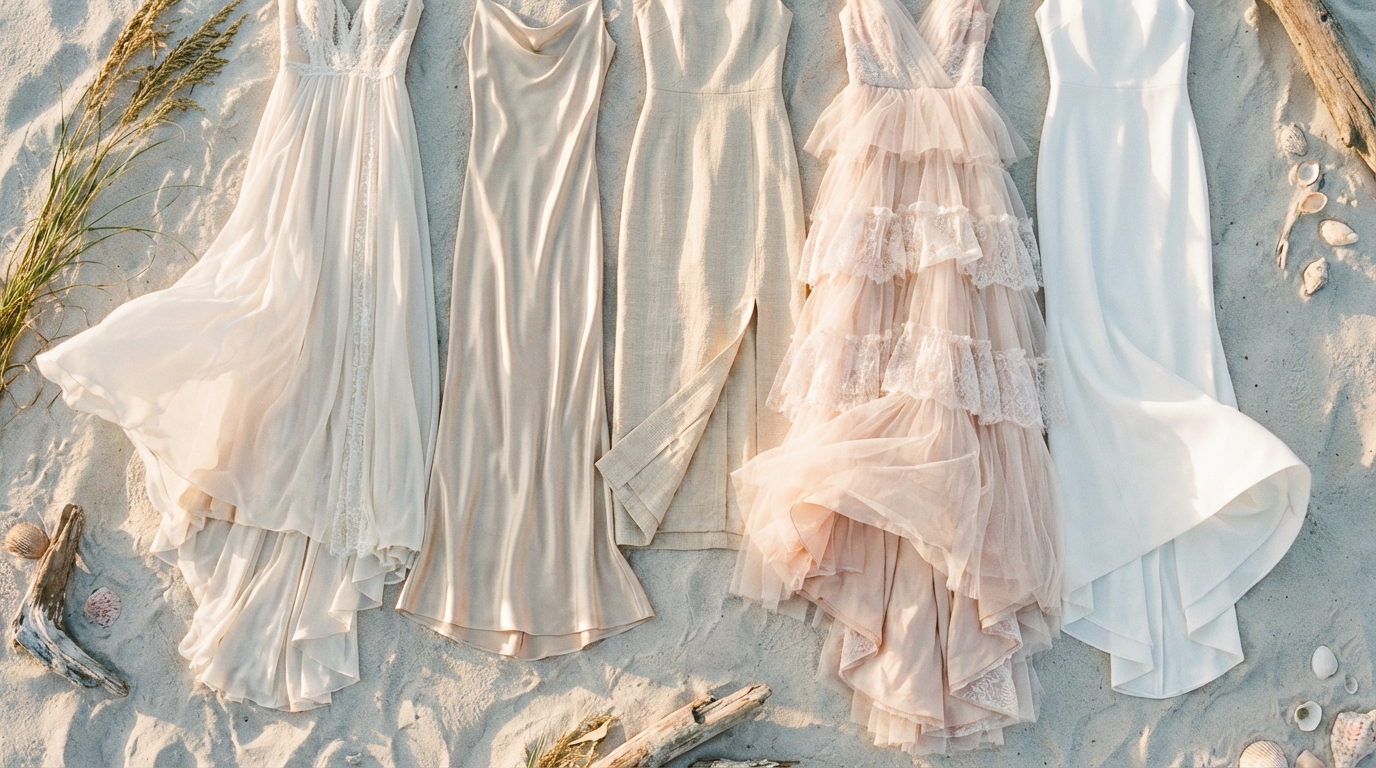
The A-line silhouette tops this list because it flatters the widest range of body types and performs well in every coastal climate. Here are all 12 styles, ranked by how well they adapt across different beach settings, weather conditions, and personal aesthetics.
1. Flowy Chiffon A-Line. The workhorse of beach bridal. Skims the body, catches the breeze beautifully, and photographs like a painting. Works everywhere from Tulum to Santorini.
2. Boho Lace with Bell Sleeves. Romantic without being fussy. According to Heart to Heart Bride, boho chic with chiffon and lace ranks among the top beach wedding dress trends for 2024 and beyond.
3. Slip Dress in Silk or Satin Crepe. Minimalist, modern, and incredibly packable for destination travel. Looks stunning against a sunset.
4. Tea-Length with a Full Skirt. Playful, retro, and practical. Your hem never touches the sand.
5. High-Low Hemline. Short in front for walking, long in back for drama. A smart compromise.
6. Sheath or Column. Clean lines, zero bulk. Best for brides who want a sleek, modern look.
7. Empire Waist. The raised waistline creates a long, flowing silhouette that’s forgiving in heat and flattering on every frame.
8. Fit-and-Flare. More shape than an A-line, more freedom than a mermaid. Releases at mid-thigh for sand mobility.
9. Off-the-Shoulder with Flowy Skirt. Romantic neckline, breezy bottom half. Secure the sleeves with hidden elastic for windy venues.
10. Halter Neck. Keeps straps secure in wind, shows off shoulders and back. Great for athletic builds.
11. Two-Piece or Crop Top Set. Unexpected, fashion-forward, and cooler in tropical heat. According to PreOwned Wedding Dresses, modern beach brides are moving away from “boring chiffon” toward personalized, expressive styles.
12. Lightweight Tulle Ballgown. Yes, volume can work on the beach if the fabric is airy. Choose thin tulle layers over structured petticoats.
Which Dress Style Works Best for Your Specific Beach Destination?
Your destination’s climate, terrain, and vibe should directly shape your dress choice. A gown that works on a calm Bali beach may be a disaster on a windy Santorini cliff.
Here’s a destination-to-style matching guide:
| Destination | Climate Challenge | Best Styles | Styles to Avoid |
|---|---|---|---|
| Bali | High humidity, tropical heat | Slip dress, sheath, empire waist | Heavy lace, long sleeves, ballgown |
| Santorini | Strong wind, cliffside terrain | Structured A-line, halter, fit-and-flare | Loose off-shoulder, cathedral train |
| Tulum | Jungle humidity, sandy beaches | Boho lace, two-piece, high-low | Thick satin, heavy beading |
| Hawaii | Warm, breezy, varied terrain | Chiffon A-line, tea-length, empire | Mermaid on soft sand |
| Cancun | Hot, humid, resort settings | Slip dress, sheath, off-shoulder | Velvet, brocade, structured ballgown |
| Amalfi Coast | Warm Mediterranean, cobblestone | Column, fit-and-flare, tea-length | Anything with a long train on stairs |
According to Bridal Elegance Studio, tropical destinations like Cancun call for sheath or slip dresses in airy layers, ideal for barefoot sand ceremonies due to minimal structure and high mobility. Meanwhile, Essense Designs recommends A-line and fit-and-flare silhouettes for breezy oceanfront settings because pleats and gathers disguise wind effects gracefully.
If you’re still deciding on your destination, our destination wedding guide breaks down costs, legal requirements, and logistics for over 20 locations.
What Fabrics Should You Actually Look For (and Which to Avoid)?
Chiffon is the single best fabric for beach weddings because it breathes in heat, dries quickly from sea spray, and doesn’t trap sand. But it’s not your only option.
According to Azazie’s fabric guide, chiffon suits tropical conditions above 80°F, offering extreme breathability and rapid drying. The same source notes that smooth-surfaced fabrics like lightweight satin and crepe reduce sand adhesion by up to 80% compared to textured surfaces like deep lace or heavy beading.
Here’s a quick fabric breakdown:
| Fabric | Best For | Watch Out For |
|---|---|---|
| Chiffon | Tropical heat, humidity, wind | Can be sheer; may need lining |
| Stretch Crepe | Structured looks in 70-80°F | Heavier versions trap heat |
| Lightweight Tulle | Layered volume, cooler coasts | Thick versions stiffen in humidity |
| Organza | Crisp, airy skirts | Stiff organza rustles loudly in wind |
| Silk Charmeuse | Luxe slip dresses | Wrinkles easily, attracts sand |
| Heavy Satin | Avoid for beach | Retains heat, wrinkles in humidity |
| Velvet | Avoid for beach | Absorbs moisture, extremely hot |
According to Essense Designs, 80% of destination wedding experts list chiffon as the number one fabric for beach venues, prioritizing its travel-friendly, wrinkle-resistant nature. And Bridal Outlet Jax confirms that chiffon performs best in tropical conditions above 80°F for its rapid drying and breathability.
One tip that saves a lot of grief: if you love lace, keep it on the bodice where it won’t collect sand. A chiffon or crepe skirt below the waist gives you the romance of lace up top with the practicality of a smooth surface where it counts.
Does Your Beach Wedding Venue Affect Which Style You Should Choose?
Absolutely, and not just because of the weather. The specific type of beach venue changes everything about what you should wear.
A soft-sand ceremony right at the waterline is a completely different environment than a beachfront resort terrace, a cliffside overlook, or a boardwalk pavilion. According to Wisteria Gardens, beach wedding venues directly influence dress style choices due to environmental factors like sand depth, wind exposure, and proximity to water.
Soft sand, waterline ceremony: Go with a tea-length, high-low, or flowing A-line. Skip anything fitted below the knee. You’ll be walking on uneven, shifting ground, and a mermaid silhouette will fight you every step.
Resort terrace or deck: You have more freedom here. The surface is stable, so a sheath, column, or even a lightweight ballgown works. Wind is still a factor, but you won’t be battling sand in your hem.
Cliffside or elevated venue: Think Santorini or the Amalfi Coast. Stairs and wind are your main concerns. A fit-and-flare or structured A-line with a secure neckline keeps you comfortable and confident. Avoid loose off-the-shoulder styles that might slip.
Tropical garden near the beach: Venues in Bali or Costa Rica often blend jungle and sand. Humidity is intense. A slip dress or empire waist in chiffon or crepe will keep you cool without clinging.
According to Paloma Blanca, A-line, sheath, and empire waist styles are the top recommendations for beach venues, with shorter or sweep trains preferred to avoid dragging in sand.
How to Style Each Look: Accessories, Hair, and Shoes That Complete the Vibe
Keep accessories lightweight, wind-resistant, and proportional to the relaxed setting. Less is genuinely more when the ocean is your backdrop.
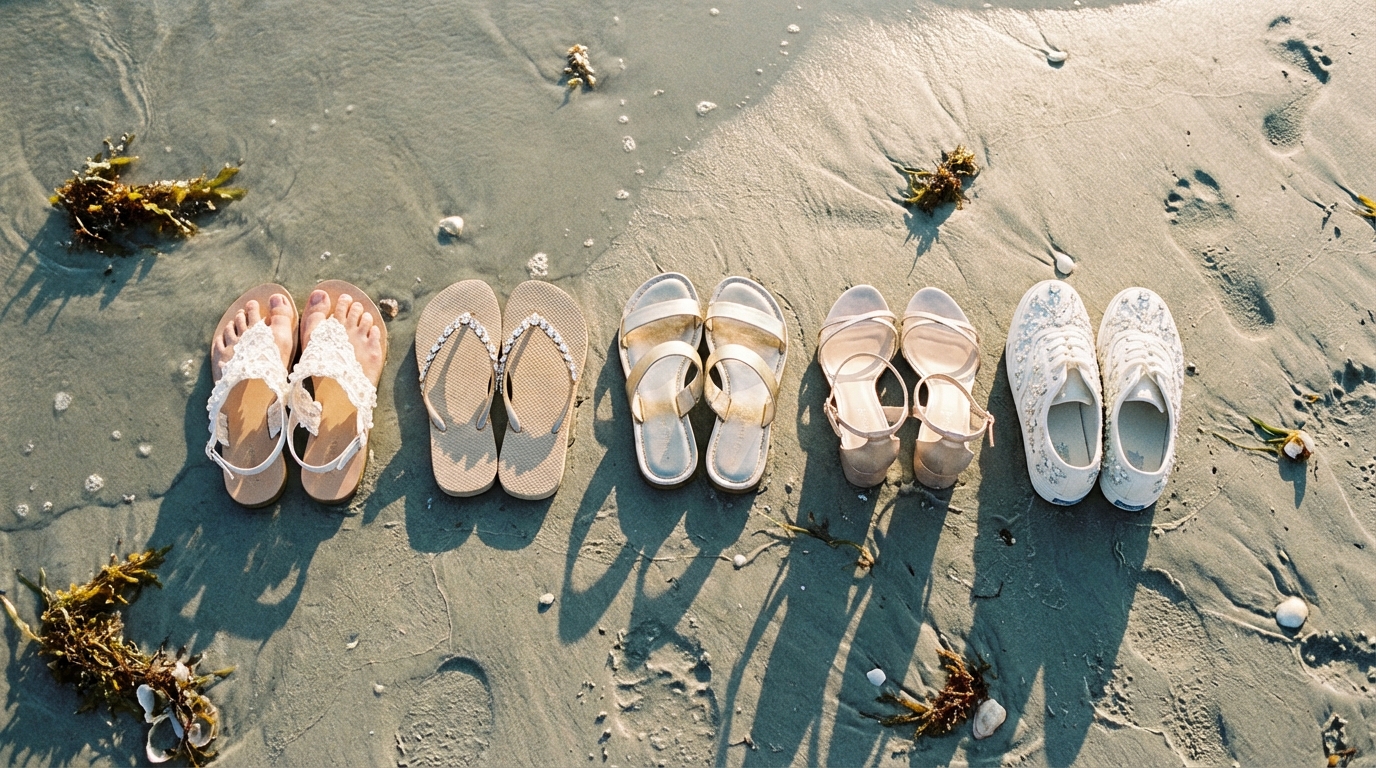
Shoes: According to The Bridal Collection, the vast majority of beach brides opt for flat sandals or barefoot options because heels sink into sand. Wedge espadrilles offer a subtle lift if you want height. Our guide to beach bridal shoes ranks the five best options by what actually works on sand.
Hair: Loose waves, low chignons, and braided updos all hold up well in coastal humidity. According to The Wedding Shoppe, about 65% of beach hairstyles feature loose waves or updos with accessories like pearl headbands or flower crowns, chosen because they secure against wind while enhancing the natural, relaxed feel.
Veils: Short veils or no veil at all. A fingertip-length veil can work for photos, but cathedral veils become kites in ocean wind. Consider a hair vine or floral comb instead.
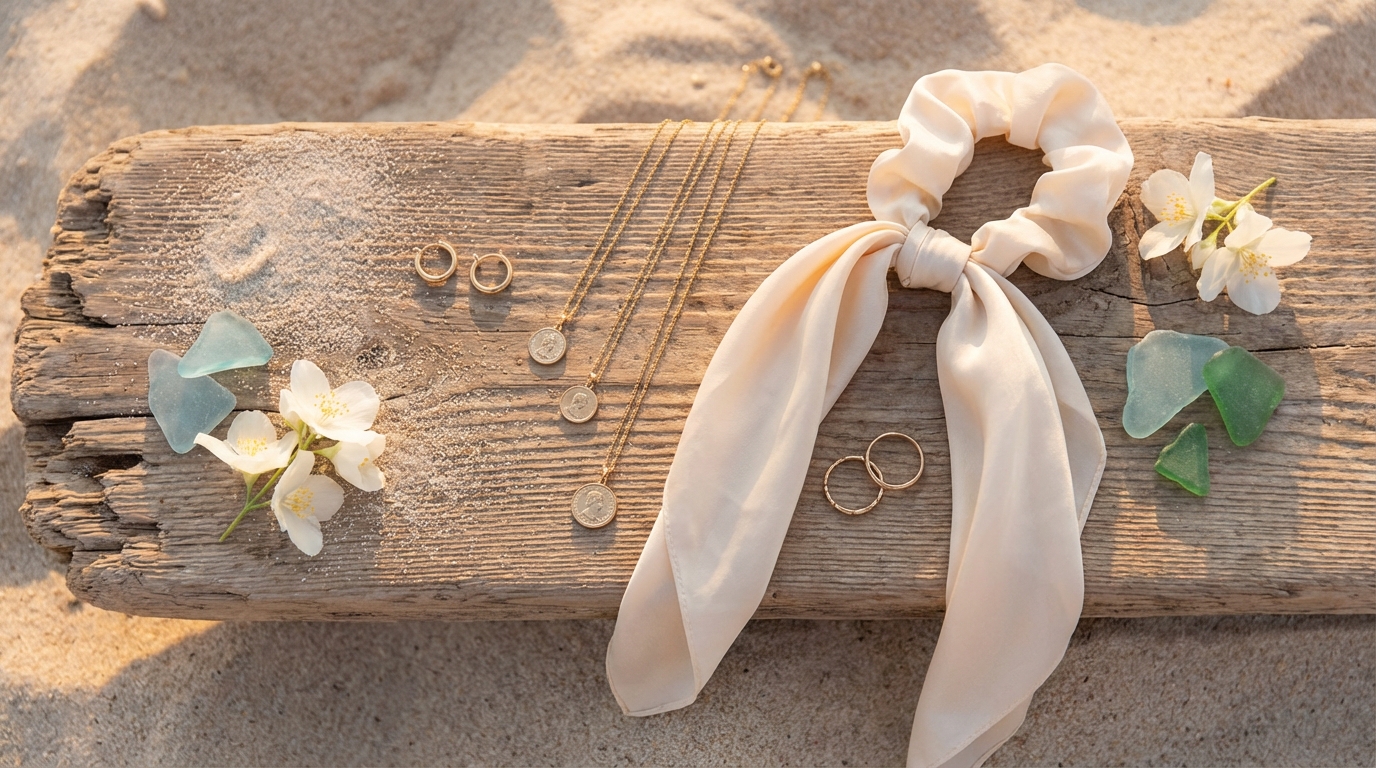
Jewelry: Dainty pieces only. One statement earring or a delicate pendant is enough. According to Forever Soles, lightweight jewelry limited to two or three pieces prevents clashing with flowy dresses in breezy settings. If you’re looking for the perfect engagement ring{rel=“noopener noreferrer sponsored”} to complement your bridal look, consider how it pairs with minimal beach accessories.
For a full rundown of what works, check out our guide to beach bride accessories.
What About the Wind? Practical Tips Every Beach Bride Needs to Know
Wind is the single biggest variable that separates a Pinterest photo from real life on a beach. Plan for it, and you’ll look effortless. Ignore it, and you’ll spend your ceremony holding down your skirt.
According to No Worries Event Planning, even forecasted calm days can surprise you with sudden gusts that topple structures and send lightweight decor flying. The same applies to your dress and veil.
Here are practical, tested strategies:
Choose the right silhouette. A-lines and fit-and-flares handle wind better than voluminous skirts because the fabric has less surface area to catch gusts. Sheaths and columns barely register wind at all.
Secure your neckline. Off-the-shoulder styles look gorgeous in still air but slip in wind. Add hidden elastic or choose a halter, V-neck, or illusion neckline that stays put without adjusting.
Skip the long veil. Or use it only for photos in a sheltered spot. According to Golden Days Photo Co., delicate fabrics like tulle fly away uncontrollably in beach wind. A birdcage veil, hair vine, or floral crown stays secure.
Use the wind for photos. A skilled photographer will use a breeze to create movement in your skirt and hair. Chiffon and tulle photograph beautifully in wind. Tell your photographer you want to lean into it, not fight it.
Pack a garment bag with a seal. Sand and wind can damage a dress before you even put it on. According to Affordable Weddings Plus Events, garment bags protect dresses from sand and wind damage during transport to the venue.
Have a backup plan for your hair. Bring extra pins, a backup hair tie, and a small bottle of hairspray. Humidity and wind will test even the most secure updo.
If you’re planning a full destination wedding, factor wind patterns into your ceremony time. Late afternoon often brings stronger onshore breezes, while morning ceremonies tend to be calmer.
How BeachBride Can Help You Find Your Perfect Look
Choosing a dress is one piece of a much bigger puzzle. Your gown needs to work with your destination’s climate, your venue’s terrain, your color scheme, and the overall vision you have for the day.
That’s exactly what we help with. At BeachBride, we connect you with destination-specific vendors, planners, and resources who understand the practical realities of coastal weddings. Whether you’re comparing destination wedding costs or looking for unique ideas to personalize your ceremony, we’ve built every guide around real-world experience, not just aesthetics.
Your dress is the starting point. The right fabric, silhouette, and accessories turn a beautiful gown into one that actually works for your specific beach, your specific weather, and your specific body. And when every element aligns, you stop worrying about logistics and start feeling exactly the way you should on your wedding day.
Ready to start pulling it all together? Take our free BeachBride quiz to get personalized destination and vendor recommendations matched to your style, budget, and timeline. It takes about two minutes, and it’ll give you a clear starting point for every decision ahead, dress included.