Planning a beach wedding at a destination location requires tracking hundreds of details across 12–18 months. This checklist organizes everything by timeline so you always know what should be happening now, what’s coming next, and what you might be forgetting.
A beach-specific checklist matters because standard wedding timelines skip the steps that make or break outdoor coastal ceremonies: permits, weather contingencies, and the logistics of planning from thousands of miles away. Before you check a single box, settle three things: a rough budget number, a rough guest count, and whether you want a legal or symbolic ceremony abroad. Everything else flows from those decisions.
18–12 months before the wedding
The early phase is all about locking in the big decisions. Everything else flows from these.
Choose your destination: Visit 2-3 destinations if possible, or research them deeply online. Consider guest accessibility, your preferred aesthetic, legal requirements, and budget. Read our complete destination wedding guide for a thorough comparison.
Set a total budget: Be specific. Write down a number, not a range. Then allocate it across categories: venue (15-25%), planner (10-15%), photography (15-20%), florals (8-12%), food and beverage (25-35%), and miscellaneous (10-15%).
Book your venue: The best beachfront venues at popular destinations (the cliff-top terraces in Santorini, the private beaches in Jamaica, the boutique Bali villas) book out 12-18 months in advance. Reach out to 3-5 venues simultaneously and be ready to commit quickly when you find the right one.
Hire a local wedding planner: Book your planner at the same time as your venue, or before. A good planner has relationships with venues that may appear fully booked. They also handle all the legal requirements, vendor coordination, and day-of logistics that you simply can’t manage from thousands of miles away.
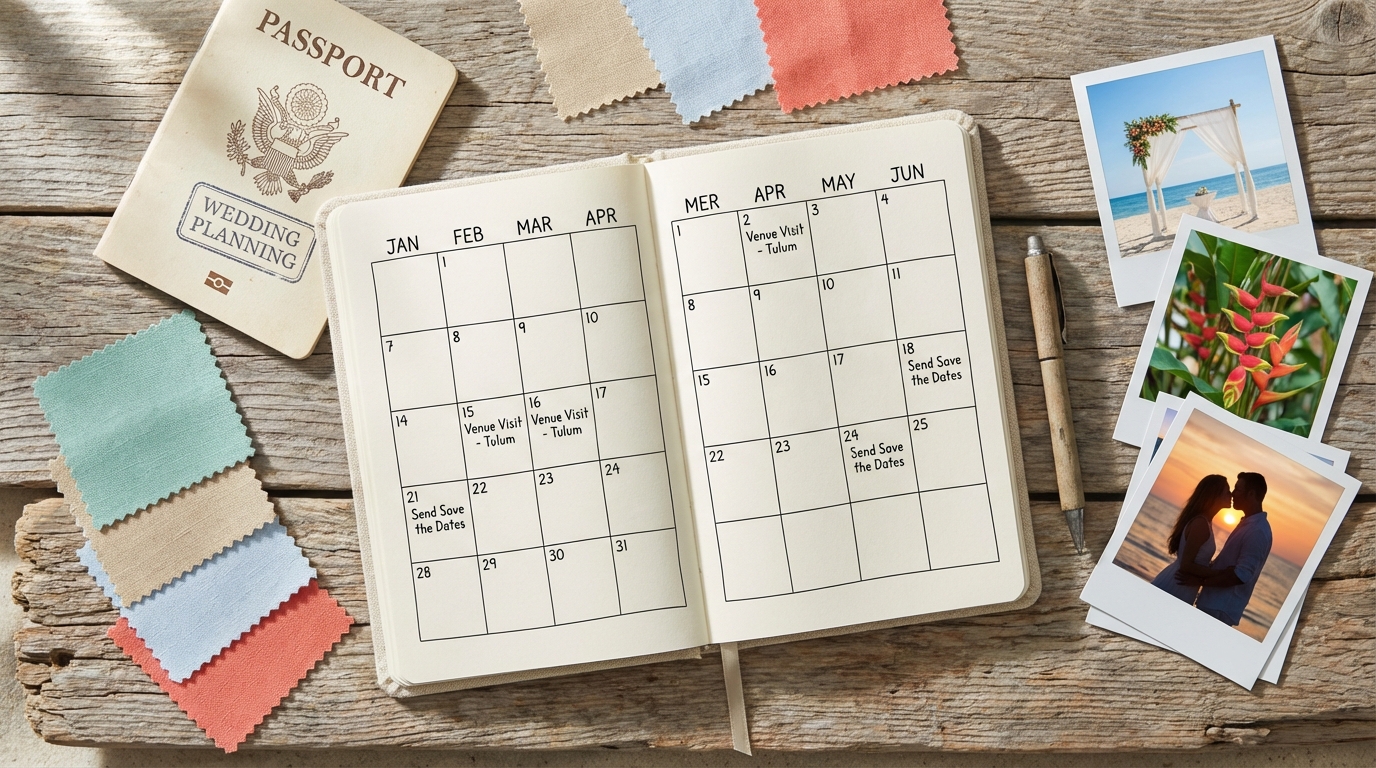
Send save-the-dates: For destination weddings, save-the-dates should go out 12 months before (16 months for international destinations). Include: your wedding date, location, approximate accommodation costs, and a link to a wedding website with more details.
12–9 months before the wedding
Book your photographer: The best destination photographers fill their calendars early. Book as soon as you’ve confirmed your venue. A photographer who knows your location brings irreplaceable expertise about lighting, timing, and hidden spots.
Negotiate a room block: Contact your resort or surrounding hotels to negotiate group rates. Most resorts require a minimum room block commitment (typically 10-20 rooms). Share the room block details with guests in your formal invitation.
Start document collection: Begin collecting the legal documents you’ll need. Requirements vary by country but typically include authenticated birth certificates, valid passports, and proof of single status. Your planner will advise on the specific requirements for your destination.
Decide on a wedding website: Create a wedding website with all the details guests need: location, travel tips, accommodation options, local weather guidance, and your registry.
9–6 months before the wedding
Send formal invitations: Send formal invitations 10-14 weeks before the wedding, with an RSVP deadline of 6-7 weeks before. Include accommodation and travel information, and any optional group activities you’re planning.
Book remaining vendors: Through your planner’s recommendations, book florist, officiant, hair and makeup, DJ or entertainment, and any additional service vendors.
Plan the guest experience: Destination weddings are multi-day events. Consider:
- Welcome dinner or cocktails on arrival night
- Optional group excursion (snorkeling, tours, spa day)
- Day-after brunch
- Welcome bags in guest rooms (local treats, sunscreen, itinerary)
Handle permits and legal requirements: Public beaches require permits. Costs range from $150-$450, and popular U.S. beaches require applications 3-6 months ahead during peak season. Permits are separate from marriage licenses. With your planner’s guidance, submit all required documents to the appropriate local authorities. Legal requirements change frequently, so confirm current rules with your planner or the country’s embassy before making deposits.
6–3 months before the wedding
Confirm final headcount: Lock in your final guest number with the venue. RSVP deadlines should be 6-7 weeks before the wedding for destination events.
Schedule a venue site visit (if you haven’t already): If budget allows, a pre-wedding trip to your destination lets you meet vendors in person, walk your ceremony space, and handle outstanding details.
Finalize vendor contracts: All vendor contracts should be signed with payment schedules confirmed. Verify cancellation and force majeure policies.
Design your ceremony: Work with your officiant on the ceremony script. If you’re writing personal vows, start now.
Confirm your weather backup plan: Set specific thresholds with your planner for switching to the indoor option. A practical standard: activate backup if sustained winds reach 15-25 mph, rain probability exceeds 50%, or lightning is detected within 10 miles.
3 months to wedding day
| Timeframe | Task |
|---|---|
| 3 months | Final guest count to caterer and venue |
| 2 months | Finalize wedding day timeline with planner |
| 6 weeks | Ship wedding dress and any shipped items |
| 1 month | Confirm all vendor details and timing |
| 2 weeks | Final headcount confirmation, vendor tips prepared |
| 1 week | Final walkthrough with planner, rehearsal dinner |
| Wedding day | Hand everything to your planner and enjoy |
Beach wedding logistics you can’t forget
Tides and wind: Ask your venue about tidal patterns and prevailing wind direction. Wind can ruin ceremony audio and wreak havoc on hair and florals. Many beach venues set up the ceremony facing into the wind, so confirm this is the plan.
Shoes and attire: Coordinate with your guests: high heels and sand don’t work. Advise guests to dress “beach formal” with flat sandals. Read our beach bridal shoes guide for options.
Sun timing: For outdoor beach ceremonies, golden hour (1 hour before sunset) provides the most flattering light and comfortable temperatures. Discuss timing with your photographer and planner. A 2:00 PM ceremony in summer means squinting guests and harsh overhead light. Avoid it.
Your beach emergency kit: A standard wedding kit plus beach-specific additions: reef-safe sunscreen (SPF 50+), bug spray, flip-flops for the wedding party, baby powder (removes sand from skin instantly), anti-chafing balm, oil blotting sheets, compact umbrella, extra water bottles, and wind-proof hair spray. Fashion tape and stain remover are critical. Wind and sand amplify every wardrobe mishap.
Travel insurance: Strongly recommend travel insurance for everyone, including yourselves. Look specifically for policies that cover wedding cancellation due to extreme weather or natural events.
Trip Protection for Your Wedding Party
Cover flights, hotels, and medical emergencies for your entire guest list. Cancel-for-any-reason options ideal for destination weddings.
A+ rated insurer. Group plans available for wedding parties.
Compare PlansThe most important thing: once you’ve handed everything to your planner, trust them. The couples who enjoy their destination weddings most are the ones who do the preparation and then let go on the day.
Ready to start? Get matched with a vetted local planner at your destination and they’ll build you a custom timeline and budget within 24 hours.