You’ve probably searched “destination wedding cost” and found a single average number that tells you almost nothing useful. That’s because the real answer depends on where you’re going, how many people you’re inviting, and what kind of experience you want to create. A beachfront ceremony in Cancun with 30 guests and a ceremony in Santorini with 80 guests are two completely different financial realities.
This guide breaks down the actual numbers by location, walks you through a realistic budget framework, and flags the hidden costs that catch couples off guard. Whether you’re working with $8,000 or $40,000, you’ll leave with a clear picture of what your money buys.
What Is a Destination Wedding Cost (and Why It’s So Different From a Local Wedding)?
A destination wedding cost is the total you’ll spend on your ceremony, reception, travel, and accommodations at a location away from where you live. The average domestic destination wedding runs about $39,000, while international destination weddings average $41,000, per The Knot. Compare that to the $32,000 average for a hometown wedding.
But those averages hide enormous variation. A destination wedding in Jamaica using an all-inclusive package might cost $6,500 total. A wedding on the Amalfi Coast with imported vendors could easily top $50,000. The “destination” label itself doesn’t determine cost. Your specific choices do.
What makes destination wedding pricing so different from local wedding pricing? Three things. First, venue costs work differently: resort packages bundle food, drinks, and coordination into one price, while local venues charge separately for each. Second, your guest list naturally shrinks (fewer people means lower catering and rental costs). Third, you’re dealing with currency exchange rates, international vendor logistics, and travel expenses that simply don’t exist for a wedding in your hometown.
If you’re just starting to plan a destination wedding, understanding these structural differences is the first step toward building a budget that actually works.
What Factors Affect How Much Your Destination Wedding Will Cost?
Five variables interact to produce your final number: location, guest count, season, venue type, and vendor logistics. Change any one of them and your total shifts dramatically.
Location is the biggest lever. France averages €30,649 (about $35,000) for a destination wedding while Colombia comes in at €4,597 (about $5,200), as Radical Storage notes. Within the U.S., The Knot reports New Jersey weddings averaging $54,400 versus Utah at $17,380. Picking your destination is, in many ways, picking your price range.
Guest count multiplies everything. Each additional guest adds catering costs (roughly $114 per person on average), plus you may need a larger venue, more tables, more florals, and more favors. Flights average $500-$600 per person, as Paradise Weddings notes, and guest accommodations run about $1,400 for a 4-5 night stay. Even if guests pay their own way, a larger group often requires a pricier venue package.
Season matters more than most couples realize. Peak travel months (June through August in the Caribbean, September and October in Europe) push resort rates, airfare, and vendor fees up across the board. Shifting to a shoulder season or weekday date can save you thousands without changing anything about the venue or experience, as Zola notes.
Venue type determines your cost structure. An all-inclusive resort bundles most expenses into one package. A private villa or independent venue requires you to source and coordinate every vendor separately, which adds both cost and complexity. And vendor logistics can surprise you: flying in a photographer, planner, or florist means covering their flights, hotels, and per diem, adding $4,000-$8,000 to your total, as Eden Photo and Film notes.
How Much Does a Destination Wedding Cost by Location?
Popular beach and European destinations range from under $10,000 to well over $40,000, depending on your guest count and style. Here’s how the most popular locations compare across three budget tiers.
Note: Costs vary significantly based on season, guest count, and specific vendors. These ranges reflect typical 2025-2026 pricing for 30-50 guests using a mix of all-inclusive packages and independent venues.
| Destination | Budget Tier ($) | Mid-Range ($) | Premium ($) |
|---|---|---|---|
| Cancun / Riviera Maya | $5,000 - $10,000 | $10,000 - $20,000 | $25,000 - $45,000 |
| Punta Cana | $5,000 - $9,000 | $10,000 - $18,000 | $22,000 - $40,000 |
| Jamaica | $6,000 - $10,000 | $12,000 - $22,000 | $25,000 - $45,000 |
| Costa Rica | $8,000 - $12,000 | $15,000 - $25,000 | $30,000 - $50,000 |
| Hawaii | $15,000 - $22,000 | $25,000 - $40,000 | $45,000 - $75,000 |
| Bali | $6,000 - $12,000 | $15,000 - $25,000 | $30,000 - $55,000 |
| Santorini | $12,000 - $18,000 | $22,000 - $35,000 | $40,000 - $70,000 |
| Los Cabos | $8,000 - $14,000 | $18,000 - $30,000 | $35,000 - $60,000 |
| Tulum | $7,000 - $12,000 | $14,000 - $25,000 | $28,000 - $50,000 |
Sources: Pricing compiled from Paradise Weddings, The Knot, Travel Queen USA, and Radical Storage.
The takeaway? Mexico and the Caribbean consistently offer the strongest value for couples on a budget, while European and Hawaiian destinations command a premium for their scenery and exclusivity. A wedding planner in Cancun can often stretch your budget further than you’d expect, because local vendor rates and all-inclusive infrastructure keep costs contained.
What Does a Realistic Destination Wedding Budget Actually Look Like?
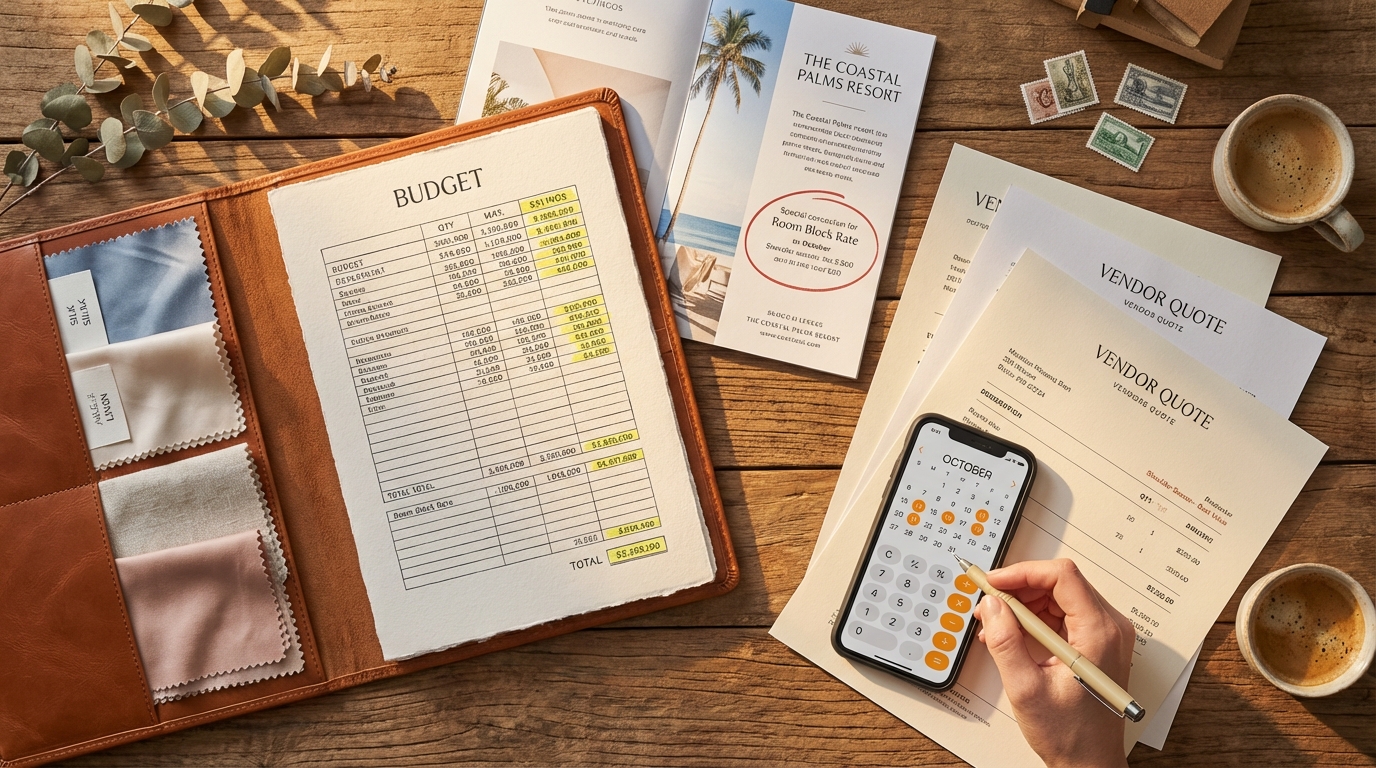
A realistic budget allocates roughly 50% to your resort stay and wedding package, with the rest split across travel, experiences, extras, and a buffer. The framework most planners recommend, as outlined by Paradise Weddings, breaks down as follows:
- 50%, Resort stay + wedding package (venue, ceremony, reception, food, drinks, coordinator)
- 20%, Personal travel and group transfers
- 15%, Group experiences and accommodation upgrades
- 10%, Additional services (DJ, extra décor, live music, photography upgrades)
- 5%, Emergency fund
So what does this look like in practice? For a $15,000 mid-range wedding in Mexico with 40 guests:
- $7,500 goes to the resort package, covering the ceremony setup, reception dinner, open bar, cake, bouquet, boutonniere, and an on-site coordinator
- $3,000 covers your flights, airport transfers, and any pre-wedding night stays
- $2,250 funds a welcome dinner, group excursion, or room upgrades for VIP guests
- $1,500 pays for a destination wedding photographer, upgraded florals, or a live musician
- $750 sits untouched until you need it (and you probably will)
The reception venue alone averages $13,030 for U.S. weddings, as The Knot notes. That single line item exceeds the entire cost of many all-inclusive destination packages. This is why the venue type you choose shapes your budget more than almost any other decision.
For couples working through their beach wedding checklist, mapping your budget to this framework early prevents the slow creep of unplanned expenses.
Are There Hidden Costs Most Couples Don’t See Coming?
Yes, and they typically add 10-20% to your total if you haven’t planned for them. Here are the five that blindside couples most often.
1. Service charges and gratuities. Resort service charges run 10-25% of your total bill, as Bolen Bliss notes. The tricky part? Service charges often go to the venue, not the staff. You may still want to tip your servers, bartenders, and coordinator separately.
2. International taxes. VAT in European destinations can reach up to 24%, and many venues quote prices as “plus VAT,” as Kay Northrup Events notes. Budget an extra 5-8% per line item for local sales taxes as a safety cushion.
3. Legal and documentation fees. Marriage licenses, translated documents, blood tests (still required in some Mexican states), and apostille certifications add $200-$500 to your total. Requirements vary by country and change frequently, so consult your local planner or the destination country’s embassy to confirm current requirements.
4. Vendor travel costs. If you’re flying in a photographer or videographer, you’re covering their flights, hotel, meals, and ground transportation. Vendor travel expenses can add $4,000-$8,000 depending on the destination, as Eden Photo and Film notes. Hiring local vendors eliminates this entirely. A wedding photographer in Bali or a planner in Santorini already knows the best spots and won’t charge you for a plane ticket.
5. “Included” items that aren’t. All-inclusive packages cover a lot, but they rarely cover everything. Travel Queen USA notes that common exclusions include string lighting, specialized audio equipment, outside vendor fees, and premium alcohol upgrades. Read the fine print on every package before signing.
Can a Destination Wedding Actually Cost Less Than a Traditional Wedding?
Absolutely, and it happens more often than people think. The average U.S. wedding costs $35,000, while the average destination wedding (including airfare, accommodations, and the wedding package) comes in around $9,850, per Destination Weddings.com.
How is that possible? Three forces work in your favor.
Smaller guest lists. When you ask people to travel, your guest count naturally drops. Fewer guests means less food, fewer rentals, smaller venues, and simpler logistics. Destination wedding packages average $6,450-$6,550 for about 50 guests, as Paradise Weddings notes.
Bundled pricing. All-inclusive resorts package the venue, food, drinks, cake, ceremony setup, and a coordinator into one price. You’re not hiring eight separate vendors and paying each one a deposit, delivery fee, and setup charge. The resort absorbs those costs into the room revenue from your guest block.
Lower labor and material costs. In Mexico, the Dominican Republic, and parts of Southeast Asia, local vendor rates are significantly lower than U.S. equivalents. A stunning floral arrangement from a florist in Bali costs a fraction of what you’d pay in New York or Los Angeles.
And here’s a stat that surprises almost everyone: guests spend an average of $673 attending a destination wedding versus $703 for a traditional one, per Travel Bash. Your guests aren’t paying more. They’re just spending their money on a vacation instead of a gift, a new outfit, and gas to drive across the state.
For a deeper look at where the savings come from, check out our breakdown on whether a destination wedding can actually save you money.
How to Stretch Your Budget Without Sacrificing the Dream
You don’t need to cut corners to stay on budget. You need to make strategic choices about where your money goes. Here are the moves that experienced destination wedding planners recommend.
Choose your destination for value, not just vibes. Mexico and the Caribbean offer the best price-to-experience ratio for beach weddings. The average destination wedding in Mexico and the Caribbean costs around $10,500, as Paradise Weddings notes. That includes airfare, accommodations, and the wedding package.
Book off-season or shoulder season. Late April, early May, and November offer the same beaches and sunsets at significantly lower rates. Resorts are hungrier for bookings, which means better room rates, complimentary upgrades, and more flexible package terms.
Negotiate group room blocks. Most resorts offer discounted rates, free room upgrades, and even complimentary nights when you book a block of rooms. Some resorts include a free wedding package when your group books a minimum number of rooms. Always ask.
Hire local vendors. A wedding planner in Jamaica or a photographer in Hawaii already knows the best locations, has relationships with local suppliers, and won’t charge you for travel. This alone can save $4,000-$8,000.
Use the venue’s natural beauty. Ocean backdrops, tropical gardens, and golden-hour light do most of the decorating work for you. Skip the elaborate floral arches and imported décor. A few well-placed arrangements and some candles are often all you need.
Combine your wedding and honeymoon. You’re already at a beautiful destination. Add a few extra nights after the wedding instead of booking a separate trip. You’ll save on flights and the mental energy of planning two vacations.
For more specific strategies, our guide to destination wedding budget hacks goes deeper on each of these.
How BeachBride Helps You Plan Within Your Budget
Generic cost averages are a starting point, not a plan. Your budget depends on your specific guest count, your preferred destination, your style, and your priorities. That’s exactly what our matching system is built for.
When you take the BeachBride quiz, you’ll tell us your budget range, your guest count, your top destination picks, and what matters most to you (food? photography? the venue itself?). We match you with vetted local planners and vendors who work within your numbers and know your destination inside and out.
No guessing. No generic internet averages. Just real pricing from real professionals who’ve done this hundreds of times at the exact location you’re considering.
Whether you’re working with $8,000 for an intimate ceremony in the Riviera Maya or $40,000 for a multi-day celebration in Hawaii, the right local team makes every dollar count. And finding that team starts with a two-minute quiz.
Take the BeachBride quiz and get your personalized cost estimate →