You’ve picked the venue. The ocean is your backdrop. Now you need tables that feel just as stunning without competing with the view. The right beach wedding centerpiece ideas turn a simple reception table into something your guests photograph between courses, and the wrong ones blow over in the first gust of wind or melt into a puddle before the toasts.
This guide treats centerpieces as a destination-specific logistics challenge, not just a Pinterest mood board. We’ll cover what actually holds up in tropical heat, what fits your destination wedding budget, and how to match your look to the specific coastline where you’re saying “I do.”
What Makes a Great Beach Wedding Centerpiece? (And What to Avoid)
A great beach centerpiece enhances the natural setting without fighting it. That means low-profile designs, wind-resistant materials, and a color palette that complements sand and sea rather than clashing with them.
According to Zola, effective beach centerpieces incorporate natural, venue-inspired elements like seashells, sand, driftwood, and sea glass for thematic cohesion. The ocean is already doing the heavy lifting visually. Your job is to add warmth, texture, and a sense of intention to the table.
Here’s what to avoid. Overly literal nautical props (think plastic anchors and netting draped over everything) tip quickly from charming to costume-y. According to Destination Wedding Details, subtle integration of beach elements around florals reads as elegant, while overloading tables with starfish and rope creates clutter. Tall, top-heavy arrangements are another risk. Open-air settings mean wind, and a three-foot floral tower on a beach table is an accident waiting to happen.
One more thing: skip real coral entirely. Harvesting live coral damages reef ecosystems, and many coastal destinations enforce fines for it. Use replicas or collected sea glass instead.
How Much Should You Budget for Beach Wedding Centerpieces?
Expect to spend between $50 and $500 per table, depending on whether you go DIY or hire a florist. The good news is that beach settings naturally reduce your decor needs.
According to Zola’s wedding decoration cost guide, total decor for a natural outdoor setting can run as low as $500 with a DIY approach, compared to $2,000 to $10,000 for a full professional setup. Flower Boom Dallas reports that the general range for wedding centerpieces sits between $80 and $500 per table, with simpler candle-and-greenery options on the lower end.
For couples watching their budget, Whole Blossoms notes that DIY floral centerpieces can be assembled for around $40 each using bulk flowers, achieving a look comparable to $150 retail versions. Pair those savings with our destination wedding budget hacks and you’ll free up funds for the parts of the day guests remember most.
Note: Costs vary significantly based on season, guest count, and specific vendors. Prices listed here reflect U.S. averages and may differ at international destinations.
| Centerpiece Style | DIY Cost Per Table | Florist Cost Per Table | Best For |
|---|---|---|---|
| Sand + pillar candles | $10 - $25 | $40 - $75 | Ultra-budget, casual beach vibes |
| Driftwood + succulents | $20 - $45 | $75 - $150 | Boho or earthy aesthetics |
| Tropical floral arrangement | $40 - $80 | $100 - $250 | Bold, colorful receptions |
| Fishbowl with floating candles | $15 - $35 | $50 - $120 | Romantic evening receptions |
| Tall elevated florals | $60 - $120 | $150 - $350+ | Formal ballroom-to-beach |
| Mixed greenery garland runner | $30 - $60 | $80 - $200 | Long banquet tables |
Does Your Destination Change What Works Best?
Your specific coastline shapes everything from flower availability to wind exposure. A centerpiece that thrives on a calm Santorini cliffside terrace may not survive a breezy afternoon in Cancun.
Tropical destinations like Bali, Fiji, and the Maldives give you access to bold local blooms: orchids, birds of paradise, ginger torch flowers, and frangipanis. According to WeddingWire, tropical island weddings favor vibrant centerpieces using pink ginger torch and orange vanda orchids that complement the lush surroundings.
Cooler coastal spots like Cape Cod, the Pacific Northwest, or even Hawaii’s windward shores call for muted tones. Blue hydrangeas, white roses, and driftwood feel right against rocky shorelines and overcast skies. Meanwhile, Caribbean destinations like Tulum blend jungle greenery with sandy neutrals, making monstera leaves and coconut accents a natural fit.
Wind is the variable most couples underestimate. If your venue sits on an exposed stretch of beach, anchor everything. Sand-weighted votives, low-profile bowls, and sturdy driftwood bases outperform delicate bud vases every time. Check your beach wedding checklist for a full rundown of weather-related planning steps.
Centerpiece Ideas Using Natural Beach Elements
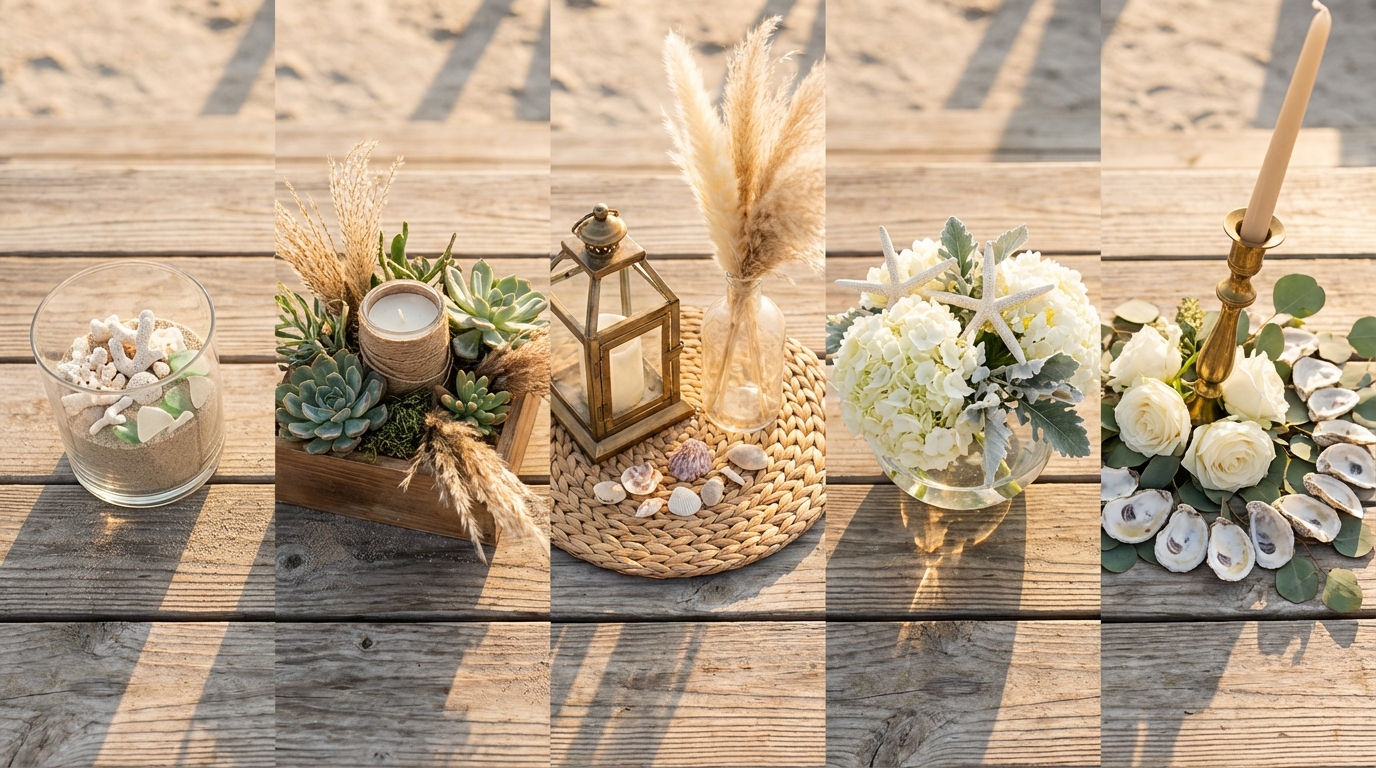
These 8 ideas use materials you can source locally or bring in your suitcase, and every one of them holds up outdoors.
1. Driftwood base with succulents. Lay a piece of driftwood flat and tuck small succulents into the crevices. According to WeddingWire, driftwood pairs beautifully with succulents and orchids for a boho-natural look. Bonus: guests can take the succulents home as favors.
2. Layered sand votives. Fill glass cylinders of varying heights with colored sand, then nestle tea lights on top. According to Zola, this creates romantic post-sunset ambiance with minimal cost.
3. Shell-scattered pillar candles. Group three pillar candles of different heights on a wooden tray and scatter shells around the base. Simple, wind-resistant when placed in glass, and under $20 per table.
4. Sea glass in clear vases. Fill a clear cylinder halfway with tumbled sea glass, add water, and float a single bloom on top. The glass catches candlelight beautifully after dark.
5. Coconut halves with tropical greenery. Hollow out coconut halves and fill them with small ferns or monstera cuttings. This works especially well at Caribbean and Southeast Asian venues.
6. Starfish and coral replica clusters. Arrange faux coral and dried starfish on a bed of sand atop a mirror or wooden charger. The mirror reflects light and makes the grouping feel larger.
7. Pineapple vases. Hollow out a pineapple and insert a small glass jar inside, then fill with tropical flowers. Eye-catching and on-theme for Hawaiian or Caribbean celebrations.
8. Beach grass bundles with twine. Gather dried beach grass into small bundles, tie with natural twine, and place three per table alongside low candles. Understated and almost free if you’re near dunes.
Floral Centerpieces That Actually Survive the Heat and Wind
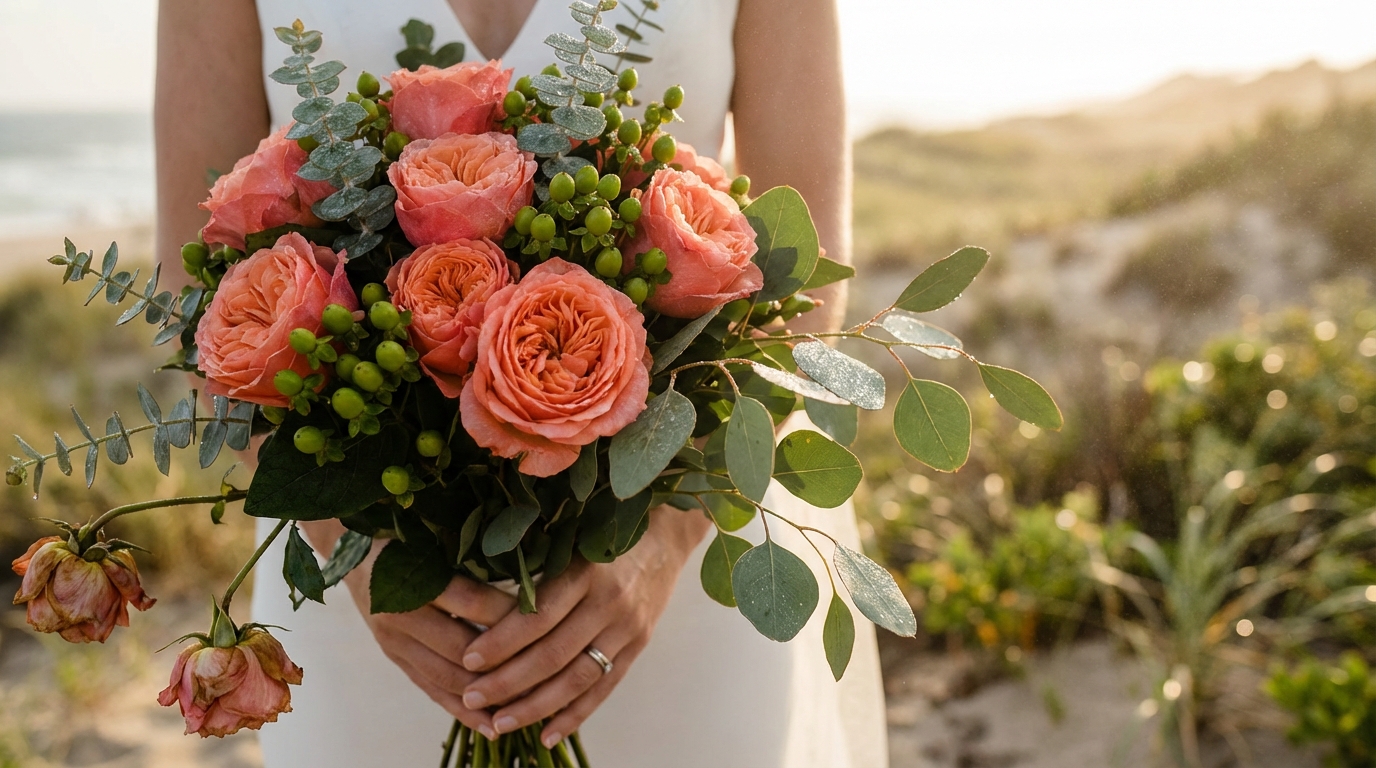
Not every flower can handle a 90-degree afternoon on an exposed beach. Choose blooms with waxy petals, dense structures, or tropical origins.
According to Bring Joy Texas, alstroemerias last up to two full weeks after cutting, even in heat and direct sunshine. Chrysanthemums hold their shape for 14 to 21 days. Carnations, often underestimated, endure up to three weeks with basic watering and add gorgeous ruffled volume.
For tropical destinations, proteas, anthuriums, and orchids are your best friends. According to Blooms By The Box, these varieties thrive without constant water sources during events, making them ideal for unattended centerpieces at outdoor receptions.
What to skip? Hydrangeas and peonies. They’re gorgeous in photos but wilt fast without frequent rehydration. If you love the look, use them only for indoor receptions or evening-only events where temperatures drop. For more on choosing the right blooms, check out our guide to bridal bouquets that survive the heat.
Pro tip: Ask your florist to mist arrangements and keep them in a cool, shaded area until 30 minutes before guests sit down. That small step extends the life of even sensitive blooms by hours.
Candle and Glass Centerpieces: The Fishbowl Effect and Beyond
Candlelight on a beach at sunset is one of the most romantic visuals you can create. The key is protecting the flame from wind while still letting the glow shine through.
According to BeachBride’s own centerpiece guide, the “fishbowl effect” works by filling the bottom of a large glass bowl with a few statement flowers, then placing a fat pillar candle in the center. When lit, the glass amplifies the glow from every angle.
Floating candle bowls are another strong option. Place shells at the bottom of a wide glass vessel, fill with water, and set floating candles on top. The water shields the flame, and the shells add texture without extra cost.
For a more modern look, cluster hurricane glass cylinders of varying heights, each holding a single taper or pillar candle. Surround the base with loose greenery and a few scattered shells. This works on both round and rectangular tables.
Wind warning: Always confirm your venue’s open-flame policy before committing to candle-heavy designs. Some beach venues and resorts restrict unprotected flames entirely. LED candles have improved dramatically and now flicker convincingly enough to fool most guests.
Low vs. Tall Centerpieces: Which Is Right for Your Tables?
Low centerpieces keep sightlines open and encourage conversation, which matters when your guests traveled to be there. Tall arrangements add drama but require careful planning to avoid blocking the view.
According to Whole Blossoms, low centerpieces average $75 to $200 per table, while tall designs run $150 to $350 or more due to the extra flowers and structural support needed. Low designs should stay at 12 inches or under. Tall arrangements need to clear 24 inches so guests can see each other underneath.
For beach weddings specifically, low almost always wins. Wind is less of a factor, the ocean backdrop stays visible, and the casual elegance of a beach setting pairs better with understated table decor. If you want height, consider a single tall arrangement on a buffet or welcome table rather than on every guest table.
According to WeddingWire forums, 60% of respondents favored low or mixed-height centerpieces for their style and lower cost. Mixing heights across tables adds visual interest without the price tag of going tall everywhere.
DIY vs. Florist-Made: What’s Actually Worth Your Time?
DIY saves money on materials but costs you something harder to get back: time and stress during wedding week.
According to Poppy Flowers, DIY material costs for 10 centerpieces range from roughly $600, but the true cost rises to $1,545 or more when you factor in 20 to 40 hours of labor. A professional florist charges $2,500 to $5,000 for comparable setups, but that includes design, sourcing, assembly, delivery, and breakdown.
According to Flower Moxie, a single centerpiece costs $18 to $60 DIY versus $50 to $135 from a florist. The per-piece savings are real. But at a destination wedding, you’re assembling those pieces in an unfamiliar space, possibly without a car, a workspace, or a refrigerator big enough to store fresh flowers.
The honest recommendation: Go DIY for non-floral elements (sand votives, shell clusters, candle groupings) that you can prep at home and pack flat. Hire a local florist for anything involving fresh flowers. The hybrid approach, according to Poppy Flowers, totals $1,700 to $2,900 and eliminates the highest-stress tasks from your wedding week.
How to Match Your Centerpieces to Your Beach Wedding Color Scheme?
Your centerpieces should feel like a natural extension of your overall palette, not an afterthought placed on tables.
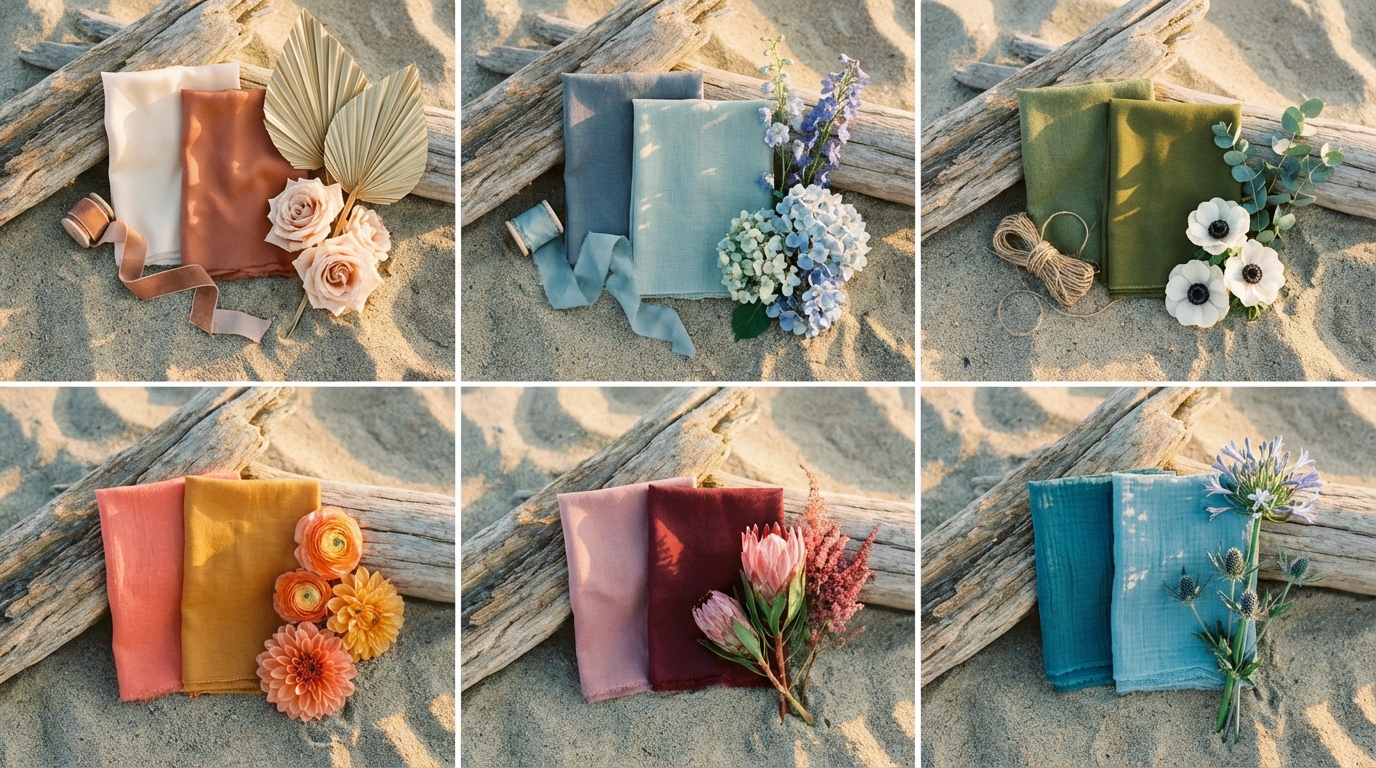
According to Ivory Floral Events, white, green, and gold palettes feel rich yet organic, with white and green echoing beach vegetation. Peach, pink, orange, and blue combinations capture both warm sunset tones and cool ocean hues. For tropical island weddings, George Street Photo recommends dusty aqua paired with pale blue and sage green, where the aqua stands out while the softer shades keep things grounded.
The simplest approach: pick your beach wedding color scheme first, then choose centerpiece flowers and accents that naturally grow in those colors. Forcing dyed flowers into an unnatural shade reads as artificial, especially outdoors where natural light reveals every detail.
A few pairings that work consistently:
- Coastal neutrals (ivory, sand, driftwood gray): white roses, dried pampas grass, bleached driftwood
- Tropical bold (coral, mango, fuchsia): proteas, anthuriums, birds of paradise
- Ocean blues (navy, seafoam, pale blue): blue hydrangeas, white delphinium, sea glass accents
- Sunset warm (peach, terracotta, gold): garden roses, ranunculus, amber glass votives
How BeachBride Can Connect You With Local Florists Who Know the Terrain
Finding a florist who has actually set up centerpieces on sand, in wind, under a tropical sun is worth more than any Pinterest board. Local vendors know which flowers are in season at your destination, which venues restrict open flames, and how to keep arrangements fresh in humidity.
Through our vendor network, we connect couples with florists and planners who specialize in specific coastlines. Whether you’re planning a Cancun resort reception or an intimate dinner on a Tulum jungle terrace, a local pro eliminates the guesswork around sourcing, transport, and setup logistics.
If you’re still narrowing down your destination, your color palette, or your overall vibe, we can help with that too. Our free quiz matches you with destinations, vendors, and planning resources based on your style, budget, and guest count.
Ready to start pulling your vision together? Take the BeachBride quiz and get matched with local florists and planners who’ve done this hundreds of times, on the exact stretch of coastline where you’ll be celebrating.