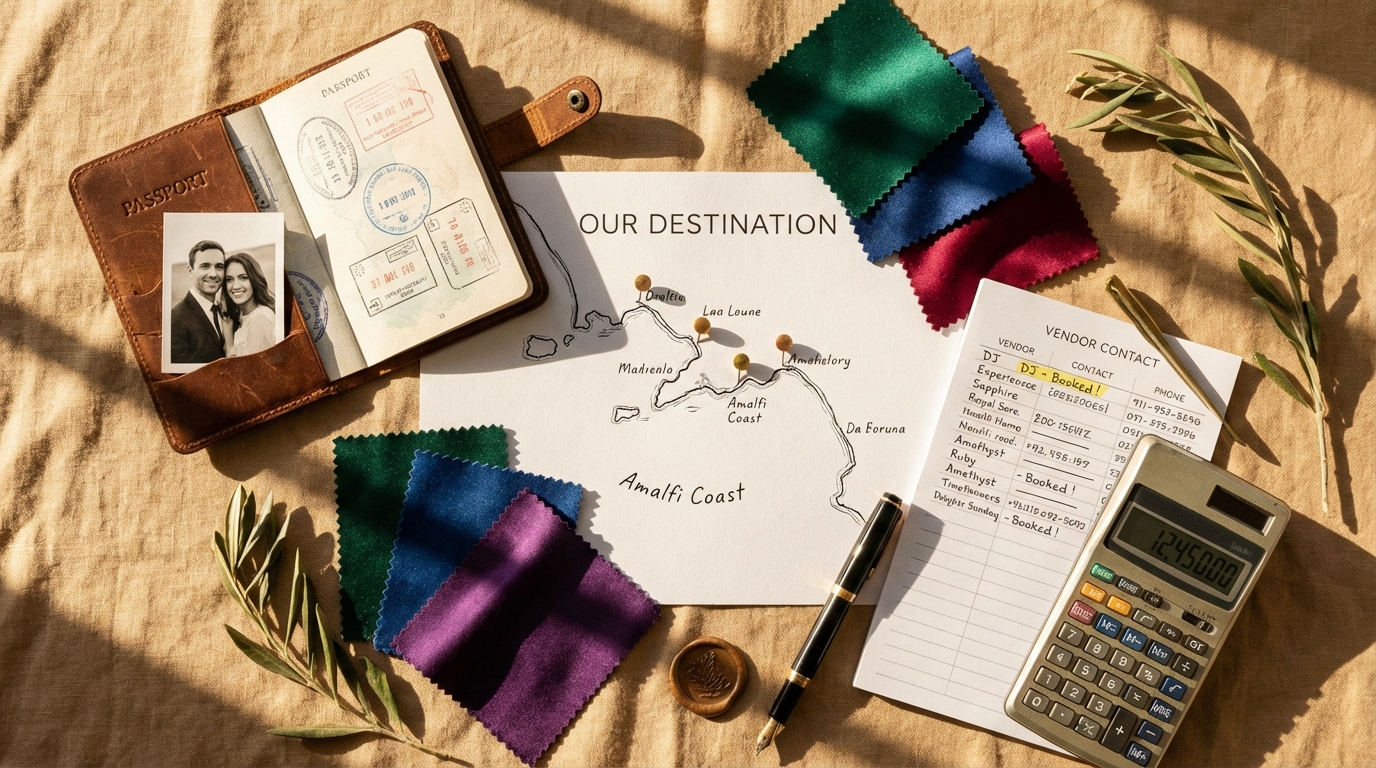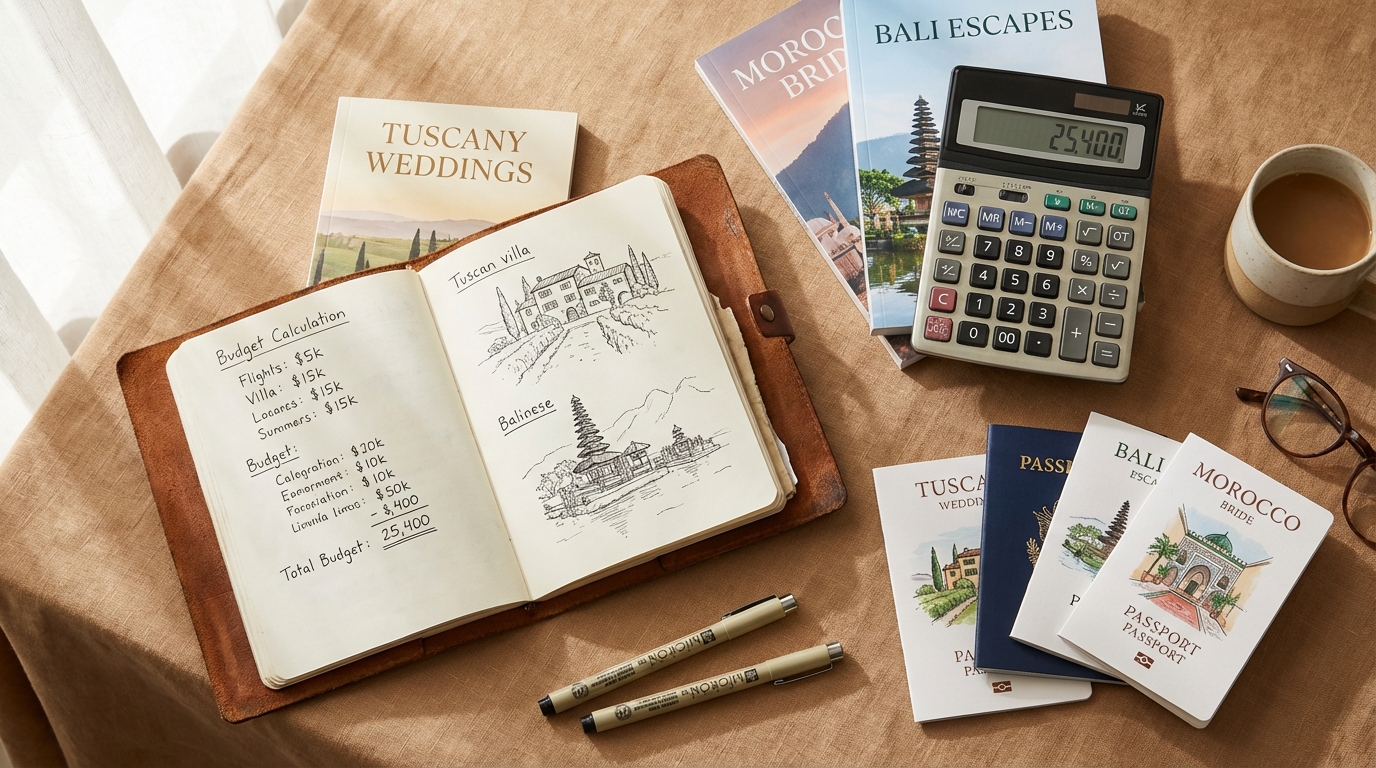
Let me guess: you’re excited about getting married somewhere beautiful, but every time you open a new browser tab, the planning feels bigger and more complicated. Flights, vendors, legal paperwork, guest logistics. It’s a lot. These destination wedding tips come from real couples who felt the same overwhelm and still pulled off celebrations they’re proud of. We’ve organized them by planning phase so you can tackle each piece with confidence, not chaos.
Before you spiral into another Pinterest rabbit hole, take a breath. You’ve got this, and we’re going to walk through it together.
What Is a Destination Wedding (and Why Are They More Achievable Than You Think)?
A destination wedding is any ceremony held outside your hometown, and they’re far more accessible than most couples realize. That’s it. No velvet rope, no trust fund required.
According to Radical Storage, destination weddings now account for 17% of all weddings globally. The market was valued at roughly $46 billion in 2024 and is projected to nearly quadruple by 2029. That kind of growth means more resorts, more packages, and more competition for your business, which works in your favor.
Here’s what surprises most people: the average destination wedding package costs $6,450-$6,550 for about 50 guests, covering the venue, ceremony, reception, food, cake, and DJ. Compare that to the $30,000 U.S. wedding average, and the math starts looking very different from what you expected.
If you’re just starting out, our destination wedding guide breaks down the full process from engagement to “I do.”
What Factors Affect How Smooth Your Destination Wedding Goes?
Five factors matter most: your timeline, your vendor team, your guest communication, your weather backup plan, and your willingness to let go of controlling every detail from thousands of miles away.
Tip #1: Start vendor searches 12-18 months out. According to Polka Dot Wedding, local vendors who know your venue’s quirks book fast, especially during peak season.
Tip #2: Build in buffer days. Allocate a full day for vendor setup at your venue, particularly for private properties or outdoor spaces. Terrain, weather, and unfamiliar roads eat time.
Tip #3: Always have a Plan B and Plan C for weather. Tropical destinations carry rainy season risks. According to 1754 House, couples who skip backup plans face the most stressful day-of surprises.
Tip #4: Accept that remote venues add complexity. Boat access, mountain roads, airport distance. These aren’t dealbreakers, but they require honest planning. Budget extra time for guest transport between ceremony and reception sites.
How Far in Advance Should You Start Planning?
Twelve to eighteen months is the sweet spot for most destination weddings. This window gives you access to top venues, group hotel rates, and enough breathing room to handle surprises.
According to Talavera Travel, couples who plan 14-18 months ahead for Mexico or Caribbean weddings achieve 60%+ guest RSVP rates. That extra lead time lets your guests budget, request vacation days, and arrange childcare.
Tip #5: Book your venue at 12-14 months. Even if you start researching at 18 months, expect the actual confirmation to happen a few months later after site visits or virtual tours.
Tip #6: Send save-the-dates at 12 months minimum. Your guests need time to book flights when prices are reasonable, not scrambling for last-minute fares.
Tip #7: Don’t panic if you’re at 9 months. It’s tighter, but flexible venues and off-peak dates can still work. You’ll just have fewer options.
Use our beach wedding checklist to map your timeline month by month.
Which Destination Is Right for Your Style and Budget?
Your destination should match your personality, your guest list’s travel tolerance, and your budget, not just look good on Instagram.
Here’s a quick comparison of popular spots to help you narrow things down:
| Destination | Best For | Budget Range (Package) | Peak Season to Avoid | Best Value Window |
|---|---|---|---|---|
| Cancun | Easy flights, all-inclusive | $4,800-$10,000 | Dec-Mar | Late Apr-Jun |
| Punta Cana | Large groups, East Coast access | $5,000-$12,000 | Dec-Apr | May-Jun, Sep-Nov |
| Jamaica | Laid-back vibes, reggae soul | $5,000-$11,000 | Dec-Mar | Apr-Jun |
| Riviera Maya | Boho-chic, cenotes, jungle | $4,800-$10,000 | Dec-Mar | Late Apr-Jun |
| Santorini | Dramatic cliffs, sunset views | $15,000-$35,000 | Jul-Aug | May, Sep-Oct |
| Costa Rica | Adventure couples, eco-weddings | $8,000-$20,000 | Dec-Apr | May, Nov |
| Hawaii | No passport needed, lush scenery | $10,000-$30,000 | Jun-Aug | Sep-Nov |
| Bali | Spiritual, tropical, affordable | $5,000-$15,000 | Jul-Aug | Apr-Jun, Sep-Oct |
Costs vary significantly based on season, guest count, and specific vendors.
Tip #8: Match the destination to your guests, not just your Pinterest board. A Los Cabos wedding with direct flights from most U.S. cities is easier on guests than a remote island requiring two connections.
Tip #9: Consider passport requirements. According to Paradise Weddings, complete packages under $10,000 exist at resorts like Barcelo Maya Grand in Mexico’s Riviera Maya. Mexico only requires a passport, no visa, for U.S. citizens, which removes a major friction point.
Tip #10: Don’t overlook Aruba. According to Journeys International, Aruba delivers reliable year-round sunshine and solid value, making it a strong pick for couples who want to skip the “what if it rains” anxiety entirely.
How Do You Build a Destination Wedding Budget That Doesn’t Blow Up?
Start with your total number, then work backward from the non-negotiables: venue, food, photography, and travel for the two of you.
According to The Knot’s 2025 Real Weddings Study, the average destination wedding cost is $39,000 for domestic U.S. locations and $41,000 internationally. But averages can be misleading. All-inclusive packages bring that number down dramatically.
Tip #11: Get the all-inclusive quote first. Packages averaging $6,450-$6,550 for 50 guests give you a baseline. Then decide what’s worth upgrading (photography, florals) and what the package handles fine.
Tip #12: Budget 10-15% for a local planner. According to Radical Storage, European destination wedding planners average about $5,300. It sounds like a lot until you consider what they save you in vendor markups, translation mishaps, and permit headaches.
Tip #13: Track the hidden costs. Plan for at least two planning trips to your destination, tips for resort staff, marriage license fees, and document translation or apostille costs. These add up to $2,000-$5,000 that most budget templates miss.
For more specific savings strategies, check out our guide to destination wedding budget hacks that don’t sacrifice luxury.
Should You Hire a Local Wedding Planner?
Yes, for almost every destination wedding, a local planner is worth the investment. They bring vendor relationships, cultural knowledge, and on-the-ground problem-solving that you simply cannot replicate over video calls.
According to Wedaways, couples using destination-based planners access pre-vetted vendor lists that can save 50-70% in research time compared to building connections from scratch. A local planner also eliminates the need to pay for a home-based planner’s flights and hotel.
Tip #14: Ask for three references from couples in the last 12 months. Not testimonials on their website. Actual email addresses or phone numbers of recent clients.
Tip #15: Clarify what “coordination” means in their contract. Some planners include design and vendor management. Others only show up on the wedding day. The gap between those two services is enormous.
Tip #16: Don’t confuse a venue coordinator with a wedding planner. According to Adventure Weddings MX, venue coordinators juggle multiple events simultaneously. A dedicated planner focuses entirely on yours.
Browse vetted destination wedding planners who specialize in the locations you’re considering.
How Do You Keep Guests Happy Without Becoming Their Travel Agent?
Give your guests clear information, helpful links, and then step back. Your job is to get married, not manage 50 itineraries.
According to Wedicity, booking hotel blocks 8-12 months in advance secures group rates and availability. Share the block details on your wedding website and let guests handle their own reservations.
Tip #17: Create a wedding website with everything in one place. Flight suggestions, hotel block links, local restaurant recommendations, a packing list for the climate. Answer the questions before they’re asked.
Tip #18: Send save-the-dates early with a cost estimate. According to Destination I Do, withholding details doesn’t build excitement. It confuses people and lowers attendance. Be upfront about what guests should expect to spend.
Tip #19: Host one welcome event, then let people roam. According to Brides Without Borders, over-scheduling exhausts guests. A welcome dinner or drinks the night before, then free time until the ceremony, hits the right balance.
Tip #20: Expect about 40% attendance. According to Rustic Pathways, only 40% of invited guests typically attend destination weddings. That’s not a failure. It’s the natural result of asking people to travel, and it creates the intimate celebration many couples actually want.
Smart Ways to Save Without Sacrificing the Vibe
You don’t have to choose between a beautiful wedding and a responsible budget. Strategic timing and packaging do most of the heavy lifting.
Tip #21: Book shoulder season. According to Joy, off-season or shoulder-season booking saves 20-50% on accommodations. For the Caribbean, that’s September through early December. For the Mediterranean, May or late September through October.
Tip #22: Choose a weekday. The same Joy source notes that weekday weddings can cut venue fees by up to $4,000. A Wednesday wedding in Tulum feels just as magical as a Saturday one, and your guests are already taking time off work anyway.
Tip #23: Use group booking power. Groups of 10 or more often unlock 10-30% off airfares and 15-40% lower hotel rates, sometimes with perks like one free room per 10 booked or resort credits for spa treatments.
All-inclusive resorts like those at Sandals in Jamaica or the Caribbean bundle ceremony, reception, food, drinks, and decor into one price, which makes budgeting predictable and often cheaper than piecing everything together independently.
If you’re still exploring ring options before diving into wedding planning, retailers like Brilliant Earth offer lab-grown diamonds that free up more of your budget for the celebration itself.
The Logistics Nobody Warns You About (But Should)
This is where the real talk happens. The pretty Instagram posts don’t show the behind-the-scenes scramble, but a little preparation prevents most of it.
Multi-day events are the norm. According to Smashing the Glass, destination weddings typically span 2-5 events: a welcome gathering, the ceremony and reception, and possibly a farewell brunch. Budget and plan for all of them, not just the main event.
You’ll need at least two planning trips. The same source recommends visiting midweek to meet vendors in person. Virtual tours help, but nothing replaces walking the actual ceremony space and tasting the actual food.
Arrive early. Fly in at least two days before your wedding. Flight delays happen. Jet lag is real. You want to feel rested and present, not frazzled from a red-eye that landed four hours late.
Legal paperwork varies wildly. Some countries require residency periods, blood tests, or document apostilles. Others let you marry the day you arrive. A symbolic ceremony at your destination paired with a legal courthouse signing at home is a popular workaround that simplifies everything. Always consult your local planner or the destination country’s embassy to confirm current requirements.
Shipping decor internationally is expensive and risky. Work with local florists and rental companies instead. Your planner’s vendor network exists for exactly this reason.
How BeachBride Matches You With the Right Vendors Instantly
We built BeachBride because we saw too many couples wasting months on cold emails to vendors who never responded, or worse, booking someone based on a gorgeous website only to discover they’d never worked at that specific venue before.
Our matching system asks about your destination, style, budget, and guest count, then connects you with vetted local vendors who actually specialize in weddings like yours. No generic directories. No scrolling through 500 listings hoping for the best.
Whether you’re planning a Riviera Maya wedding for 30 guests or a Santorini wedding for 100, the right photographer, planner, and florist make the difference between a stressful production and a celebration that feels like you.
You’ve read the tips. You know more than you did 10 minutes ago. Now let’s turn that knowledge into action. Take the BeachBride quiz to get matched with vendors who fit your destination, your style, and your budget. It takes about two minutes, and it might be the most productive thing you do for your wedding this week.
Disclaimer: This article contains affiliate links. If you book through our partner links, we may earn a small commission at no extra cost to you. Cost estimates referenced throughout are approximate and vary significantly based on season, guest count, and specific vendors. For legal requirements in any destination, consult a qualified local wedding planner or the relevant country’s embassy. BeachBride provides informational content and vendor matching but is not a licensed financial or legal advisor.