Here’s something most couples don’t realize until they start planning an Aruba destination wedding: the island is essentially a desert. Aruba gets just 18 to 20 inches of rain per year, which means the lush tropical flowers you’re picturing don’t exactly grow wild along Eagle Beach. Finding the right Aruba wedding florist means finding someone who understands island logistics, knows which blooms survive the heat and trade winds, and can source the rest without blowing your budget.
This guide breaks down what Aruba florists actually do, what flowers hold up on the beach, and what you should realistically budget. No vague advice. Just the honest details you need to make a confident choice from thousands of miles away.
What Does an Aruba Wedding Florist Actually Do?
An Aruba wedding florist handles far more than arranging pretty stems in a vase. They manage the entire floral lifecycle for your event, from the first consultation call to post-reception teardown.
That means designing your bouquets, boutonnieres, and centerpieces, yes. But it also means sourcing flowers (often importing them by air from Miami or Ecuador), conditioning blooms to survive Aruba’s heat, coordinating delivery with your venue, building wind-resistant installations on the beach, and breaking everything down afterward. A typical wedding involves 10 to 12 core tasks and coordination with five to ten other vendors, including your planner, photographer, and resort events team.
For destination weddings specifically, your florist becomes a logistics manager. They’re tracking shipment timelines, managing hydration techniques to keep imported roses fresh after a multi-day journey, and problem-solving when a flight delay threatens your ceremony arch. On the wedding day itself, florists often work 12 to 16 hour days, hauling heavy loads and setting up under the Caribbean sun.
One common misconception: any local flower shop can handle a wedding. In reality, only a fraction of florists specialize in weddings and destination events. General florists may lack experience with large installations, vendor coordination, or the preservation techniques that tropical heat demands.
Why Flowers Are Different in Aruba (Climate, Logistics & What That Means for You)
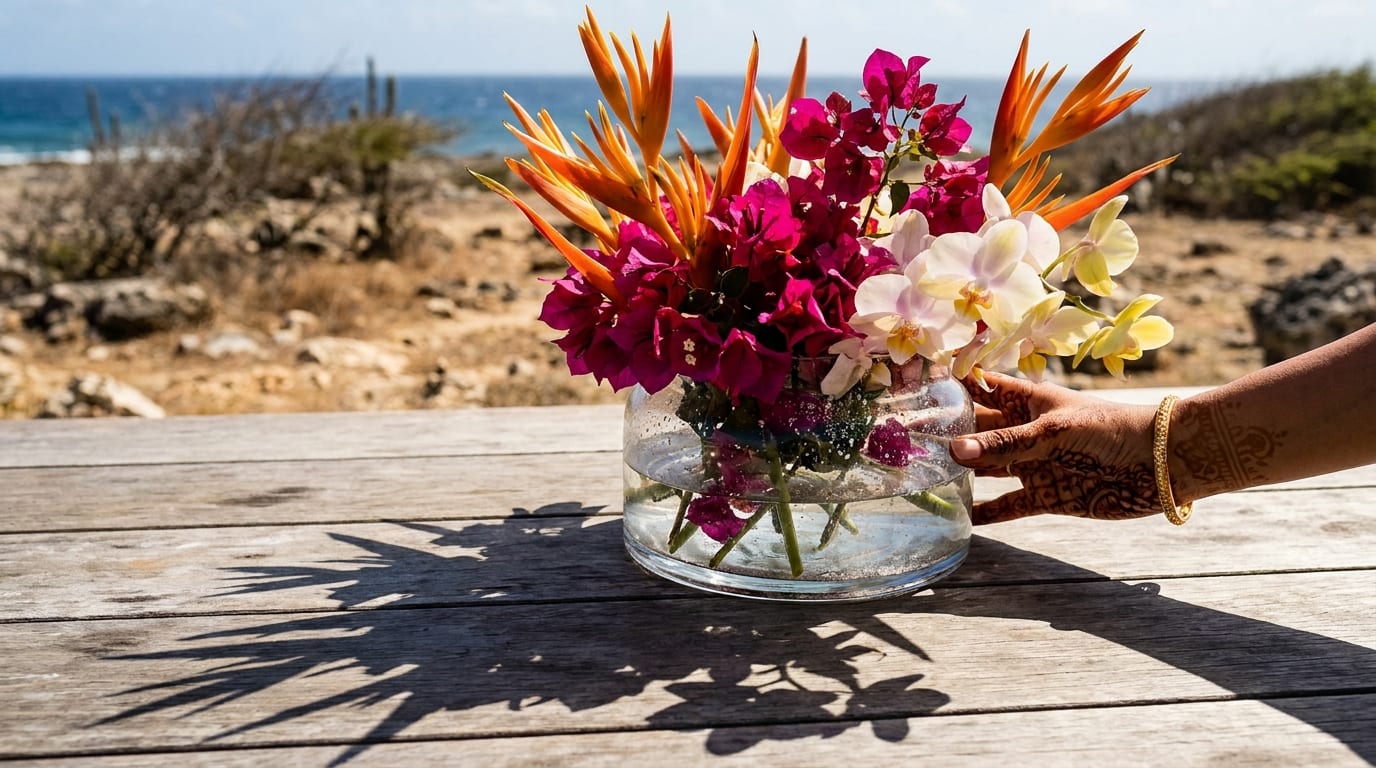
Aruba’s landscape looks nothing like most Caribbean islands. Instead of rainforest, you’ll find cactus forests, wind-sculpted divi-divi trees, and hardy succulents. The island’s dominant flora includes prickly pear cactus, aloe vera (commercially cultivated for over 160 years), and the endemic Agave arubensis. Beautiful? Absolutely. But not exactly bouquet material.
This means the vast majority of wedding flowers must be imported. The lush resort landscaping you see at Palm Beach hotels is irrigated and maintained, not a reflection of what grows naturally. Couples who assume they’ll find cheap, abundant tropical blooms on the ground are in for a surprise.
Here’s what the climate means for your flowers in practical terms:
- Heat and humidity accelerate wilting. Delicate blooms like peonies can deteriorate within hours in 85°F+ temperatures. Your florist needs to use preservatives, oasis foam, and careful timing to keep arrangements fresh through the ceremony and reception.
- Trade winds are relentless. Any freestanding installation, like a ceremony arch, needs structural reinforcement. This adds cost and requires a florist experienced with beach setups.
- Protected species are off-limits. Endangered native plants like Agave arubensis are ranked among Aruba’s most protected species. Harvesting wild flora is restricted, so even “local” arrangements rely on cultivated or imported stock.
- Imported flowers need paperwork. Blooms flown into Aruba require phytosanitary certificates from the Department of Agriculture to prevent invasive species.
The bottom line: your florist’s knowledge of Aruba’s specific conditions matters more here than in almost any other destination. If you’re comparing this to a Hawaii wedding florist or a Bali wedding florist, know that Aruba’s arid environment creates a completely different set of challenges.
What Factors Affect the Cost of Aruba Wedding Flowers?
Several factors push Aruba floral costs higher than what you’d pay on the mainland. Understanding them helps you budget realistically and avoid sticker shock.
Import logistics. Since the island grows very little commercially, most wedding flowers arrive by air from South America or the Netherlands. Shipping fees can add $500 or more per international air shipment, and that cost gets passed to you.
Flower choice. In-season tropical varieties like anthuriums and heliconias cost significantly less than imported peonies or garden roses. Exotic imports can run $25 to $50 per stem, two to three times the price of locally available options.
Venue location and setup. Remote beach venues add $200 to $500 in transport and setup fees. Setup and breakdown labor typically accounts for 15 to 25% of your total floral budget, according to Aster & Bee Floral.
Design complexity. A simple hand-tied bouquet is a different animal than a full floral arch reinforced against 20-mph trade winds. Structural installations require more materials, more labor, and more expertise.
Season. Peak wedding season in Aruba (December through April) overlaps with high demand for imported flowers across the Caribbean, which can tighten supply and raise prices.
For a full picture of how flowers fit into your overall spending, check out our destination wedding cost breakdown.
How Much Do Aruba Wedding Florists Charge? (Real Numbers)
Let’s talk numbers. Costs vary significantly based on season, guest count, and specific vendors, but here’s a realistic framework based on industry data and Aruba-specific pricing.
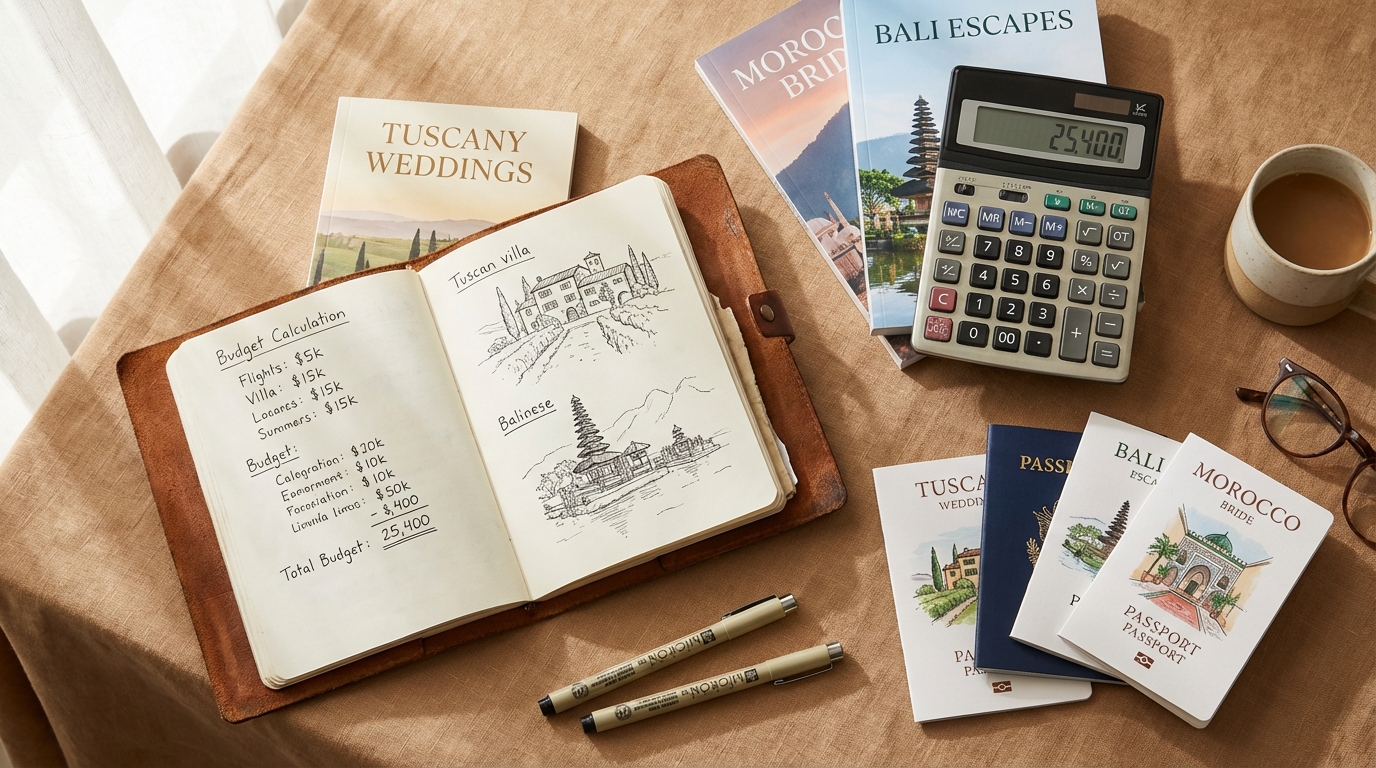
The Aruba Tourism Authority notes that overall destination wedding budgets on the island typically range from $10,000 to $30,000. With florals generally accounting for 8 to 13% of a wedding budget, that puts most couples in the $1,000 to $4,000 range for flowers.
| Floral Item | Typical Cost Range | Notes |
|---|---|---|
| Bridal bouquet | $100 - $500 | Tropical blooms on the lower end; imported peonies/garden roses push higher |
| Bridesmaid bouquet | $35 - $75 each | Simpler designs with local greenery save here |
| Boutonnieres | $15 - $35 each | Orchid or succulent options hold up well |
| Ceremony arch / chuppah | $200 - $4,500 | Beach installs with wind reinforcement average $3,000+ |
| Reception centerpieces | $75 - $300 each | Greenery-heavy designs cost less than full floral |
| Delivery & setup fees | $200 - $500 | Depends on venue distance and complexity |
Sources: MerciGarden, Aster & Bee Floral, Curated Events
For intimate elopements or micro-weddings, you can keep essentials (bouquet, boutonniere, small arrangement) under $500 to $2,000. Larger celebrations with full ceremony and reception florals will land in the $3,000 to $5,000+ range once you factor in import premiums and island logistics.
A quick reality check: U.S. couples spend an average of about $2,800 on wedding flowers nationally. Expect to add 20 to 50% on top of that for an equivalent design in Aruba, thanks to shipping and the specialized handling tropical conditions require.
Which Flowers Work Best for an Aruba Beach Wedding?
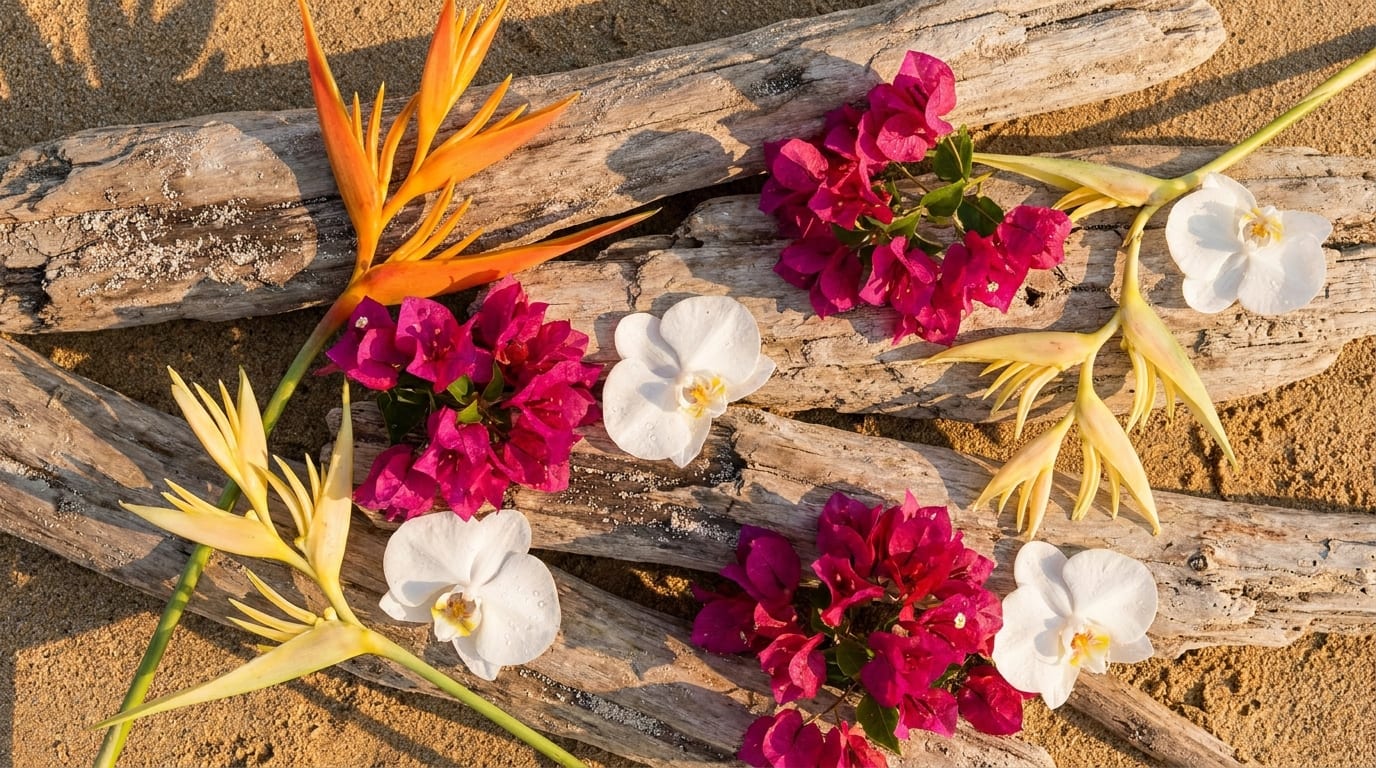
The best Aruba wedding flowers are the ones still looking gorgeous in your photos three hours into the reception. Heat tolerance, wind resistance, and salt-air durability matter more here than anywhere else.
Top performers for Aruba beach weddings:
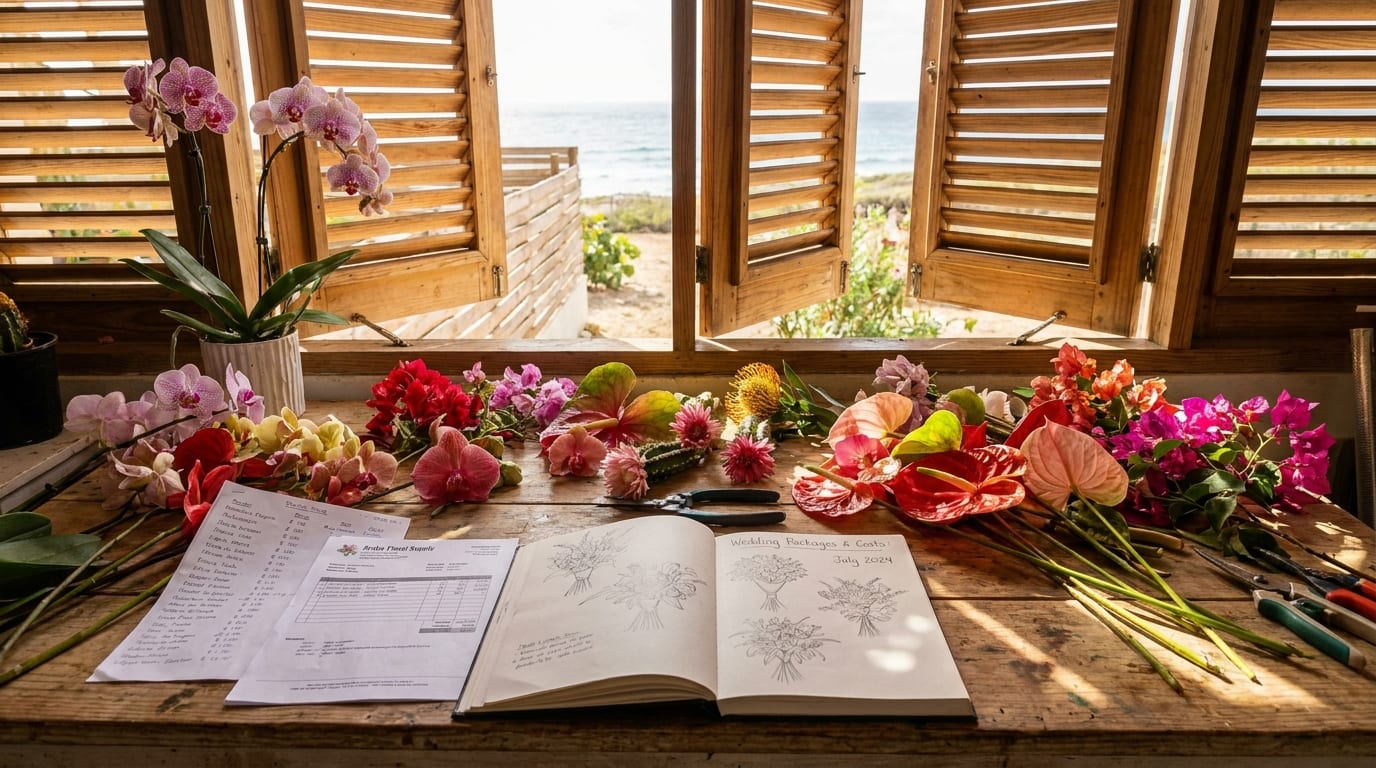
- Orchids (especially Phalaenopsis). Long-lasting in tropical temperatures and available year-round on the island. Local Aruba florists use them in the majority of bridal bouquets.
- Anthuriums. Their waxy, heart-shaped blooms resist coastal elements and hold their shape for 7 to 10 days after harvest, far outlasting standard roses.
- Calla lilies. Thick stems and waxy petals make them ideal for beach ceremonies in temperatures above 90°F.
- Roses (tropical varieties). White roses are a staple in Aruba wedding bouquets and pair beautifully with orchids for a classic look.
- Plumeria. Naturally fragrant and lasting five to seven days in sun, they add an unmistakably tropical feel.
- Hydrangeas. Full and photogenic, they work well in centerpieces and bouquets when properly hydrated.
What to avoid (or use with caution):
- Peonies. Gorgeous but they wilt rapidly in Aruba’s heat, sometimes within hours. If you’re set on them, plan for a very short window between setup and photos.
- Ranunculus and garden roses. Beautiful but fragile in humidity. Your florist may be able to make them work with careful conditioning, but expect higher waste rates.
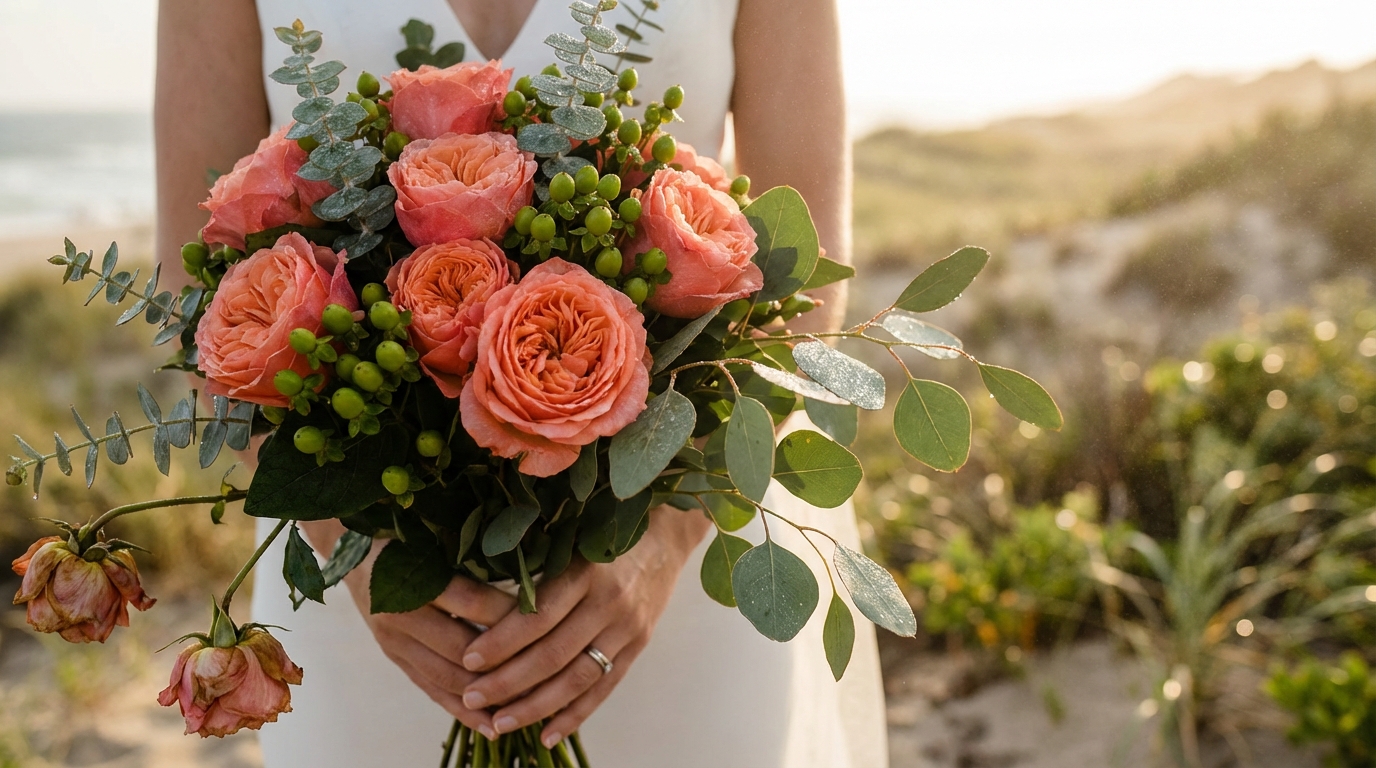
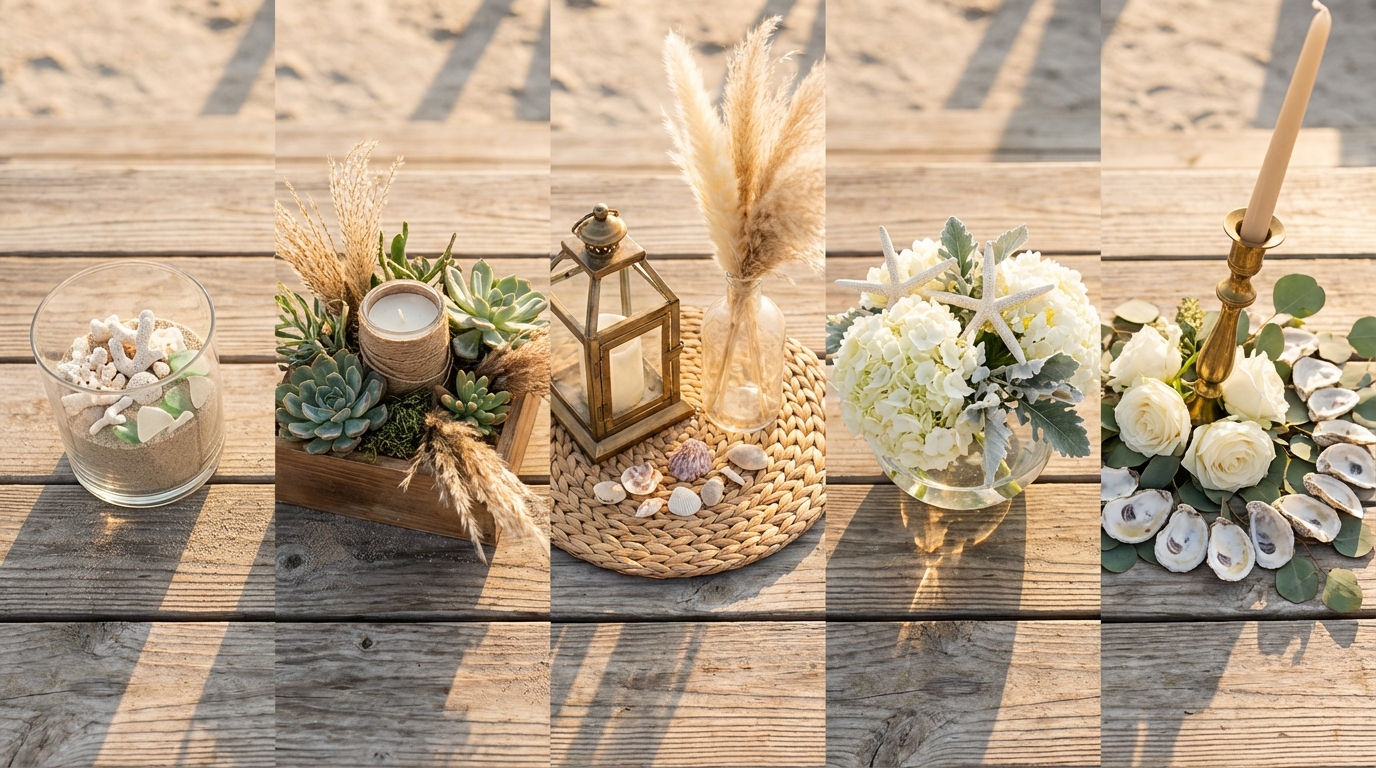
For more on choosing blooms that photograph well on sand, see our guide to beach bridal bouquets and beach wedding centerpiece ideas.
Thinking about your overall palette? Our beach wedding color schemes guide can help you match your florals to your full design vision.
Trip Protection for Your Wedding Party
Cover flights, hotels, and medical emergencies for your entire guest list. Cancel-for-any-reason options ideal for destination weddings.
A+ rated insurer. Group plans available for wedding parties.
Compare PlansResort Florist vs. Independent Florist: Which Should You Choose?
This is one of the biggest decisions you’ll make about your wedding flowers, and there’s no universal right answer. Here’s an honest comparison.
Resort florists come with convenience. They know the property, they’re already approved to set up on-site, and coordination with the venue team is built in. Many all-inclusive resort wedding packages bundle a basic bouquet and boutonniere. But “basic” is the key word. Upgrades get expensive fast, and customization options tend to be limited. Resorts often rely on imported stock from large suppliers, and some charge 20 to 50% premiums over what an independent florist would charge for comparable work.
Also worth knowing: some resorts restrict outside vendors from setting up on property. Ask about this early.
Independent florists offer more creative freedom, often better pricing, and a personal touch that resort operations can’t match. They may source from a wider network, including local growers, and they’re more likely to offer truly custom designs. The trade-off is that you’ll need to coordinate logistics yourself (or through your planner), and they’ll need venue access approval.
A study of florist sourcing preferences found that 62% of florists cite better vase life as a key benefit of local sourcing, and independent florists tend to prioritize this more than large resort suppliers.
Our take: If your wedding is simple and you want zero logistics to manage, a resort florist works fine. If florals are a priority and you want a specific look, an independent florist is almost always worth the extra coordination. Many couples use the resort’s included basics for the ceremony and hire an independent florist for the reception.
How to Find and Vet an Aruba Wedding Florist
Start your search early. Three to six months before your wedding date is ideal, and longer for peak season (December through April).
Where to look:
- WeddingWire lists 13 wedding planners in Aruba, many of whom work closely with preferred florists and can make introductions.
- Specialized vendors like Shar’s Flowers & Events offer integrated floral and event services.
- Your wedding planner (if you have one) will have a shortlist. If you’re still deciding whether you need a planner, our destination wedding guide can help you think that through.
What to ask during vetting:
- Can I see full wedding galleries, not just styled shoots? Real weddings show how arrangements hold up in actual conditions.
- How do you handle Aruba’s wind and heat? Listen for specific techniques: structural reinforcement for arches, conditioning protocols, timing of setup relative to the ceremony.
- What percentage of your flowers are imported vs. locally sourced? This affects both cost and freshness.
- Do you have experience with my venue? A florist who’s set up at your resort or beach before knows the access rules, power availability, and setup windows.
- What happens if a shipment is delayed? A good florist has backup plans and substitute bloom lists ready.
- Can you provide a detailed, itemized quote? Avoid florists who only give package prices without breaking down what’s included.
Don’t skip the video call. Seeing a florist’s workspace and talking through your vision in real time tells you more than any email exchange. Share your beach wedding checklist and tabletop decor inspiration so they understand the full picture.
Wedding Stationery That Sets the Tone
Coordinated invitations, programs, menus, place cards, and thank you cards designed by independent artists. One brand, one aesthetic, end to end.
16,000+ artists. Free guest addressing on most orders.
Shop Wedding StationeryWedding Thank You Cards from Minted
Match your invitation suite with custom photo thank you cards. Print on linen, pearlescent, or premium matte stock with free addressing.
Free guest address printing. Same-day proofs.
Browse Thank You CardsHow BeachBride Can Help You Find the Right Florist
Planning flowers from thousands of miles away is one of the trickiest parts of a destination wedding. You can’t pop into a shop, touch the petals, or see the cooler. That’s exactly why we built our vendor matching process.
We connect couples with vetted Aruba florists who specialize in destination weddings, including vendors like Shar’s Flowers & Events who work with island planners and resorts regularly. Every florist in our network has been reviewed for portfolio quality, communication responsiveness, and experience with the specific challenges of beach and resort setups.
Rather than spending hours cold-emailing vendors and hoping for replies, you can tell us what you’re looking for and we’ll match you with florists who fit your style, budget, and timeline. We also connect you with planners, photographers, and other vendors so your whole team works together from the start.
Your Aruba wedding flowers should make you catch your breath when you see them for the first time on the beach. The right florist makes that happen, even when you’re planning from a different time zone.
Ready to find your perfect match? Take our free quiz and we’ll connect you with vetted Aruba wedding florists (and planners, photographers, and more) who fit exactly what you’re looking for.