What Does ‘Beach Formal’ Actually Mean for Wedding Guests?
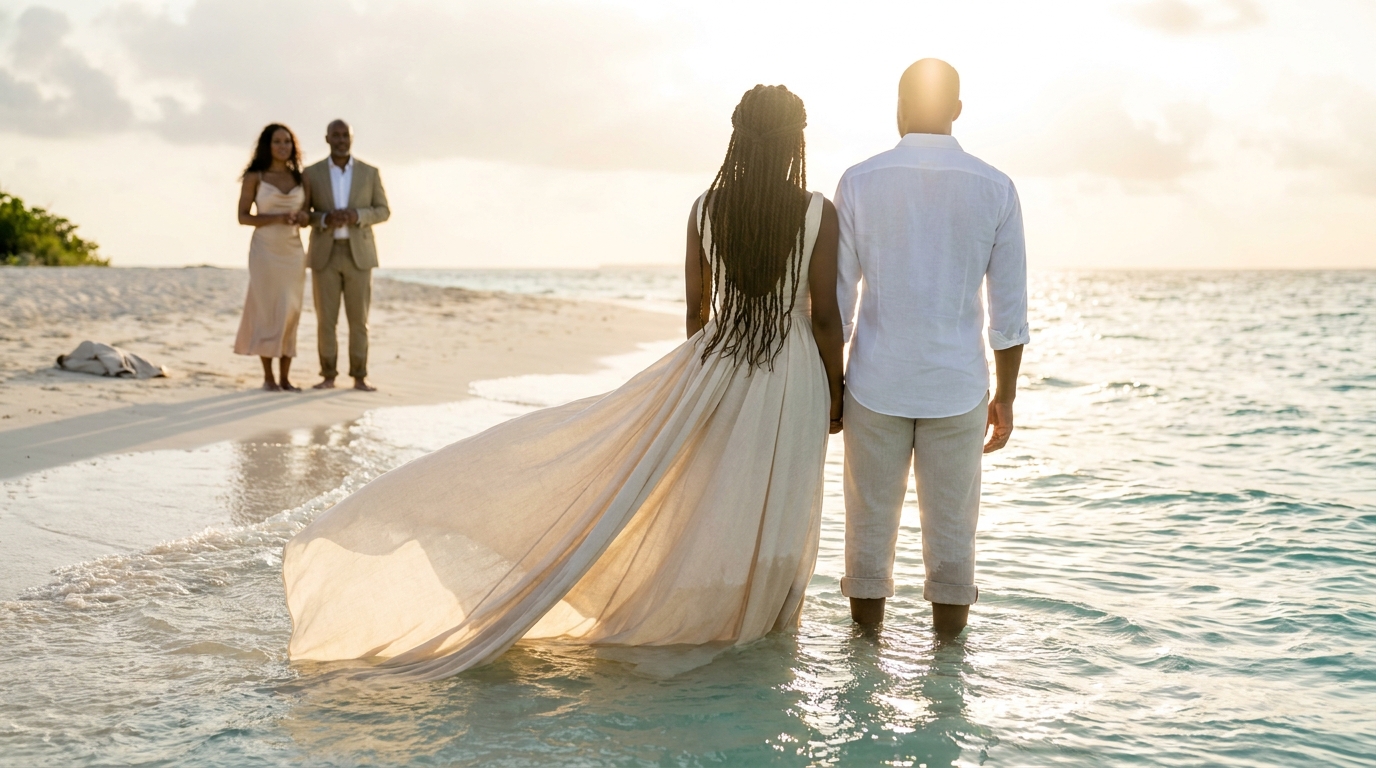
Beach formal means cocktail-length dresses or dressy separates for women, linen suits or dress pants with button-downs for men, with no ties or full suits required.
The phrase “dress code for beach wedding” on an invitation can feel like a contradiction. You picture sand between your toes, then read the word “formal,” and suddenly you’re spiraling through your closet wondering if your navy suit will leave you drenched in sweat. Here’s the reality: beach formal borrows the silhouette and polish of traditional cocktail attire but swaps heavy fabrics and restrictive fits for breathable materials designed for warm, outdoor settings.
For women, beach formal typically means a midi or cocktail-length dress in chiffon, silk, or lightweight crepe. Dressy jumpsuits also work well. For men, think linen or cotton-blend trousers paired with a structured button-down shirt. A blazer is a nice touch but not mandatory. The goal is to look polished enough for a formal celebration while acknowledging that you’re standing on a beach, possibly in 85-degree heat.
When in doubt about any dress code term, the simplest move is to ask the couple or a member of the wedding party directly. That five-second text message saves hours of outfit anxiety.
How Is Beach Semi-Formal Different from Regular Semi-Formal?
Beach semi-formal allows lighter fabrics, brighter colors, and sandals instead of closed-toe shoes, while maintaining the same silhouette formality as traditional semi-formal attire.
Traditional semi-formal usually means a knee-length dress or a suit with a tie. Beach semi-formal keeps that same level of “put together” but relaxes the details. You can trade your closed-toe pumps for wedge sandals, swap your dark wool blazer for a linen one, and reach for colors that complement an ocean backdrop rather than a hotel ballroom.
The key distinction is that the formality level stays the same. You’re still dressing for a wedding, not a beach barbecue. A flowy tea-length dress in a tropical print reads semi-formal on sand. A pair of board shorts and a Hawaiian shirt does not. If you’re attending a wedding in a destination like Cancún or Punta Cana, the heat and humidity make fabric choice especially important. Cotton, linen, and moisture-wicking blends will keep you comfortable through the ceremony and reception.
What Should Women Wear to a Beach Wedding?
Women should wear midi or maxi dresses in breathable fabrics like cotton, linen, or chiffon, paired with wedges or dressy flat sandals that won’t sink in sand.
Dress Length and Silhouette Guidelines
Midi and maxi lengths work best for beach weddings. They’re elegant enough for photos and practical enough for wind. A-line and wrap silhouettes move naturally in a breeze without clinging uncomfortably. If you prefer shorter hemlines, a knee-length or tea-length dress works for semi-formal and casual beach codes. Avoid floor-sweeping hems that drag through sand, and steer clear of very short cocktail dresses that may feel out of place during an outdoor ceremony.
Fabric Choices That Actually Work in Heat and Wind
Fabric is where beach wedding attire diverges most from traditional wedding guest outfits. Multiple wedding style guides consistently recommend lightweight, breathable materials like cotton, linen, chiffon, and silk for beach settings. Sun and Sea Beach Weddings specifically warns against heavy fabrics such as velvet, wool, brocade, thick satin, taffeta, tweed, and flannel, all of which trap heat and become uncomfortable quickly. If you already own a gorgeous wedding guest dress in a heavier fabric, save it for an indoor event. For the beach, prioritize materials that let air circulate and dry quickly if they catch ocean spray.
Color and Pattern Considerations
Beach settings invite brighter, more saturated colors than indoor weddings. Coral, turquoise, soft greens, and warm sunset tones photograph beautifully against sand and sea. Floral and tropical prints are welcome at most beach celebrations. That said, there are clear boundaries on color, which we’ll cover below.
What Should Men Wear to a Beach Wedding?
Men should wear linen or cotton dress pants with a lightweight button-down shirt, optional blazer for formal events, and leather sandals or loafers. Skip the tie unless specified.
When to Wear a Jacket (and When to Skip It)
If the invitation says “beach formal,” bring a lightweight, unstructured blazer. Linen and cotton-blend blazers in light colors (tan, light grey, soft blue) look sharp without overheating you. For beach semi-formal or casual codes, a blazer is unnecessary. A well-fitted button-down with the sleeves rolled to the forearm looks polished and intentional on its own.
Shirt and Pant Combinations by Formality Level
For beach formal, pair linen dress pants with a structured button-down in a solid or subtle pattern. For semi-formal, chinos or cotton trousers with a linen shirt work well. For beach casual, khakis or tailored shorts (if explicitly allowed) with a polo or relaxed button-down hit the right note. Across all levels, stick to lighter colors and breathable fabrics. A dark wool suit on a Caribbean beach will have you miserable before the vows are finished.
The Tie Question: Yes or No?
Unless the invitation specifically says “black tie” or “formal,” you can safely leave the tie at home. Most beach wedding dress codes assume no tie. If you want a touch of formality without the constriction, a pocket square in a complementary color adds visual interest without adding heat.
What Shoes Actually Work on Sand?
Wedges, block-heel sandals, dressy flats, and leather sandals work on sand. Avoid stilettos, which sink, and athletic sandals, which look too casual for most beach weddings.
Footwear is arguably the trickiest part of beach wedding attire. Guidance across at least seven major wedding planning sources consistently warns against stilettos and traditional high heels on sand. [Source: Sun and Sea Beach Weddings] They sink, they’re unstable on uneven terrain, and they’ll slow you down walking to the ceremony site.
For women, wedge heels with a wide base, block-heel sandals, and embellished flat sandals all strike the right balance between dressy and functional. For men, leather sandals, loafers (worn without socks), and suede driving shoes work across most formality levels. Some couples invite guests to go barefoot during the ceremony itself. If the invitation mentions a barefoot ceremony, bring shoes for the reception, which often moves to a patio, deck, or indoor space where bare feet aren’t practical. And if you’re the bride reading this, our roundup of beach wedding shoes covers bridal-specific picks.
Are There Colors Guests Should Avoid at Beach Weddings?
Avoid white, ivory, cream, and champagne tones that compete with the bride. Black is acceptable for evening beach weddings but can feel heavy for daytime ceremonies.
Color etiquette at beach weddings follows the same core rule as any wedding: don’t wear anything that looks bridal. White, ivory, off-white, and pale cream are widely treated as off-limits for guests because these shades can read as bridal in photos. [Source: Bella Bridesmaids] Very pale pastels that wash out to near-white in bright sunlight should also be avoided, since outdoor beach lighting intensifies this effect.
On the other end of the spectrum, neon or extremely bright colors can be distracting in photos and pull attention from the couple. Very dark or all-black outfits, while technically acceptable, can feel visually heavy at a daytime beach celebration. [Source: Bella Bridesmaids] If you love black, save it for an evening beach reception where it feels more natural.
What Does ‘Tropical Attire’ or ‘Island Chic’ Mean?
Tropical attire means bright colors and tropical prints are encouraged, but garments should still be wedding-appropriate. Think floral maxi dresses and guayabera shirts, not Hawaiian tourist shirts.
When a couple writes “tropical attire” or “island chic” on the invitation, they’re giving you permission to have fun with color and pattern. For women, this means floral or botanical print dresses, bright solid-color jumpsuits, or colorful separates. For men, a guayabera (a structured, embroidered linen shirt traditional in Caribbean and Latin American celebrations) is a perfect choice. Linen shirts in bold colors or subtle tropical prints also work.
The line between “tropical” and “tourist” comes down to fit and intention. A tailored shirt with a palm leaf print looks intentional. An oversized, novelty-print Hawaiian shirt from a souvenir shop looks like you’re headed to a luau, not a wedding. If you’re attending a celebration in a destination like Jamaica or Costa Rica, local formalwear traditions can guide your choices. Many wedding planners in these regions help couples communicate specific attire expectations to guests.
How Do You Dress for a Beach Wedding in Cooler Weather?
For cooler beach weddings, add a pashmina, light blazer, or cashmere wrap. Choose midi dresses over maxi lengths and closed-toe shoes like loafers or low block heels.
Not every beach wedding takes place in tropical heat. California coast, Pacific Northwest, and fall New England beach weddings can be surprisingly cool, especially once the sun sets. Layering is your best strategy. A lightweight cashmere wrap or structured pashmina adds warmth without bulk. For men, a cotton or wool-blend blazer serves double duty as style and insulation.
Closed-toe shoes become more practical in cooler settings. Women can opt for low block heels, ankle boots (on firmer sand), or pointed-toe flats. Men can wear loafers or desert boots. Midi-length dresses work better than maxis in cooler, windier conditions because they’re less likely to whip around or get damp from wet sand.
What Accessories Work for Beach Wedding Guests?
Choose lightweight jewelry that won’t tarnish in salt air, small crossbody bags or clutches, and sunglasses for daytime ceremonies. Skip heavy statement pieces that compete with the setting.
Salt air and humidity can damage delicate metals and gemstones. Gold-plated or costume jewelry may tarnish or discolor. Opt for solid gold, sterling silver, or high-quality stainless steel pieces if you’re concerned about damage. Keep jewelry minimal. The beach itself provides the backdrop, so you don’t need oversized accessories to make an impact.
For bags, a small clutch or crossbody works best. You’ll likely be walking on sand, standing for the ceremony, and moving between locations, so anything bulky becomes a burden. For daytime ceremonies, bring sunglasses. They’re practical and photograph well. Just remove them during the ceremony itself as a sign of respect.
What Should You Never Wear to a Beach Wedding?
Never wear stiletto heels, overly casual beachwear like flip-flops or shorts, anything white or bridal-looking, or heavy fabrics like velvet and thick wool that trap heat.
The “never wear” list for beach weddings is remarkably consistent across wedding planning experts. At least seven of nine major style guides agree on the same core items to avoid. [Source: Sun and Sea Beach Weddings] Here’s the full list:
-
White, ivory, off-white, or pale cream in any garment. These read as bridal in photos.
-
Stilettos or thin high heels. They sink into sand and create an unstable, uncomfortable experience.
-
Heavy fabrics like velvet, wool, brocade, thick satin, taffeta, tweed, or flannel. They trap heat and feel oppressive outdoors.
-
T-shirts, denim cutoffs, swimwear, and rubber flip-flops. A beach venue doesn’t make these wedding-appropriate.
-
Formal gowns or tuxedos when the dress code is casual or semi-formal. Overdressing can feel just as awkward as underdressing.
How Do You Interpret Vague Dress Codes Like ‘Beach Casual’?
Beach casual means sundresses or nice separates for women and khakis with polo shirts or casual button-downs for men. It’s elevated resort wear, not actual beachwear.
“Beach casual” is the dress code that trips up the most guests. The word “casual” suggests relaxed, but the word “wedding” still demands a level of effort. Think of it as what you’d wear to a nice restaurant at a beach resort. Sundresses, linen pants with a blouse, or a clean jumpsuit work for women. Khakis or tailored chinos with a polo or short-sleeve button-down work for men. Shorts are generally acceptable only if they’re tailored (not cargo or athletic) and the event is explicitly casual.
Should You Bring a Backup Outfit or Shoes?
Bring backup flats or sandals if wearing heels to the ceremony, and a light layer for evening temperature drops or unexpected wind. Keep them in your car or hotel room.
Beach weddings are outdoor events, which means weather and terrain can be unpredictable. A pair of foldable flats tucked into your bag can save you if heels become impractical. A light wrap or blazer left in your hotel room gives you an option if the evening cools down. If you’re traveling to a destination wedding, pack one versatile backup outfit in case your primary choice wrinkles badly or feels wrong once you see the venue. Many destination wedding guests find that what looked perfect at home feels different in a tropical setting.
Beach Wedding Dress Code Reference Table
This table maps common dress code terms to specific garment examples for both women and men.
| Dress Code | Women | Men | Shoes |
|---|---|---|---|
| Beach Formal | Cocktail or midi dress in chiffon/silk; dressy jumpsuit | Linen suit or dress pants with structured button-down; optional blazer | Wedge heels, embellished sandals; loafers |
| Beach Semi-Formal | Tea-length or knee-length dress; dressy separates | Chinos or cotton trousers with linen shirt | Block-heel sandals, dressy flats; leather sandals |
| Tropical / Island Chic | Floral maxi dress; bright solid-color jumpsuit | Guayabera shirt or printed linen shirt with dress pants | Strappy sandals, wedges; loafers or leather sandals |
| Beach Casual | Sundress; linen pants with blouse; casual jumpsuit | Khakis with polo or short-sleeve button-down | Flat sandals; clean loafers or boat shoes |
Note: Costs for new attire vary widely by brand and region. These recommendations focus on garment types, not specific products.
Planning your own beach wedding? Browse our destination guides to find the perfect location, then connect with local planners who can help you communicate dress code expectations to your guests clearly and confidently.