Whether you have a small wrist tattoo or a colorful half-sleeve, knowing how to cover tattoos for your wedding gives you options. Maybe you want a clean canvas for photos. Maybe your family is traditional. Or maybe you just feel like switching things up for the day. Whatever your reason, this guide walks you through the best products, a step-by-step process, and the specific challenges that come with covering ink at a destination wedding. And if you decide to skip coverage entirely? That’s a great choice too.
Should You Cover Your Tattoos for Your Wedding? (No Wrong Answer Here)
This is entirely your call, and there is no “correct” answer for every couple. Your tattoos are part of your story.
Some people cover tattoos because they want a particular look in generational family photos. Others do it because a tattoo is mid-laser-removal and looks uneven. Family expectations and conservative or religious ceremony settings rank among the top reasons couples choose coverage, as Tattoo Cover Makeup Service notes. Meanwhile, plenty of brides and grooms proudly display their ink, choosing dress styles like sweetheart necklines or open-back designs that frame tattoos as part of the overall look.
Displaying your tattoos can create personality-driven images that feel timeless and authentic, as Magpie Wedding notes. There is no obligation to hide anything.
Here’s a quick way to think through the decision:
| Consider Covering If… | Consider Showing Your Ink If… |
|---|---|
| A tattoo is mid-laser removal and looks patchy | Your tattoos reflect who you are as a couple |
| Your ceremony venue or family setting is very traditional | You want photos that feel 100% like you |
| You have a specific aesthetic vision for photos | Your dress or outfit was chosen to complement your ink |
| The tattoo clashes with your color palette | You’d rather spend morning-of time relaxing, not in a makeup chair |
No judgment either way. If you do decide to cover, keep reading.
What Makes Tattoo Coverage Different From Regular Makeup?
Tattoo coverage requires specialized products, color theory knowledge, and layering techniques that go far beyond everyday foundation. Regular makeup is designed to even out skin tone and add a glow. Tattoo coverage has to completely block pigment that was injected under the skin.
Tattoo cover is a “specialised makeup service that few artists offer,” as Easy Weddings notes, requiring experienced professionals who understand how to use color correctors (like orange tones to neutralize dark ink) before layering skin-matching products on top. The process involves patient layering of high-pigment makeup and typically takes significantly longer than standard bridal application.
There’s also a texture issue that surprises many couples. As Lux Beauty & Bridal notes, makeup hides color but cannot change raised skin texture. Up close, a covered tattoo may feel slightly different from surrounding skin, even if the color match is perfect. This is normal and rarely visible in photos, but it’s worth knowing so your expectations are realistic.
One more key difference: longevity. Regular foundation might last six hours before needing a touch-up. Tattoo coverage needs to survive 8 to 12 hours of dancing, hugging, and (if you’re having a beach celebration) heat and humidity. That’s why alcohol-based and waterproof formulas are essential. As Lux Beauty & Bridal notes, friction from clothing can reduce hold by up to 50% without proper barriers like setting sprays and powders.
The Best Products for Covering Tattoos on Your Wedding Day
The right product depends on your tattoo’s size, color, and location on your body. Here are the top picks that wedding makeup professionals recommend most often.
Dermablend Leg and Body Cover Crème is a go-to for larger tattoos on legs, arms, and backs. As Dermablend notes, their body foundations are dermatologist-tested, allergy-tested, and non-comedogenic, meaning they won’t clog pores even during a long, warm day. The creamy formula glides on smoothly and builds to full coverage.
KVD Good Apple Full-Coverage Foundation Balm delivers serious, waterproof coverage in a compact format. The KVD line provides a matte finish that works well when blended with a damp beauty sponge and set with translucent powder to prevent gown transfer, as Today’s Bride notes.
Ben Nye MediaPRO body makeup is a favorite among theatrical and bridal professionals for its heavy pigment load and staying power. It’s especially useful for covering colorful tattoos because it layers well without caking.
Mehron Tattoo CoveRing is worth knowing about if you want a simpler option. As WeddingWire notes, this product lasts up to two weeks and is water-, sweat-, and transfer-proof, requiring less layering and no color correction for lighter tattoos.
| Product | Best For | Coverage Level | Waterproof? | Approx. Price Range* |
|---|---|---|---|---|
| Dermablend Leg & Body Crème | Large tattoos on legs/torso | Full | Yes | $30-$40 |
| KVD Good Apple Balm | Arms, smaller areas | Full | Yes | $35-$45 |
| Ben Nye MediaPRO | Colorful or multi-tone tattoos | Full | Water-resistant | $15-$25 |
| Mehron Tattoo CoveRing | Quick application, lighter ink | Full | Yes | $10-$20 |
Costs vary significantly based on season, guest count, and specific vendors. Prices reflect typical retail at time of writing and may change.
Disclosure: Some product links on this page are affiliate links. If you purchase through them, we may earn a small commission at no extra cost to you.
How to Cover a Tattoo Step by Step
A proper tattoo cover-up takes about 20 to 45 extra minutes on your wedding morning, depending on size and color density. Philadelphia Magazine notes that covering a tattoo adds roughly 20 minutes to your schedule when using silicone-based waterproof makeup with airbrush layering. Larger or darker tattoos will take longer.
One critical note before you start: as QC Makeup Academy notes, tattoos require about 45 days to fully heal before you apply coverup makeup. If your tattoo is newer than that, talk to a dermatologist first.
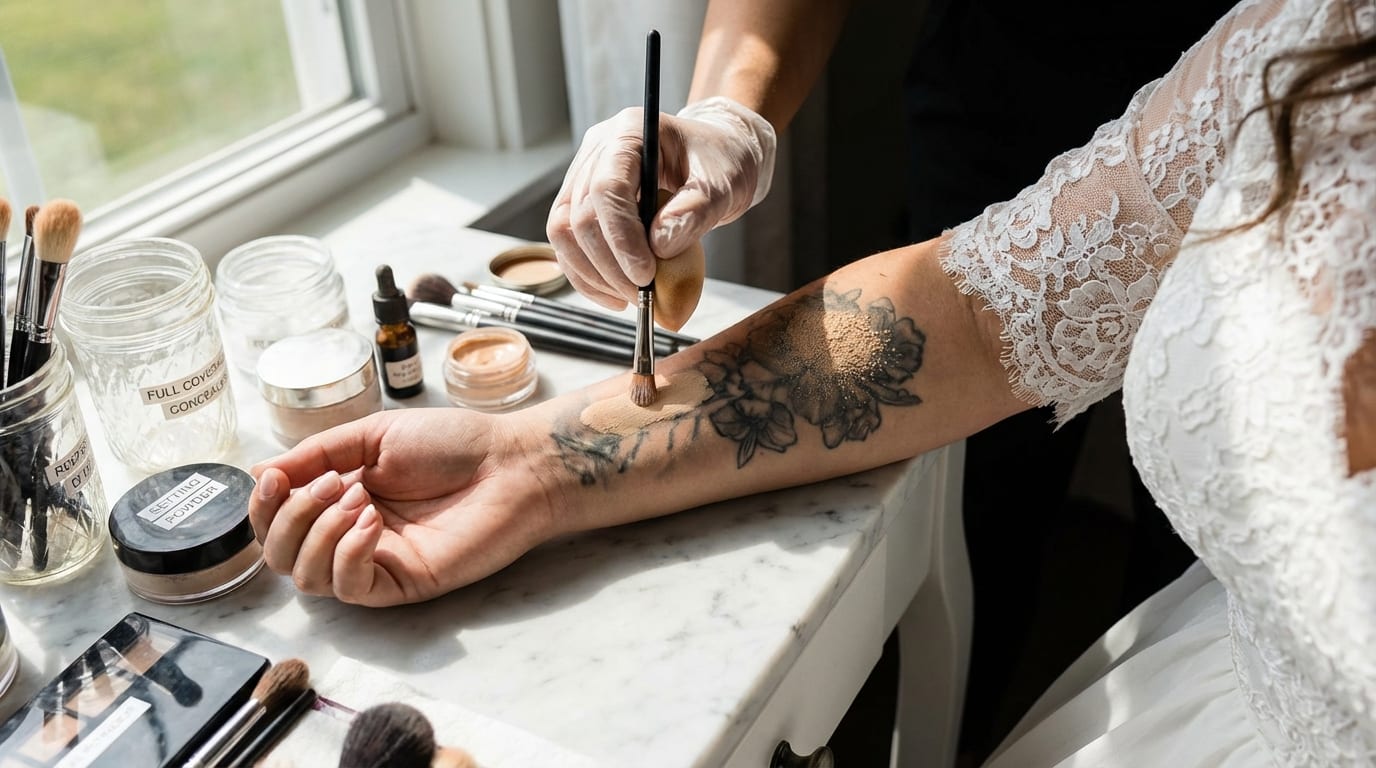
Step 1: Clean and prep the skin. Cleanse the tattooed area with micellar water to remove oils. Apply a thin moisturizer, then a silicone-based primer. This creates a smooth surface for everything that follows.
Step 2: Apply color corrector. This is the step most DIY attempts skip, and it’s the most important one. Use an orange or peach corrector for dark and black ink. Green works for reddish tones. Pat (don’t rub) the corrector over the entire tattoo. As Beauty Brigade LLC notes, stippling with a sponge or brush pushes product into the skin without disturbing the base layer.
Step 3: Layer a lighter concealer. Using a damp beauty blender, stipple a full-coverage concealer one shade lighter than your skin tone over the corrected area. Build in thin layers. Set lightly with translucent powder before moving on.
Step 4: Match with skin-tone foundation. Tap on a waterproof foundation that matches your skin exactly. Blend the edges well beyond the tattoo border so there’s no visible line where coverage ends. An airbrush gives the most natural finish here.
Step 5: Set and seal. Dust translucent powder generously and let it “bake” for five minutes. Brush off the excess. Finish with two coats of a long-wear setting spray, letting each coat dry completely. Then, and only then, get dressed.
How Does Destination Wedding Climate Affect Your Coverage?
Heat, humidity, salt air, and sun exposure all work against tattoo coverage, making product choice and application technique even more important for beach weddings. If you’re planning a Hawaii wedding or a ceremony in Cancun, climate is a factor you can’t ignore.
UV exposure accelerates tattoo fading and complicates healing, as Marine Agency notes, which means a fresh or recently lasered tattoo needs extra protection in tropical sun. Waterproof SPF underneath your coverage adds a layer of defense.
Humidity is the bigger challenge for makeup longevity. Sweat breaks down even heavy-duty products over time. Salt water and chlorine are even more aggressive. If your wedding day includes a pool, ocean, or any water activity, standard concealers will fail. You’ll need alcohol-based or specifically waterproof formulas (like Mehron Tattoo CoveRing or Dermablend) paired with a strong setting spray.
Here are climate-specific tips:
- Tropical beach venues (Cancun, Jamaica, Bali): Use alcohol-based products, skip heavy moisturizer underneath, and carry a touch-up kit. Ask your wedding planner about air-conditioned getting-ready spaces.
- Mediterranean settings (Santorini, Amalfi Coast): Dry heat is kinder to coverage than humidity, but sun glare can highlight texture differences. A mattifying setting spray helps.
- Cooler coastal spots (Key West in winter, Algarve): Wind and cool air can dry out skin and crack coverage. Use a hydrating primer and avoid over-powdering.
Add your coverage routine to your beach wedding checklist so it doesn’t get lost in the shuffle of morning-of logistics.
Should You Hire a Professional Makeup Artist or DIY?
For most couples, hiring a professional with tattoo coverage experience produces better, longer-lasting results than doing it yourself. That said, small and light tattoos can be manageable as a DIY project with practice.
Wedding hair and makeup services average $982 nationally, as Zola notes, with tattoo coverage adding an extra $50 to $100 for specialized products and techniques. Airbrush application, which is ideal for body tattoo coverage, runs $300 to $500 or $75 to $150 extra over traditional methods. Costs vary significantly based on season, guest count, and specific vendors.
Professional tattoo coverage, as Easy Weddings notes, can take up to one hour per tattoo, using multiple layers of color correctors, heavy foundation, airbrush, and waterproof sealer. Not every makeup artist offers this service, so ask specifically about tattoo experience when interviewing vendors.
If you’re going the DIY route, commit to at least three full practice sessions before your wedding. Time yourself. Test against your outfit fabric. Photograph the results in different lighting. And be honest with yourself: if the coverage looks uneven or patchy after multiple attempts, that’s your sign to bring in a pro.
For destination weddings, consider hiring a local artist who understands the climate. A destination wedding photographer can also recommend makeup artists they’ve worked with who handle tattoo coverage well.
How Does Photography Lighting Affect Tattoo Coverage?
Different lighting conditions can either help your coverage blend perfectly or expose it, so coordinating with your photographer matters. Direct flash is the biggest risk factor for revealing covered tattoos.
Neewer notes that direct flash creates glare on skin, especially oily or shiny surfaces, making covered areas more visible. Softboxes or diffusers positioned at 45-degree angles spread light evenly and minimize this problem. Color temperature matters too: lights in the 5000K to 5500K range mimic natural daylight and render skin tones accurately, while warmer or cooler temperatures can tint your coverage and make it look mismatched.
Golden hour (the hour after sunrise or before sunset) is your best friend. The warm, diffused natural light flatters skin and makes coverage virtually invisible. If your ceremony is at midday, overhead sun casts harsh shadows that can reveal tattoo outlines beneath makeup.
Here’s what to do: share your coverage plan with your wedding photographer before the wedding. A quick five-minute conversation about lighting angles and flash settings can save you from surprises in your final gallery. Some photographers will even do a brief test shoot during your makeup trial to check how coverage holds up on camera.
Practice Makes Perfect: Your Pre-Wedding Timeline
Start your tattoo coverage prep four to six weeks before your wedding to give yourself enough time for product testing, skin reaction checks, and full dress rehearsals. As Zola notes, this timeline allows you to try different brands and confirm compatibility with your skin tone and wedding outfit.
6 to 8 weeks out: If hiring a professional, schedule your makeup trial and specifically request tattoo coverage. Test two or three product options. Take photos in natural light and indoor light.
4 weeks out: Practice the full application at home. Time yourself. Tattoo cover-up application requires 30 to 60 extra minutes on the wedding morning, as WeddingsOnline.ie notes, so you need to know exactly how long your specific tattoo takes.
2 weeks out: Do a full dress rehearsal. Put on the coverage, get into your wedding outfit, and wear it for several hours. Check for transfer on fabric. Dance around. Sit down and stand up repeatedly. This is where you’ll catch problems.
Wedding week: Confirm your artist’s arrival time includes buffer for coverage. Pack a touch-up kit with your matching concealer, a small sponge, translucent powder, and setting spray. If you’re at a destination venue, test your products in the local climate as soon as you arrive.
Professional airbrush tattoo coverage can last 12 or more hours with waterproof products, as PriscillaM Beauty notes, but pre-wedding testing in your actual destination climate is the only way to confirm that hold time for your specific situation.
How BeachBride Can Help You Find the Right Vendors
Finding a makeup artist who specializes in tattoo coverage at your destination takes some digging, and that’s where we come in. Whether you need a local wedding planner who knows the best beauty professionals in your destination or a photographer who understands how to light covered skin beautifully, BeachBride connects you with vendors who’ve done this before.
Your tattoo coverage decision is just one piece of the bigger planning puzzle. From choosing accessories that complement (or strategically cover) your ink to finding bridal shoes that work on sand, every detail connects.
Not sure where to start? Take our free BeachBride quiz and tell us about your style, your destination, and what matters most to you. We’ll match you with vendors who get it, including makeup artists experienced in tattoo coverage for beach and destination settings. Your wedding should look and feel like you, tattoos and all, or beautifully covered. Your call.