So you’re planning a wedding in Mexico and wondering how to legally get married in Mexico as an American. Here’s the honest truth that most articles bury: the majority of couples skip the legal process in Mexico entirely. They hold a beautiful symbolic ceremony at their resort and handle the legal paperwork at a courthouse back home. But if you want to make it official on Mexican soil, you absolutely can. This guide walks you through both paths so you can choose what fits your life, your timeline, and your stress tolerance.
Whether you’re eyeing a wedding in Cancun or a barefoot celebration in Tulum, the process is the same across Quintana Roo. Let’s break it all down.
Legal vs. Symbolic: Which Path Do Most American Couples Actually Choose?
The symbolic route wins by a landslide. Romance Travel Group reports that over 80% of all destination weddings are symbolic ceremonies rather than legal ones. One Mexico-focused planner reported that 100% of their clients choose symbolic ceremonies because of the legal hurdles involved.
Why? Legal marriages in Mexico require blood tests done locally, a ceremony conducted entirely in Spanish by a government judge, apostilled documents, certified translations, and arriving 3-5 business days early. That’s a lot of logistics on top of planning a wedding.
With a symbolic ceremony, your resort coordinator, a friend, or a non-denominational officiant leads the celebration. It looks and feels exactly like a wedding. As The Knot forums note, roughly 95% of guests at symbolic Mexico weddings don’t even realize it isn’t the legal event. Most couples quietly sign their marriage license at a US courthouse a few days before or after the trip.
Here’s the important caveat: a symbolic ceremony has zero legal weight. A 2014 court case documented by Justia involved an American couple whose 2010 Tulum resort wedding was ruled invalid under both Mexican and New York law. They had assumed their beach ceremony was binding. It wasn’t. This created real problems around property and taxes.
Bottom line: If you go symbolic, make sure you handle the legal side in the US. If you want the full legal experience in Mexico, keep reading. Our symbolic ceremony guide covers that path in detail.
What Documents Do You Need to Get Legally Married in Mexico?
You need apostilled originals of every key document, translated into Spanish by a certified translator in Mexico. No shortcuts here.
According to the US Embassy in Mexico, here is the full list:
- Valid passports for both partners (at least 6 months validity remaining)
- Original birth certificates with apostille and certified Spanish translation (three copies, per Destination Weddings Blog)
- Tourist card (FMM) obtained at the point of entry into Mexico
- Blood test results from a Mexican lab (more on this below)
- Four adult witnesses (over 18) with valid passports or government ID and tourist cards
- Divorce decree or death certificate (if previously married), apostilled and translated
- Marriage application form from the local Registro Civil
If either partner was previously married, Cabo Platinum notes that some states require the divorce to be finalized at least one year prior. This is a detail that catches people off guard, so check with your specific municipality early.
Requirements vary by state and even by municipality. Always consult your local planner or the US Embassy to confirm current requirements before you start gathering documents.
What Is an Apostille and Why Does It Matter for Your Mexico Wedding?
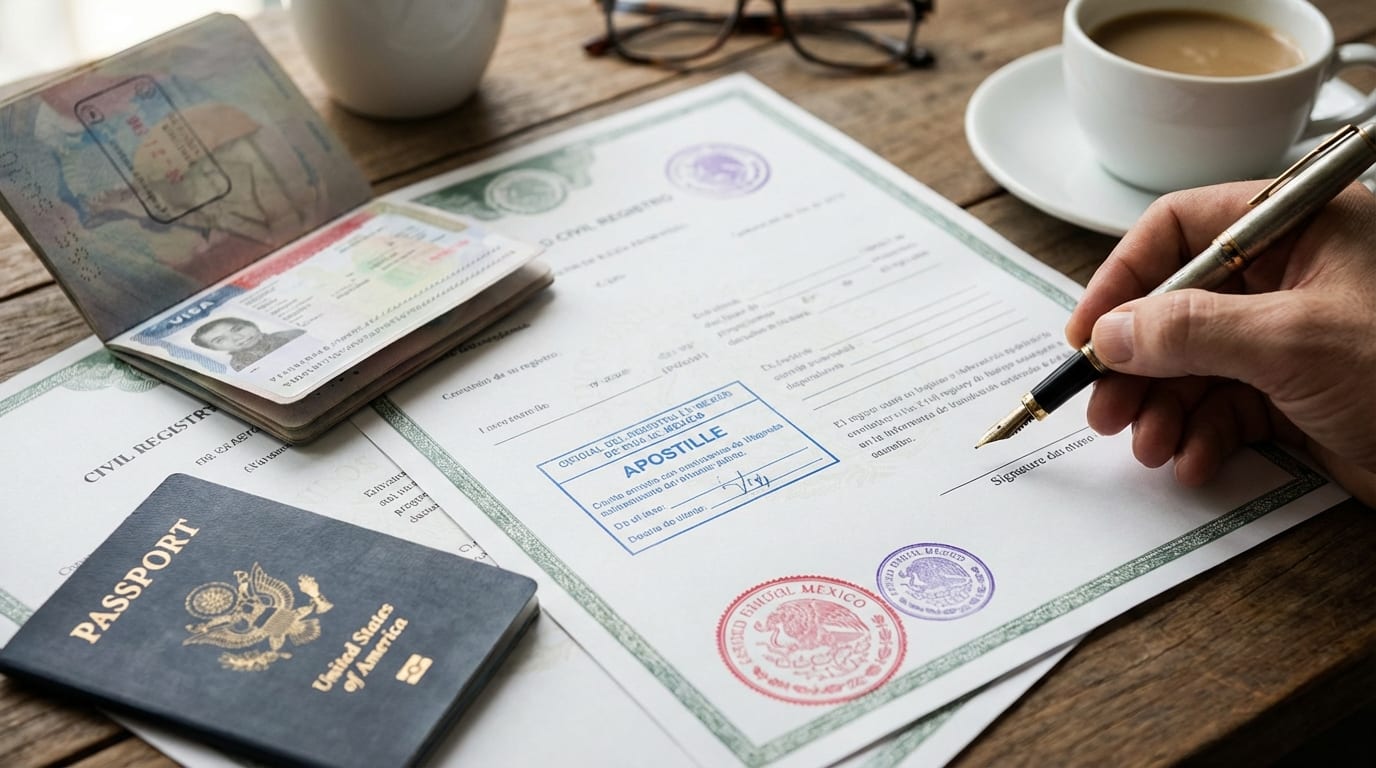
An apostille is a standardized certificate that authenticates the origin of a public document for international use. Without one, your US birth certificate is just a piece of paper to a Mexican civil registry.
Here’s how it works. The US and Mexico are both members of the 1961 Hague Apostille Convention. This means a document apostilled in the US is automatically recognized in Mexico without further legalization. As One Source Process notes, you need one apostille per document, issued by the Secretary of State in the state where the document was originally issued.
For example, if you were born in Texas but live in California, your birth certificate apostille comes from the Texas Secretary of State. Not California. Not the federal government.
Processing times vary. Some states turn apostilles around in a week. Others take 6-8 weeks. Momentos Los Cabos recommends starting this process at least 10-12 weeks before your wedding date. That buffer protects you from delays.
After apostilling, each document needs a certified Spanish translation done by a licensed translator in Mexico. Your resort’s wedding coordinator or a local planner in Cancun can connect you with trusted translators.
One common mistake: using a hospital keepsake birth certificate. Only official vital records versions from your state qualify for an apostille, as Reloca notes. Order a certified copy from your state’s vital records office if you don’t already have one.
How Does the Civil Registry Ceremony Actually Work?
The ceremony itself is the easy part. It’s a 30-45 minute proceeding conducted entirely in Spanish by a government-appointed Registro Civil officer.
You and your partner stand before the officer with your four witnesses. The officer reads portions of the Mexican Civil Code, including the rights and obligations of marriage. You both say “sí” (yes) at the appropriate moments. If neither of you speaks Spanish, you’ll need a certified interpreter present, which your planner can arrange.
The ceremony can take place at the registry office or at an off-site location like your resort or the beach, as Paradise Weddings notes. Off-site ceremonies cost more and typically need to be scheduled at least 14 days in advance.
After the ceremony, you receive your Mexican marriage certificate (acta de matrimonio). This document is legally valid, but you’ll want to have it apostilled in the Mexican state where you married and translated into English before returning to the US. That step ensures smooth processing for name changes, tax filing, and insurance updates.
A few things that surprise couples: the officer may ask personal questions during the pre-ceremony interview (it’s routine, not an interrogation). The ceremony itself feels formal and bureaucratic compared to the romantic celebration you might picture. Many couples choose to have both: a civil ceremony for the legal piece and a separate symbolic ceremony for the emotional, personalized celebration with their guests.
Getting Married in Quintana Roo: Cancun, Tulum, and the Riviera Maya
Quintana Roo is where the vast majority of American destination weddings in Mexico happen. The Riviera Maya stretches from Cancun down through Playa del Carmen and Tulum, offering everything from all-inclusive mega-resorts to intimate jungle venues.
Here’s what’s specific to Quintana Roo:
Luxelope confirms that Quintana Roo allows legal same-sex marriages, making it a welcoming option for LGBTQ+ couples. Blood tests must be completed at least three business days before the ceremony and no more than seven business days before, which is a tighter window than the 15-day rule in other states.
The 300-day remarriage restriction for women who were previously married is unique to Quintana Roo law, as Mexperience notes. Medical documentation can waive this, but it’s something to plan for if it applies to you.
| Requirement | Quintana Roo Specifics | General Mexico |
|---|---|---|
| Blood test window | 3-7 business days before ceremony | Up to 15 days before |
| Off-site ceremony fee | Varies by municipality | |
| Registry office fee | Varies by municipality | |
| Witnesses required | 4 adults with valid ID | 4 adults with valid ID |
| Same-sex marriage | Legal | Legal nationwide since 2015 |
| Remarriage waiting period | 1 year (300 days for women) | Varies by state |
| Advance arrival | 3-5 business days | 3-5 business days |
Costs vary significantly based on season, guest count, and specific vendors. Confirm current fees with your local Registro Civil.
If you’re looking for a wedding planner in Tulum who specializes in legal paperwork coordination, that’s one of the smartest investments you can make for this process.
What Does It Cost to Get Legally Married in Mexico?
The legal fees themselves are surprisingly affordable. It’s the supporting costs that add up.
The Destination Weddings Blog notes that a registry office ceremony runs about 520 MXN ($26 USD), while an off-site ceremony at a resort or beach costs approximately 1,299 MXN ($65 USD). The US Embassy lists an immigration marriage permit at approximately 2,658 MXN (~$130 USD) if one partner is a Mexican national.
Here’s a realistic cost breakdown for the legal process:
| Expense | Estimated Cost (USD) |
|---|---|
| Apostille per document (varies by state) | $10-$50 each |
| Certified Spanish translations | $50-$100 per document |
| Blood tests and medical exams (per person) | $200-$300 |
| Civil ceremony fee (off-site) | $65-$400 |
| Certified interpreter (if needed) | $100-$300 |
| Total estimated legal costs | $500-$1,500 per couple |
Costs vary significantly based on season, guest count, and specific vendors. These are estimates based on 2025-2026 pricing and may change.
For context on overall destination wedding costs, the legal fees are a small fraction of the total budget. But they do require time and attention that many couples prefer to spend on other details. That’s a big reason the symbolic route is so popular.
How Far in Advance Do You Need to Start Your Paperwork?
Start at least 3-4 months before your wedding date if you’re going the legal route. For symbolic-only ceremonies, 1-2 months is plenty.
Here’s the timeline that works, broken into phases:
10-12 weeks out: Order certified copies of birth certificates from your state vital records office. Submit apostille requests to the appropriate Secretary of State. This is the step most couples underestimate, as Momentos Los Cabos notes.
8 weeks out: All apostilled documents should arrive at your destination or with your planner. This gives time to arrange certified Spanish translations in Mexico.
2 weeks out: Schedule your off-site civil ceremony with the Registro Civil if you haven’t already. Confirm your four witnesses and their travel documents.
3-5 business days before the ceremony: Arrive in Mexico. Complete blood tests at a local lab. Submit your paperwork to the Registro Civil. Attend any required interviews. Weekends and Mexican holidays do not count toward this window, so plan accordingly.
Your beach wedding checklist can help you track these milestones alongside all your other planning tasks.
Do You Need a Blood Test to Get Married in Mexico?
Historically, yes. Most Mexican states require blood tests for HIV, STDs, and blood type as part of the legal marriage process.
According to the US Embassy in Mexico, prenuptial medical exams must be performed in Mexico and issued no more than 15 days before the ceremony. Tests from the US or any other country are not accepted. Destination Weddings Blog estimates costs at $200-$300 USD per person, with results typically available within 24 hours.
Here’s an important note for 2026: some states, including parts of Quintana Roo, have been relaxing or waiving blood test requirements for tourist couples in recent years. This is an evolving situation. Do not assume the requirement has been dropped. Confirm with your specific municipality’s Registro Civil or your local wedding planner before making plans. Requirements change, and what applied last year may not apply this year.
Some states also require chest X-rays in addition to blood work. Again, this varies. Your planner will know exactly what your municipality currently requires.
How BeachBride Can Help You Navigate the Whole Thing
We built BeachBride because planning a destination wedding shouldn’t feel like filing international tax returns. Whether you choose the legal route or the symbolic path, we connect you with planners, venues, and vendors who have done this hundreds of times.
For legal ceremonies in Mexico, a local planner is worth every penny. They coordinate with the Registro Civil on your behalf, arrange certified translators, schedule your blood tests at a reputable lab, and make sure your four witnesses show up with the right documents. They know which officer is working that week and whether the municipality has any quirks you won’t find on a government website.
For symbolic ceremonies, the process is simpler, but you still want someone who understands the local vendor landscape, knows which resorts offer the best ceremony packages, and can help you create a celebration that feels personal rather than cookie-cutter.
Here’s what we’d suggest as your next step: take our free quiz. It takes about two minutes, and we’ll match you with vetted planners and venues in Cancun, Tulum, the Riviera Maya, or Los Cabos based on your style, budget, and guest count. No pressure, no spam. Just a starting point that actually makes sense for your situation.
You’ve already done the hard part: deciding to get married somewhere beautiful. Let us help with the rest.
Legal requirements for marriage in Mexico change periodically. This article reflects information available as of early 2026. Always consult your local wedding planner or the US Embassy in Mexico to confirm current requirements for your specific municipality. Cost estimates are approximate and vary significantly based on season, guest count, and specific vendors. BeachBride does not provide legal advice.