A seas the day wedding is what happens when you stop trying to recreate a ballroom on the sand and start building a celebration around the ocean itself. It’s part destination wedding, part shared vacation, and entirely built on the idea that the best backdrop you can buy is one nature already made. If you’ve been drawn to the phrase and the vibe behind it, this guide will show you how to pull it off with real costs, specific destinations, and design choices that feel polished rather than party-store.
What Is a “Seas the Day” Wedding (and Why It Works So Well for Destination Celebrations)?
It’s a coastal destination wedding that treats the ocean setting as the main event, not just a photo backdrop. The name riffs on “seize the day,” and the philosophy matches: prioritize the experience, keep the guest list intentional, and let the shoreline set the tone.
This approach works especially well for destination celebrations because of how naturally it aligns with the format. The average destination wedding hosts about 48 guests, compared with 144 for a local wedding, which means fewer logistics and more quality time with the people who actually made the trip. Couples frequently choose destinations because they want to combine the wedding and honeymoon into one shared experience, and a seas the day framework leans into that instinct instead of fighting it.
That said, a beach ceremony is not automatically simple. Beaches Resorts recommends planning for shade, a sound system, and a backup indoor or covered option for every beach wedding. Wind, tides, and public-beach permit rules all shape what’s possible. The couples who love their seas the day weddings are the ones who planned with the environment instead of against it.
If you’re just starting to explore the idea, our destination wedding guide walks through the full planning process from engagement to “I do.”
What Factors Shape the Look and Feel of a Nautical Beach Wedding?
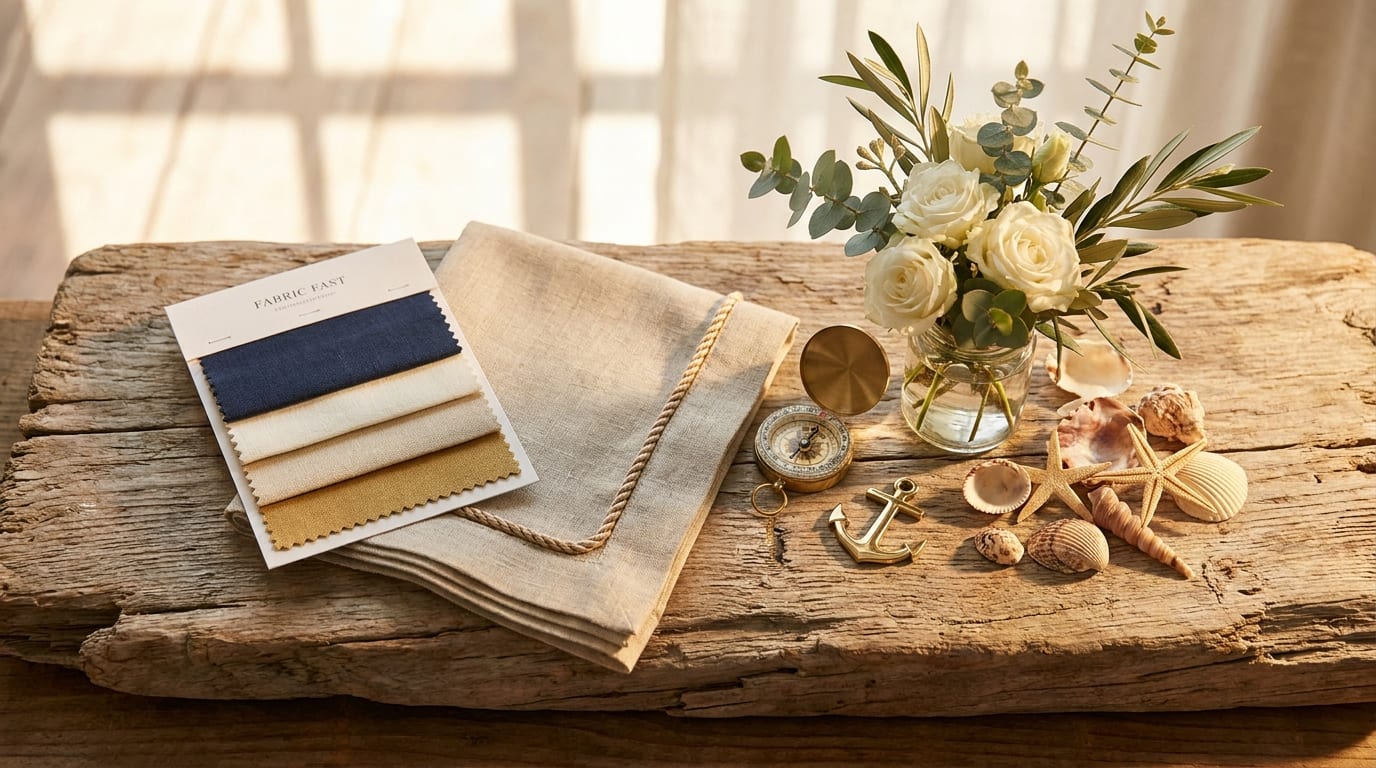
Five things determine whether your wedding reads as “elevated coastal” or “themed party”: weather, regulations, guest comfort, tides, and the venue itself.
Weather and seasonality affect everything from your color palette to your fabric choices. Atlantic hurricane season runs June through November, which pushes many Caribbean and Gulf Coast couples toward winter or spring dates. Heat and humidity in tropical destinations naturally steer you toward clean lines, low-profile florals, and breathable fabrics rather than heavy draping or tall centerpieces.
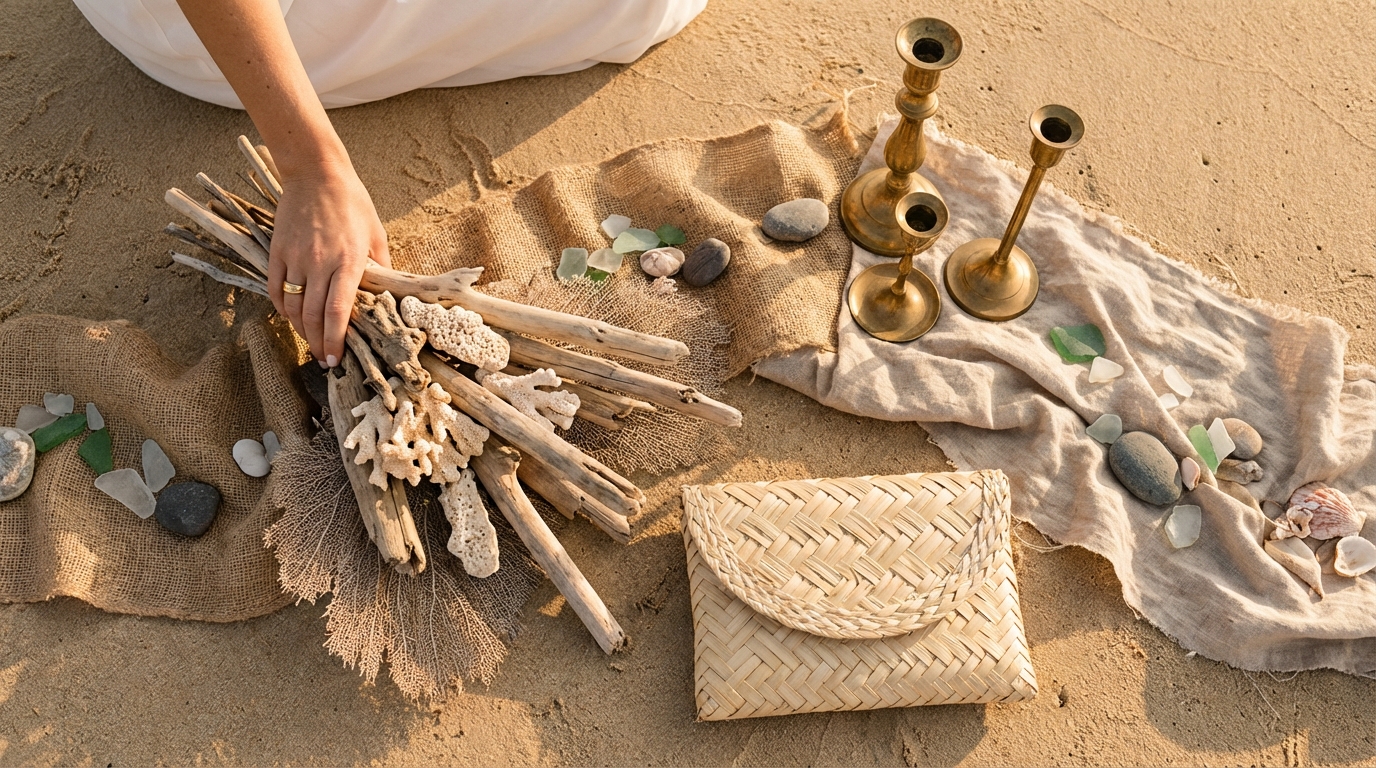
Beach access rules shape your design more than you might expect. Many public beaches restrict staking into sand, open flames, amplified sound, and non-biodegradable decor. Hawaii’s DLNR requires permits for commercial events on state beaches, and Florida coastal counties commonly ban glass containers and balloons. These restrictions actually help your aesthetic: they push you toward weighted arches, lanterns, driftwood accents, and freestanding signage that look more intentional than a pile of plastic props.
Guest comfort becomes a design element on the beach. Sand makes stilettos impractical, so Zola’s beach attire guidance recommends flowy dresses, linen, and wedges. Fans, parasols, and water stations aren’t just practical; they become part of the visual story.
Tides and daylight determine your ceremony layout. A ceremony at low tide looks dramatically different than one at high tide, and coastal photographers recommend scheduling outdoor portraits 20 to 30 minutes before sunset for the softest light. Work backward from golden hour to build your entire day-of timeline.
The venue itself is your biggest design decision. A naturally beautiful beachfront terrace or oceanview restaurant needs almost nothing added. Minimalist wedding guidance from Bella Bridesmaids stresses that raw, unadorned spaces are ideal for elevated celebrations because the setting does the work.
Which Destination Is Best for a Seas the Day Wedding?
The best destination depends on three things: how easy you want the legal process, how far your guests can travel, and the specific coastal vibe you’re after.
Here’s how the most popular options compare:
| Destination | Vibe | Legal Ease (for U.S. couples) | Hurricane Risk | Best Season |
|---|---|---|---|---|
| Hawaii | Lush tropical, volcanic coastline | Simple (U.S. state) | Low | April - October |
| Key West | Laid-back, colorful, intimate | Simple (U.S. state) | Moderate (Jun-Nov) | December - May |
| Cancun / Tulum | Turquoise Caribbean, Mayan ruins | Moderate (blood tests, witnesses) | Moderate (Jun-Nov) | November - April |
| Santorini | White-washed cliffs, Mediterranean blue | Moderate (paperwork-heavy) | None | May - October |
| Turks and Caicos | Pristine sand, ultra-clear water | Moderate (residency period) | Moderate (Jun-Nov) | November - May |
| Amalfi Coast | Dramatic cliffs, Italian elegance | Moderate (civil requirements) | None | May - September |
U.S. destinations like Hawaii and Key West eliminate passport requirements for American guests and keep marriage-license logistics straightforward. The Knot lists multiple U.S. beach destinations among its top picks for exactly this reason.
Caribbean and Mexico offer classic turquoise water at lower price points, but legal ceremonies abroad involve extra steps. In Quintana Roo (Cancun and the Riviera Maya), you’ll typically need blood tests done in Mexico, four witnesses with IDs, and arrival three to four business days before a civil ceremony. Many couples opt for a symbolic beachfront ceremony abroad and handle the legal paperwork at home. The U.S. State Department advises checking country-specific marriage laws well in advance.
Mediterranean picks like Santorini and the Amalfi Coast trade tropical warmth for dramatic coastal architecture. They’re ideal if your seas the day vision leans more “whitewashed terrace overlooking the Aegean” than “toes in the sand.”
No matter where you land, consult the local tourism board or a destination wedding planner to confirm current permit and legal requirements. Rules change, and a local expert saves you from surprises.
How Much Does a Nautical Destination Wedding Actually Cost?
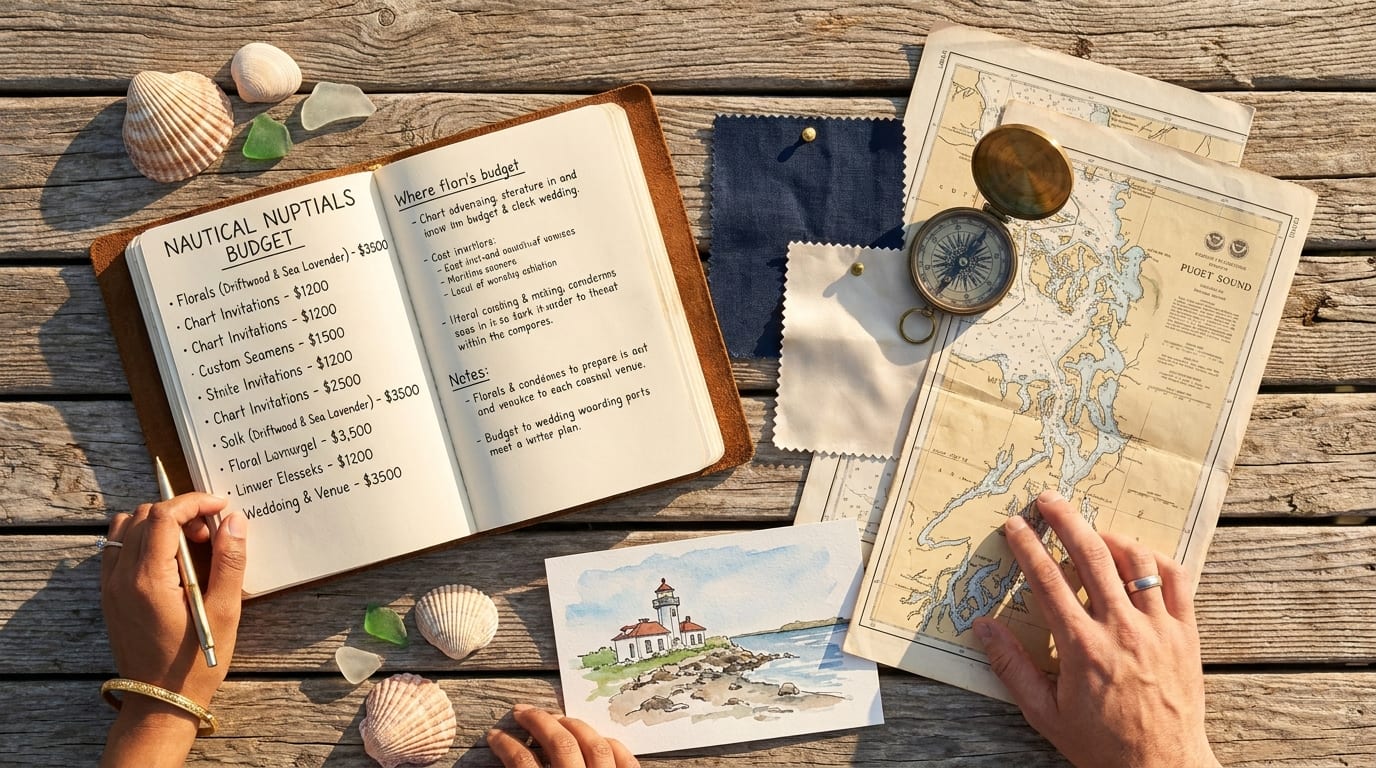
A nautical destination wedding typically costs between $10,000 and $40,000, depending on location, guest count, and how much you customize beyond a resort package.
The range is wide because the data sources measure different things. The Knot’s 2025 study puts the average destination wedding at $39,000, while DestinationWeddings.com reports that couples using their platform spend under $10,000 on average for the entire wedding experience. The gap reflects the difference between a fully custom celebration and a resort package with a smaller guest list.
Here’s a realistic budget breakdown based on Eden Photo & Film’s destination wedding cost guide:
| Category | Estimated Range |
|---|---|
| Venue & ceremony | $3,000 - $7,000 |
| Reception & catering | $5,000 - $10,000 |
| Couple’s travel & accommodation | $4,000 - $8,000 |
| Vendors (photo, video, music) | $4,000 - $8,000 |
| Decor & flowers | $1,500 - $4,000 |
| Legal/paperwork | $200 - $500 |
| Miscellaneous | $500 - $2,000 |
| Total | $18,200 - $39,500 |
Per-guest costs also shift by location. International destinations generally cost more per head than continental U.S. ones once travel and logistics are factored in.
Your guests will have their own expenses too. Couples on Paradise Weddings report that guests spend roughly $1,400 on accommodation and $600 on flights, totaling around $2,000 per person. That’s worth factoring into your guest communication strategy.
For a deeper breakdown, our destination wedding cost guide covers every line item.
Costs vary significantly based on season, guest count, and specific vendors. The figures above are averages and ranges from industry studies, not guarantees.
Trip Protection for Your Wedding Party
Cover flights, hotels, and medical emergencies for your entire guest list. Cancel-for-any-reason options ideal for destination weddings.
A+ rated insurer. Group plans available for wedding parties.
Compare PlansHow Do You Pull Off the Aesthetic Without It Looking Like a Party Store?
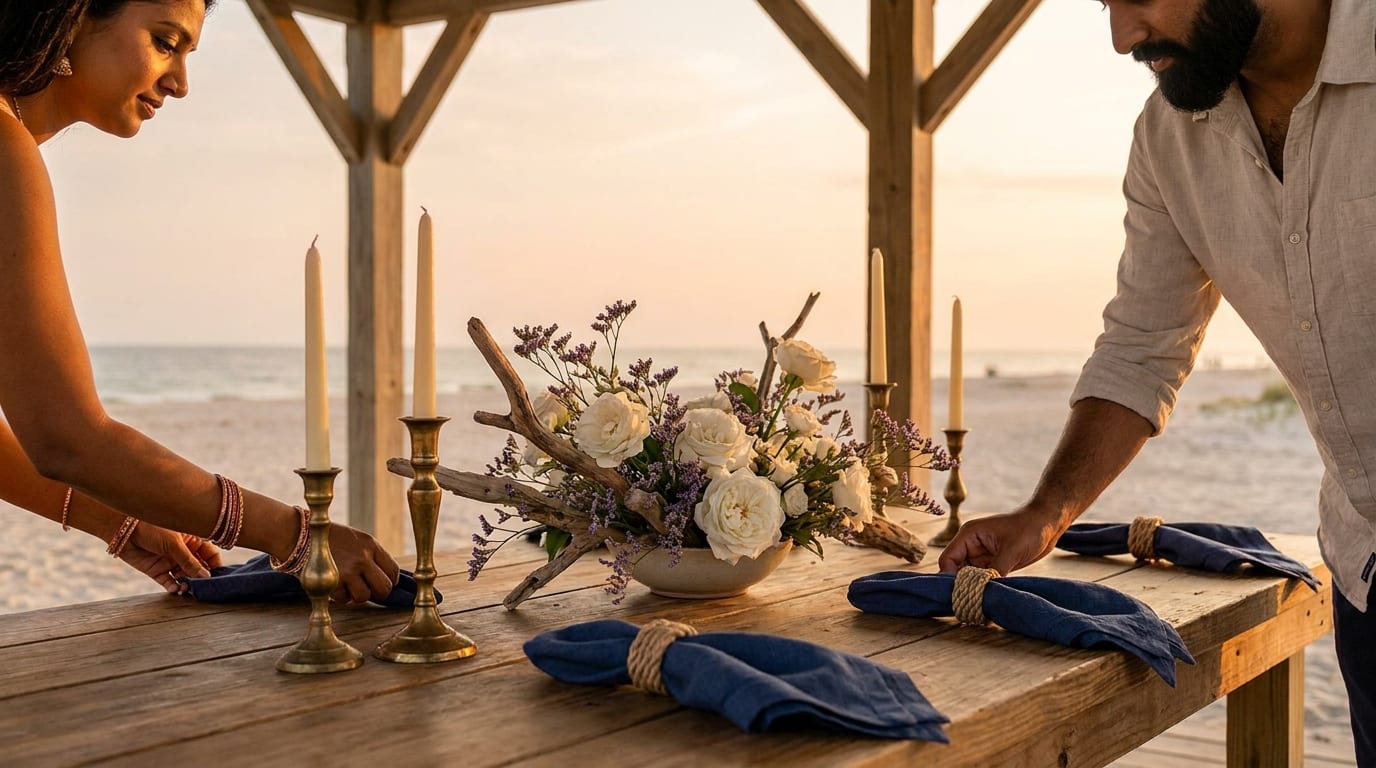
Restraint. One or two subtle nautical motifs paired with natural textures will always look better than a table full of plastic anchors.
The Knot’s beach wedding guide recommends focusing on “one or two subtle nautical motifs” and leaning on natural elements like linen, seagrass, and driftwood. WeddingWire takes a similar stance, advising couples to limit ceremony decor to an altar or arch, aisle markers, and a sign or two because the ocean is already your main visual.
Here’s the cheat sheet for elevated vs. kitschy:
Elevated: Rope-wrapped pillar candles, a driftwood ceremony arch, linen table runners in sand tones, navy napkins with a single sprig of eucalyptus, menus printed on textured card stock.
Kitschy: Plastic starfish scattered on every table, anchor confetti, turquoise tulle draped over folding chairs, a “seas the day” banner printed on a bedsheet.
A few specific strategies that work:
Invest in candles over props. Experienced couples on r/weddingplanning consistently recommend groupings of cylinder vases with floating candles as one of the highest-impact, lowest-cost upgrades. Layered candlelight transforms even a basic reception space.
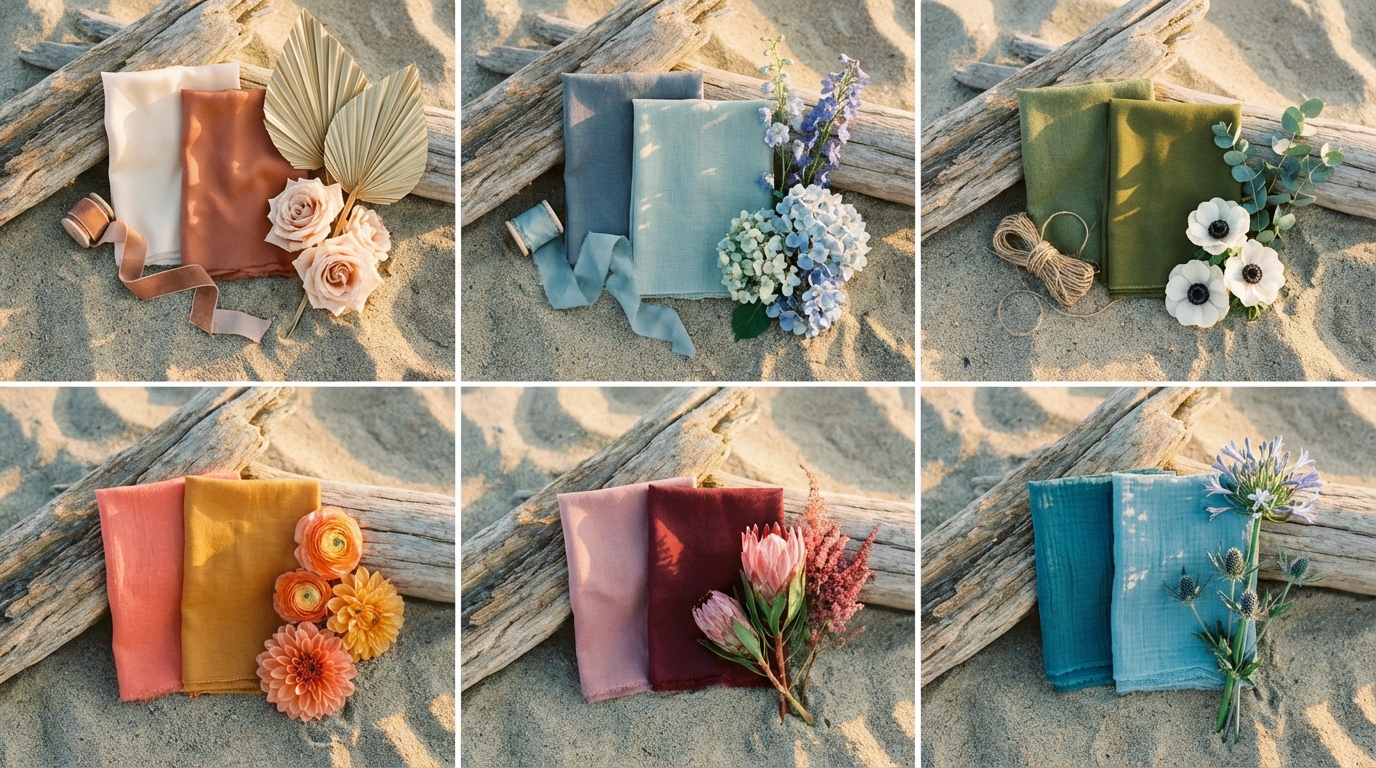
Keep the palette tight. Bella Bridesmaids notes that a neutral color scheme (white, ivory, beige, soft gray, muted pastels) reads as more elevated than saturated tropical colors. For a nautical spin, add navy and one accent. That’s it.
Let local regulations guide you. Many beaches ban non-biodegradable items, glass, and open flames. Visit South Walton’s beach rules prohibit discarding glass containers and regulate structures on the sand. Working within these limits naturally pushes you toward fewer, sturdier, higher-quality pieces. The result looks intentional, not restricted.
Spend on the venue, save on the stuff. A beachfront terrace with an ocean view needs almost nothing added. One of the most upvoted tips in wedding planning forums is to stretch your budget on the setting itself, because a beautiful space requires minimal decoration.
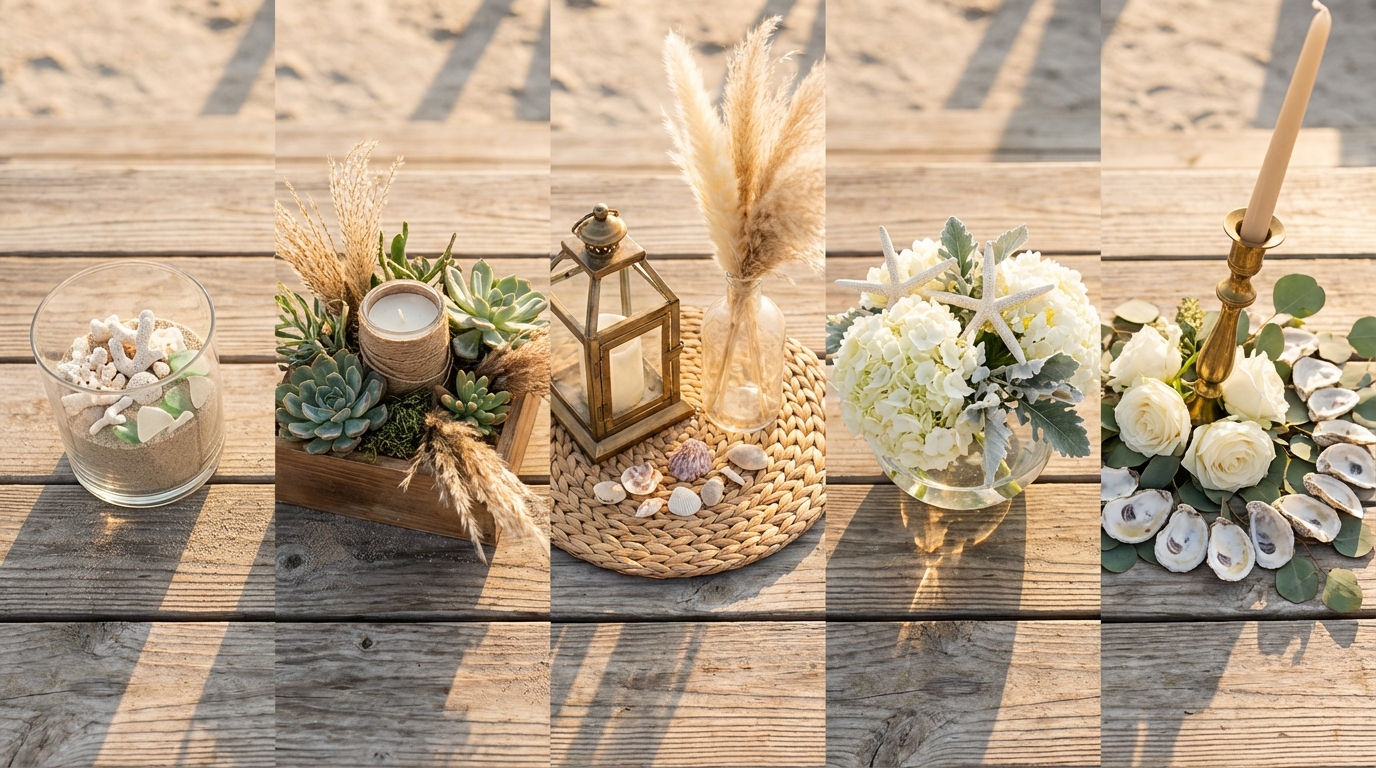
For more ideas, check out our guides to beach wedding centerpieces and tabletop decor.
What Should Be on Your Seas the Day Wedding Planning Timeline?
Start 12 to 18 months before your date, especially if you want a peak-season Saturday at a popular coastal venue.
Here’s a condensed timeline built around the realities of destination beach weddings:
12-18 months out: Choose your destination. Decide whether you want a legal ceremony abroad or a symbolic one with legal paperwork at home. Book your venue and local wedding planner if you’re using one. Start researching permit requirements.
9-12 months out: Send save-the-dates. Sun and Sea Beach Weddings recommends this timeline for destination weddings so guests can book flights and request time off. Set up your wedding website with travel details, hotel options, and dress code guidance.
6-9 months out: Send formal invitations. The Oviatt’s planning guide recommends six months for destination weddings with international guests. Confirm beach permits, finalize your vendor team (photographer, florist, DJ or musician), and lock in your room block. Our beach wedding checklist covers every task in detail.
3-6 months out: Finalize your ceremony time by working backward from sunset. A wedding photographer’s guide suggests finishing outdoor portraits 20 to 30 minutes before sunset. Confirm legal requirements: in Florida, marriage licenses are valid for 60 days; in Mexico’s Quintana Roo, you’ll need to arrive three to four business days early for blood tests and civil judge scheduling.
1 month out: Confirm all vendor contracts, finalize your day-of timeline, and send a detailed itinerary to your wedding party. Check the tide chart for your ceremony date and adjust setup timing if needed.
Week of: Do a site walkthrough. Confirm your weather backup plan. Breathe. You planned for this.
Save the Dates from Minted
Photo save the dates, magnets, and postcards designed by independent artists. Order 6+ months out for best price tiers and free recipient addressing.
Free guest address printing on orders 50+.
Browse Save the DatesHow BeachBride Can Match You With the Right Vendors
Planning a wedding in a place you don’t live is the core challenge of every destination celebration. You need vendors who know the local permit rules, understand the weather patterns, and have actually worked on that specific stretch of coastline before.
That’s where we come in. BeachBride matches you with vetted local vendors based on your destination, budget, guest count, and style. Whether you need a wedding planner in Cancun, a photographer in Santorini, or a florist in Hawaii, we connect you with professionals who already know the terrain.
Budget is one of the top decision factors when hiring wedding vendors, and destination pricing varies wildly by market and season. A vendor who’s perfect for a 20-person elopement on a quiet beach may not be the right fit for a 75-guest resort celebration. We filter for operational compatibility, not just pretty portfolios.
The fastest way to get started? Take our free quiz. You’ll answer a few questions about your vision, and we’ll match you with vendors who fit your specific celebration. No generic directories. No guessing. Just the right people for your seas the day wedding, wherever the tide takes you.