Croatia has quietly become one of Europe’s most sought-after spots for a destination wedding. With over 1,200 islands, nearly 1,800 km of Adriatic coastline, and UNESCO-listed cities that look like they were built for wedding photos, it’s easy to see why. But the Instagram aesthetic only tells half the story. This guide breaks down real costs, region-by-region venue options, legal requirements, and honest comparisons to other European hotspots so you can plan your Croatia celebration with confidence.
If you’re new to planning abroad, our destination wedding guide covers the universal basics. This article goes deep on everything specific to Croatia.
Why Croatia Is Having a Major Moment as a Wedding Destination
Croatia’s rise isn’t just about pretty coastlines. The country recorded 20.6 million tourist arrivals and 108 million overnight stays in its pre-pandemic peak year of 2019, building the kind of hospitality infrastructure that makes international weddings genuinely easy to pull off. That tourism boom has a direct ripple effect: more bilingual vendors, better airport connections, and venues that understand what foreign couples expect.
The wedding industry has noticed. A leading Croatia-based planner reported receiving roughly 50% more foreign-wedding inquiries year-on-year, describing interest as “definitely booming.” And the climate cooperates: coastal Croatia enjoys over 2,300 hours of sunshine annually, giving couples a long, reliable outdoor-wedding season from May through early October.
Then there’s value. Several independent travel outlets highlight Croatia as strong value compared with Italy or France, citing lower local costs for accommodation, food, and services while still delivering a Mediterranean luxury feel. You get the stone-walled terraces, the turquoise water, and the vineyard dinners without the price tag of the Amalfi Coast or Provence.
What Makes a Croatia Wedding Different From Other European Destinations?
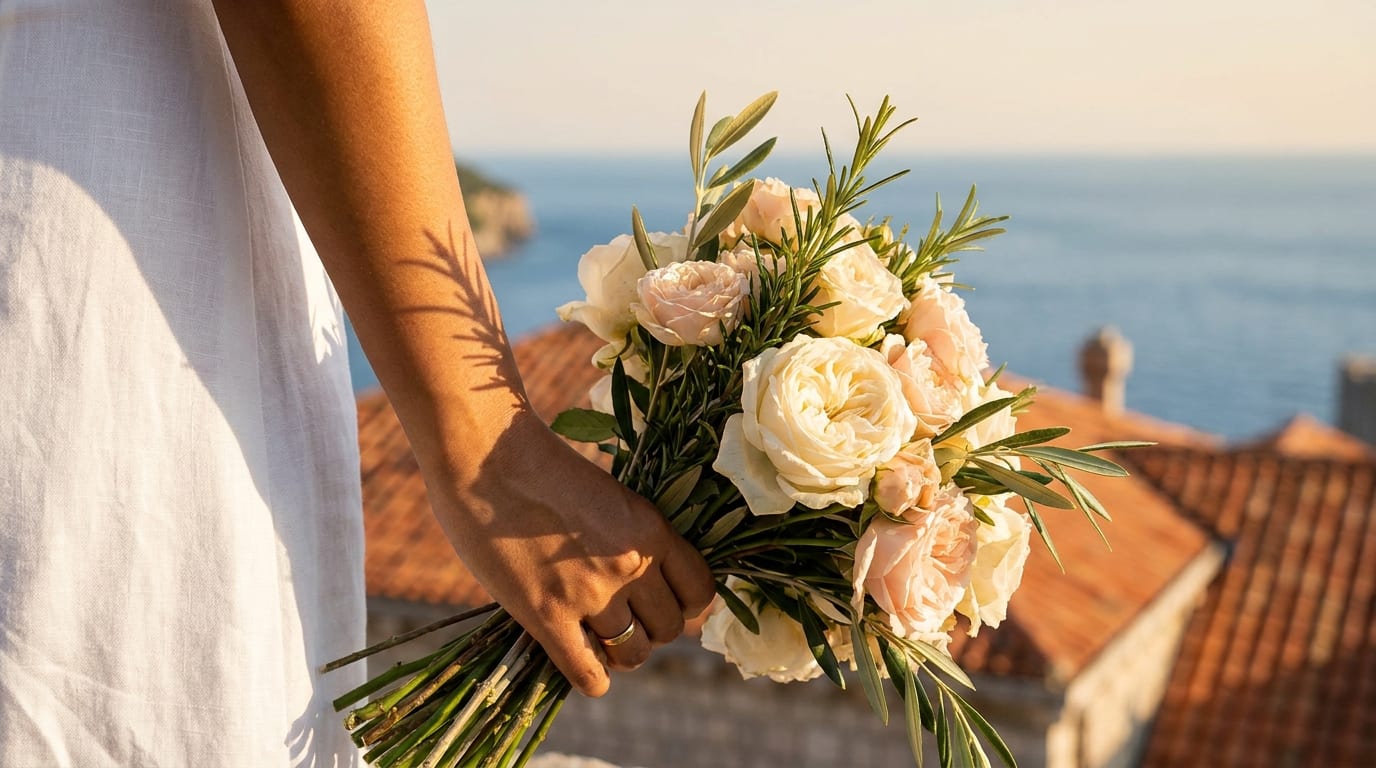
Croatia offers a combination of coast, islands, and wine country that’s hard to match anywhere else in Europe at this price point.
Unlike single-focus regions (the Amalfi Coast is all coastline, Tuscany is all countryside), Croatia packs Italian-style hilltop villages and Greek-style islands within a few hours’ drive or ferry of each other. Istria, the country’s largest peninsula, is frequently called “the Tuscany of Croatia” for its vineyards, olive groves, and medieval hill towns. Meanwhile, Dalmatia delivers walled cities, fortress venues, and island beach clubs. You can design a multi-day celebration (welcome dinner on an island, vineyard ceremony, city brunch) without crossing a single border.
The cultural flavor is different, too. Traditional Croatian weddings commonly stretch across two to three days, with dancing that continues until 5 or 6 a.m. and a 2 a.m. tradition where guests personally present gifts to the couple. You don’t need to adopt every local custom, but weaving in a few gives your celebration a sense of place that a generic hotel ballroom never could.
Croatia also sits in the EU and the Schengen Area (since 2023), which simplifies travel for European guests. For American guests, no visa is needed for stays under 90 days. And the country switched to the euro in 2023, eliminating the old currency-conversion confusion that plagued earlier planning guides.
Where Should You Get Married in Croatia? A Region-by-Region Breakdown
Your choice of region shapes everything from your budget to your guest experience. Here’s an honest look at the main options.
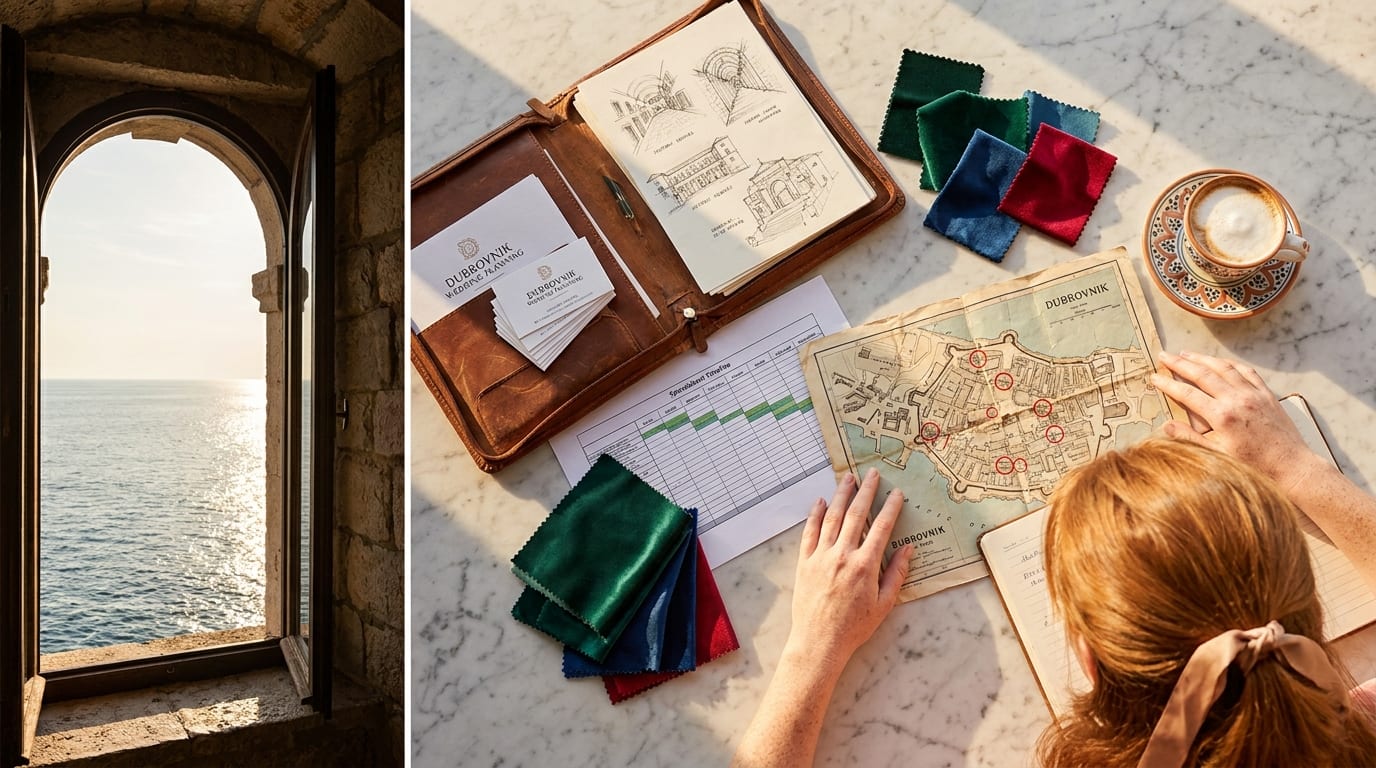
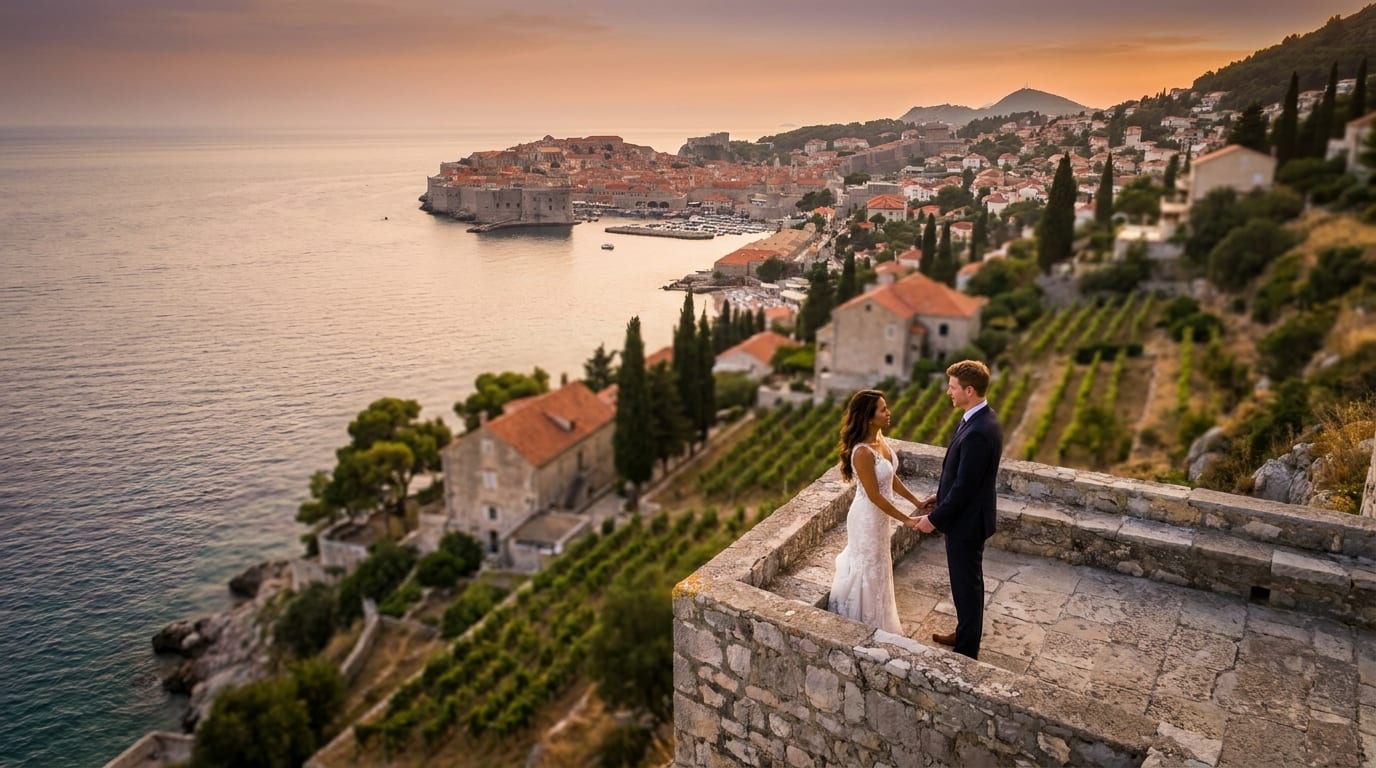
Dubrovnik is Croatia’s most famous wedding city. The Old City is a UNESCO World Heritage Site inscribed in 1979, and venues like Sponza Palace and the Lazareti offer backdrops you’ve seen in a hundred films. The trade-off? Dubrovnik is notoriously more expensive than other places on the Adriatic coast, and the county recorded nearly 2 million tourist arrivals in 2023 alone. If you’re drawn here, our Dubrovnik wedding planner guide walks you through finding the right local help.
Split and Central Dalmatia offer a strong middle ground. Split Airport handled over 3.3 million passengers in 2023, making it Croatia’s primary international gateway for the central Adriatic. The city’s Diocletian’s Palace is itself a UNESCO World Heritage Site, and Split serves as the jumping-off point for islands like Hvar, Brač, and Vis.
Hvar records roughly 2,700+ hours of sunshine per year, earning its reputation as Croatia’s sunniest island. It’s consistently listed among the top three Croatian wedding locations alongside Dubrovnik and Split, with options ranging from fortress venues to beach clubs and monastery courtyards.
Šibenik is the only city in Croatia with two UNESCO World Heritage Sites (St. James Cathedral and St. Nicholas Fortress), yet it comes with lower prices and fewer crowds than Dubrovnik. Zadar, one of Croatia’s oldest continuously inhabited cities, offers similar value.
Istria is the pick for couples who want wine-country vibes. The region clusters venues around Rovinj, Poreč, and Pula, plus inland hill towns surrounded by vineyards and olive groves. Pula Airport is smaller (around 780,000 passengers in 2023), but Istria is easily reachable by road from Slovenia, Italy, and Austria, which is a real advantage if many of your guests are driving from elsewhere in Europe.
Vis and Korčula are for couples who want seclusion. Vis is marketed by planners as a “well-kept secret” with fewer tourists than Hvar or Brač, while Korčula offers a highly scenic but less overdone island setting.
How Much Does a Destination Wedding in Croatia Cost?
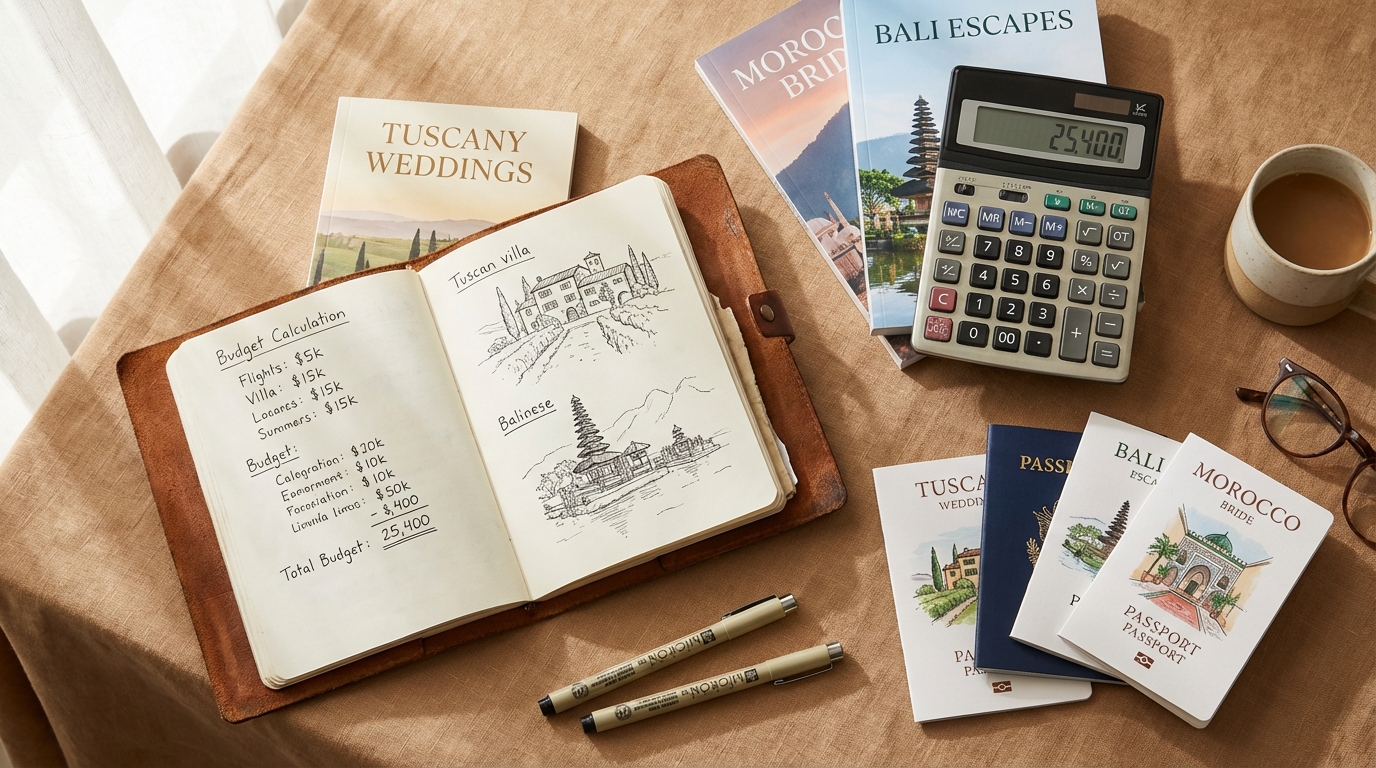
A mid-range destination wedding in Croatia for 50 to 60 guests typically falls between €15,000 (about $17,000) and €35,000 (about $40,000), depending on region, season, and style. That’s a wide range, so let’s break it down.
One Croatian planner publishes detailed average budgets by guest count: roughly €20,000 (about $23,000) for 20 guests, €35,000 (about $40,000) for 50 guests, and €70,000 (about $80,000) for 100 guests. Another planner states that the average cost falls between €35,000 (about $40,000) and €100,000 (about $114,000), with the high end reflecting luxury Dubrovnik and Hvar celebrations. For a deeper look at how these numbers compare globally, see our destination wedding cost breakdown.
Here’s where the money actually goes:
| Budget Category | Typical Range (EUR) | Notes |
|---|---|---|
| Venue rental | €2,000 - €10,000 (about $2,300 to $11,500) | Island and historic venues at the top end |
| Food per guest | €110 - €300 (about $130 to $340) | Higher on Hvar and in Dubrovnik |
| Beverages per guest | €100 - €250 (about $110 to $290) | Open bar vs. limited packages |
| Photography (full day) | €2,500 - €10,000 (about $2,800 to $11,500) | Elopement coverage starts around €900 (about $1,000) |
| Videography | €2,500 - €10,000 (about $2,800 to $11,500) | Often bundled with photography |
| Florals & rentals | €7,000 - €15,000+ (about $8,000 to $17,000) | Biggest variable after catering |
| Wedding planner | €600 - €8,000 (about $680 to $9,100) | Partial coordination vs. full-service |
| Music (DJ or band) | €800 - €5,000 (about $910 to $5,700) | Live bands cost more and may need overnight stays |
| Ceremony fees | €500 - €1,500 (about $570 to $1,700) | Civil ceremonies with registrar travel cost more |
Sources: Adriatic Weddings Croatia, Katarina Tati Weddings, Ame Amor Weddings. Costs vary significantly based on season, guest count, and specific vendors.
Even elopements add up faster than you’d expect. A real 2025 budget breakdown for a two-person legal cliffside ceremony in Croatia totaled €6,692 (about $7,600) before dinner, with civil ceremony fees alone at €1,800 (about $2,100).
Trip Protection for Your Wedding Party
Cover flights, hotels, and medical emergencies for your entire guest list. Cancel-for-any-reason options ideal for destination weddings.
A+ rated insurer. Group plans available for wedding parties.
Compare PlansWhat Are the Legal Requirements for Getting Married in Croatia?
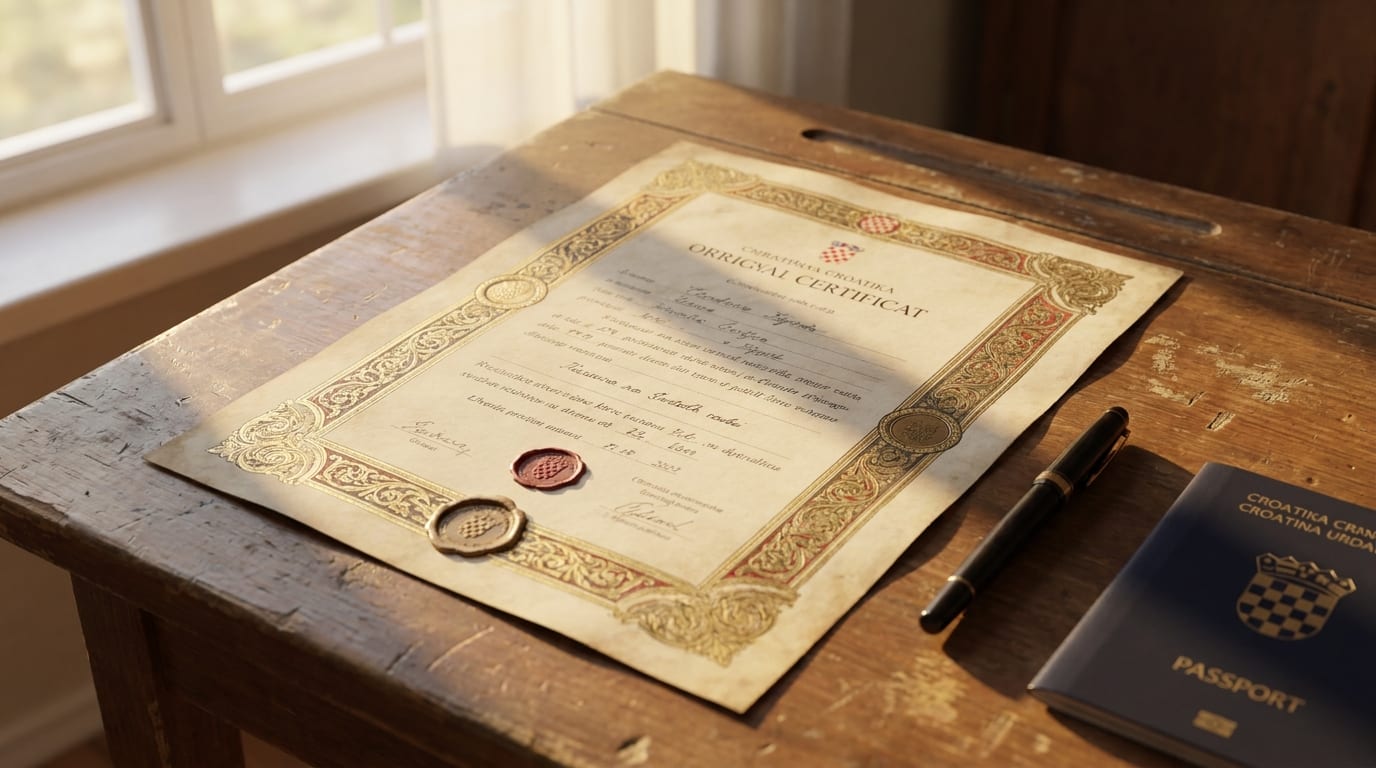
Foreign couples can have a fully legal civil wedding in Croatia, but the paperwork takes real effort.
A civil ceremony must be performed by a Croatian registrar (matičar), either at a local registry office or at an approved external location like a hotel terrace or historic site. The Croatian government allows both civil ceremonies and religious ceremonies that carry legal effect, provided the religious community has a regulated relationship with Croatia.
There is no minimum residency requirement for foreigners, which is a genuine advantage. However, you’ll need to submit documents to the local registrar at least 30 to 45 days before your wedding, and your birth record copy must be issued within the last 3 months.
Here’s the standard document checklist for non-Croatian couples:
- Valid passports for both partners
- Full birth certificates (issued within the last 3 months)
- Single status certificate plus a Certificate of No Impediment confirming the marriage will be recognized in your home country (the two can be one combined document)
- Proof of dissolution of any prior marriage, if applicable
- All documents apostilled and translated into Croatian by a court-certified translator
- Passport details for two adult witnesses
If neither partner speaks Croatian, a sworn interpreter must be present at the civil ceremony, and the couple pays for this service.
The simpler alternative: symbolic ceremonies. Many international couples complete the legal marriage at home and hold a symbolic ceremony in Croatia. This eliminates the registrar requirement, the interpreter, and the translated-document logistics. You get total flexibility on location and timing, and your celebrant can be anyone you choose. Local planners consistently recommend this route for couples who want to minimize stress. Learn more about whether you need a destination wedding planner to handle these logistics.
Legal requirements change. Consult your local planner and the Croatian embassy in your home country to confirm current rules before making any commitments.
What Factors Affect Your Croatia Wedding Budget?
Five variables will shape your final number more than anything else.
Guest count is the single biggest lever. With per-person food and drink costs running €210 to €550 (about $240 to $630) combined at mid-to-high-end venues, adding 20 guests can increase your catering bill by €4,000 to €11,000 (about $4,600 to $12,500) before you touch décor or rentals.
Location within Croatia matters enormously. Planners consistently flag Dubrovnik as significantly pricier than other Adriatic locations. A comparable celebration in Šibenik or Zadar can save thousands on venue fees alone.
Season and day of the week create real price tiers. Weekend dates in July and August carry the highest venue and vendor rates. Weekday ceremonies before 4 p.m. are explicitly cheaper for registrar fees and some venue rentals. A Thursday wedding in late September can deliver the same sunshine for substantially less.
Style expectations drive costs fast. “Pinterest-type” weddings with abundant décor, full-evening live music, and premium photo and video teams quickly reach €40,000+ (about $45,500) budgets. Simpler but elegant celebrations with a DJ, seasonal flowers, and a talented photographer can come in well under that.
Croatia’s 25% VAT catches some couples off guard. Not all vendors charge it (depending on their business structure), but a Croatian wedding consultant specifically warns couples to ask whether VAT applies, because it can significantly increase vendor costs.
How Does Croatia Compare to Other European Wedding Destinations?
This is the question that really helps you decide. Here’s how Croatia stacks up against the destinations couples most often weigh it against.
| Factor | Croatia | Italy (Amalfi/Tuscany) | Greece (Santorini) | Montenegro (Kotor) |
|---|---|---|---|---|
| 100-guest budget range | €25,000 - €55,000 (about $28,500 to $62,500) | €40,000 - €100,000+ (about $45,500 to $114,000) | €30,000 - €70,000 (about $34,000 to $80,000) | Lower than Croatia |
| Sunshine (hours/year) | 2,300 - 2,700+ | 2,000 - 2,500 | 2,500+ | ~2,500 |
| Venue diversity | Coast + islands + wine country | Extremely high | Primarily island/coast | Coast + bay towns |
| Legal complexity | Moderate (registrar + translations) | Similar complexity | Moderate | Simpler for some |
| Tourist saturation | Growing but still fresh | Very high | Very high | Low |
| Flight access | Good (Split, Dubrovnik) | Excellent | Seasonal | Limited |
Sources: French Wedding Style European comparison, Croatia Wedding Planner, Ame Amor Weddings
The value gap is real. A European destination wedding comparison ranked Croatia and Portugal as the “strongest value” tier, roughly 30 to 50% cheaper than France or Italy for similar quality. Croatia and Greece are grouped together for beach and island experiences with near-guaranteed sunshine from May to October, but Croatia offers more variety beyond the coastline.
Compared to Santorini, Croatia feels less “done.” Your guests have probably seen a dozen Santorini wedding albums on social media. Croatia still has a freshness factor. And compared to Kotor in neighboring Montenegro, Croatia offers far more developed wedding infrastructure and flight connections, even if Kotor can be cheaper.
The honest take: if budget is your primary concern and you want Mediterranean scenery, Croatia and Portugal are your best bets. If you want the most iconic “postcard” setting and budget is flexible, Italy and Santorini still deliver. Croatia sits in the sweet spot of all the romance and charm with more breathing room and better value.
Don’t forget to protect your investment with destination wedding travel insurance, especially when coordinating international flights for a large group.
Wedding Bands That Match the Ring
Diamond eternity bands, classic gold and platinum bands, and stackable sets designed to pair with any engagement ring style. Free resizing and lifetime warranty.
Certified diamonds, free shipping, and 30-day returns.
Shop Wedding RingsEngagement Rings from Blue Nile
Certified conflict-free diamonds and handcrafted settings in every classic style - solitaire, halo, three-stone, and pavé. Free resizing and lifetime warranty on every ring.
Over 20 years of online bridal. Free 30-day returns and free shipping.
Shop Engagement RingsHow BeachBride Can Help You Plan Your Croatia Wedding
Planning a wedding across an ocean involves more moving parts than most couples expect. Venues in Croatia’s most popular locations are often fully booked 12 to 18 months in advance for peak season. Most Croatian venues don’t offer all-inclusive wedding packages, meaning you’ll coordinate separate contracts for venue, catering, bar, décor, entertainment, and transport. And if you want a legal ceremony on a beach, you’ll need a registrar willing to travel (for an extra fee), potentially a special permit for outdoor setups, and a sworn interpreter if you don’t speak Croatian.
That’s where we come in. Take our free quiz and tell us your style, budget, and guest count. We’ll match you with vetted local planners, photographers, and venues across Croatia’s regions so you can compare options side by side. No generic recommendations. No guesswork.
Whether you’re envisioning a 20-person elopement on a cliffside in Vis or a 100-guest celebration in a Dubrovnik palace, the right local team makes the difference between a stressful logistics puzzle and the celebration you’ve been imagining.
Use our beach wedding checklist to stay on track, and start with the quiz. It takes two minutes, and it’s completely free.