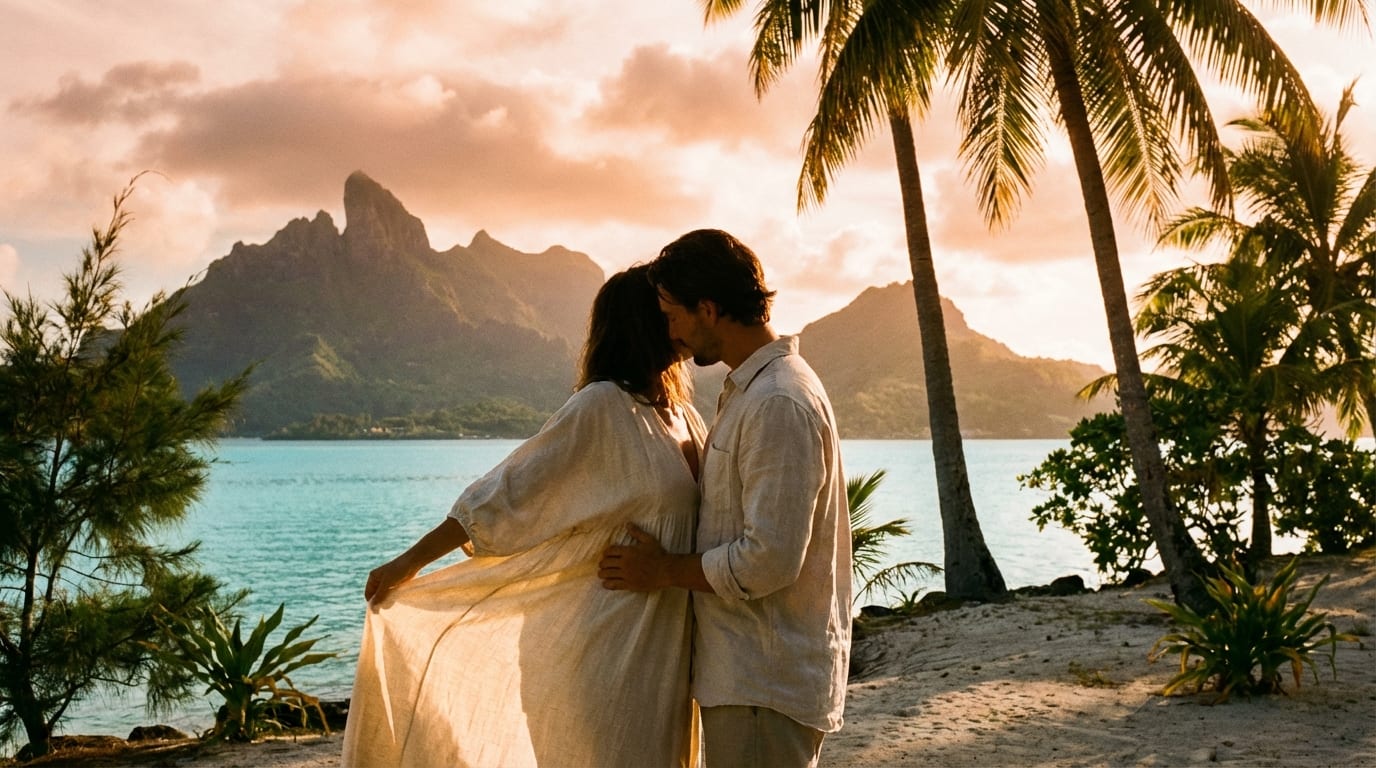
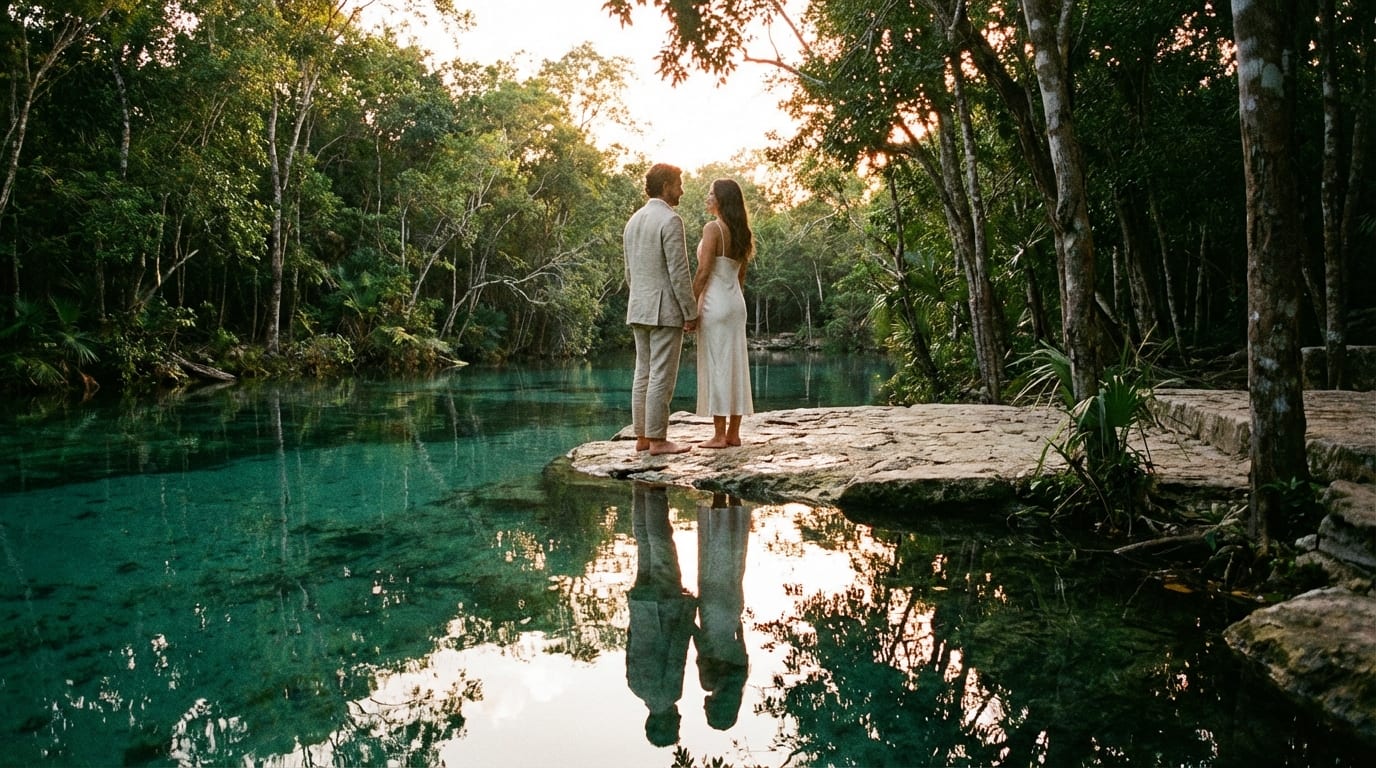
Picture this: turquoise water glowing through a limestone cave opening, jungle vines framing the light, and just the two of you standing knee-deep in a sacred cenote. That’s not a fantasy. That’s a Tuesday elopement in Tulum. This Tulum elopement guide covers everything you need to turn that image into your actual wedding day, from the legal fine print to the real costs, the best venues for your personality, and the infrastructure quirks nobody else warns you about.
Tulum sits on Mexico’s Caribbean coast in the state of Quintana Roo, roughly 80 miles south of Cancun. It’s become one of the most sought-after elopement spots in the world for good reason. But the laid-back, bohemian energy that makes Tulum so appealing can also trick couples into thinking no planning is required. That’s where things get complicated. Let’s make sure they don’t.
Why Tulum Is One of the Most Magical Places to Elope
Tulum offers something almost no other destination can: three completely different ceremony backdrops within a 20-minute drive. You can exchange vows on a white-sand beach at sunrise, say your words inside a jungle cenote by midday, and celebrate with dinner overlooking ancient Mayan ruins at sunset.
Over 60 cenotes are accessible near Tulum, including iconic spots like Cenote Dos Ojos and Cenote Calavera with its dramatic “skull” entrance sunbeams, as Wanderlost Imagery notes. That’s far more variety than typical beach destinations offer. Add the Tulum Ruins (El Castillo) perched on a cliff above the Caribbean, and the UNESCO-listed Sian Ka’an Biosphere Reserve covering over 1.3 million protected acres just south of town, and you start to understand why photographers and couples keep coming back.
Ivy Christina Photos regularly recommends at least five top elopement sites: Tulum Ruins Beach, Playa Paraiso, Sian Ka’an, Zacil-Ha cenote, and Soliman Bay. Each one offers a different mood, from wild and secluded to polished and accessible.
The vibe here is eco-conscious, bohemian luxury. Think treehouse architecture, copal incense, and Mayan shaman ceremonies. If you want editorial, natural, adventurous imagery for your wedding photos, Tulum delivers that in a way few places on earth can match. Still working up to the question itself? A quiet stretch of Tulum sand is also an ideal setting for a message in a bottle proposal.
Is Tulum Right for Your Elopement Style?
Tulum is perfect for couples who want something intimate, nature-driven, and visually striking. It is not the right fit for couples who want a traditional formal wedding with ballroom settings and black-tie dress codes.
Here’s a quick way to think about it. Tulum works beautifully if you want:
- A ceremony surrounded by jungle, ocean, or underground caves
- A bohemian or editorial aesthetic for your photos
- An intimate celebration with fewer than 20 guests (or just the two of you)
- Adventure add-ons like private cenote swims or sunset sailing
- A symbolic ceremony with creative freedom over every detail
Tulum may not be your best match if you want:
- A large, formal reception with 100+ guests
- Reliable high-speed internet and modern infrastructure everywhere
- Easy airport access (Cancun International is 1.5 to 2 hours away)
- Indoor backup venues in case of rain
The dry season from November through April offers temperatures between 75°F and 85°F with low humidity, making outdoor ceremonies comfortable, as Signature Destination Wedding notes. But even in the best months, Tulum is tropical. You’ll want breathable fabrics and a willingness to embrace the elements.
If you’re comparing destinations, the Riviera Maya offers similar scenery with more resort infrastructure, while Tulum gives you that raw, unpolished beauty that photographs like nothing else.
Legal vs. Symbolic Ceremonies in Tulum: What Most Couples Actually Do
The vast majority of couples eloping in Tulum choose symbolic ceremonies and handle the legal paperwork at home. This is the single most important planning decision you’ll make.
Here’s why. As DWD Travel reports, 100% of their Mexico destination wedding clients choose symbolic ceremonies over legal ones. That’s not a typo. The legal process in Mexico requires blood tests completed in the country, a civil judge conducting the ceremony in Spanish, apostilled and translated documents, and four adult witnesses over age 18 with valid passports and tourist cards. Ever After Travel notes that couples pursuing legal ceremonies must arrive 3 to 4 business days early to complete paperwork and medical requirements.
A symbolic ceremony, by contrast, has zero legal standing but gives you total freedom. Choose any officiant, any location, any format. A Mayan shaman blessing with copal incense? A barefoot exchange of vows in a cenote? Both possible. You simply file your marriage license at your local courthouse when you return home.
| Legal Ceremony | Symbolic Ceremony | |
|---|---|---|
| Legally binding in Mexico? | Yes | No |
| Officiant | Civil judge (Spanish) | Anyone you choose |
| Documents needed | Passports, apostilled birth certificates, blood tests, tourist cards | Passports for travel only |
| Witnesses required | 4 adults with valid ID | None required |
| Arrival time | 3-4 business days early | Day before is fine |
| Location flexibility | Limited to judge availability | Any venue or outdoor spot |
| Estimated added cost | $300-$800+ for legal fees | $0 legal fees |
For the full breakdown of Mexico’s legal marriage requirements, see our guide on how to legally get married in Mexico as an American. Note that same-sex marriage has been legally recognized in Mexico since 2015. Requirements change periodically, so consult your local planner or the Mexican embassy to confirm current requirements before booking.
What Are the Best Venues for a Tulum Elopement?
Your venue choice shapes the entire feel of your elopement, and Tulum offers four distinct categories: beachfront boutique hotels, jungle estates, cenotes, and public beaches or ruins.
Here are the standout options, each suited to a different couple:
Azulik is the most Instagrammable venue in Tulum. Treehouse architecture, no electricity in the rooms (by design), and an adults-only policy make it feel like another world. If you want dramatic, editorial photos and a fully immersive experience, this is your spot.
Papaya Playa Project offers beachfront ceremony space with a bohemian, festival-inspired energy. They have a cliff ceremony option that gives you ocean views without the sand-in-your-shoes factor.
Nomade is wellness-focused and intimate. Think yoga, sound baths, and a ceremony space that feels spiritual without being over-the-top. Great for couples who want their elopement to feel like a retreat.
Mía Restaurant & Beach Club is the most accessible mid-range option. It’s polished but relaxed, with solid food and a beachfront setting that works for elopements with a small guest list.
For couples who prefer a resort experience, Conrad Tulum Riviera Maya offers an Oceanview Palapa venue accommodating up to 80 guests with four wedding packages, as Paradise Weddings notes. Hilton Tulum’s Gazebo Palace also hosts up to 80 guests with three packages available.
Public beaches like Playa Paraiso are free for sunrise ceremonies, but they get crowded after mid-morning. For that iconic backdrop without tourists in your photos, Wanderlost Imagery recommends early-morning access to the Tulum Ruins beach as the best approach.
A wedding planner in Tulum who knows these venues personally is worth every penny. They’ll match your style to the right space and handle permits you didn’t know you needed.
Can You Really Get Married in a Cenote?
Yes, cenote ceremonies happen regularly in Tulum, and they are the signature experience that sets this destination apart from every other elopement spot in the world.
A small family wedding in a hidden Tulum cenote cave was fully legally binding, with all required paperwork prepared for U.S. recognition, as Elopement Riviera Maya notes. So it’s not just possible; it’s been done.
That said, not all cenotes allow ceremonies. Public cenotes like Zazil-Ha may restrict events due to crowds and environmental rules, according to discussions on TripAdvisor. Archaeological cenotes require permits from INAH (Mexico’s National Institute of Anthropology and History). Privately operated cenotes, like Cenote El Buho, handle permits through their own management, which simplifies the process considerably.
Couples have successfully held intimate traditional Mayan ceremonies at Cenote El Buho, as Junebug Weddings documents, surrounded by jungle and natural light. Mayan shaman-led rituals are popular in cenotes for their cultural depth, though they are symbolic and not legally binding on their own.
A few practical notes: cenotes involve uneven rocky terrain, sometimes ladders, and occasionally wildlife (one couple’s picnic was famously disrupted by ants). Wear shoes with grip. Bring bug spray. And hire a planner who has done cenote ceremonies before, because logistics matter more here than anywhere else.
What Does a Tulum Elopement Cost?

A Tulum elopement for two guests typically costs between $989 and $3,000 for the ceremony package alone, with all-in costs reaching $3,000 to $6,500 once you add photography, florals, and transportation.
Elopement packages for 2–10 guests range from $989 to $1,590, covering symbolic ceremonies, coordinators, bouquets, and cake, as Destination Weddings Blog notes. Resort packages like Secrets Tulum’s “Elope in Luxury” start at $1,100 for two guests, per PlayaDelCarmen.com.
Here’s a realistic budget breakdown:
| Expense | Budget Range | Notes |
|---|---|---|
| Ceremony package (symbolic) | $989 - $1,590 | Includes coordinator, basic decor, bouquet |
| Photography (4-6 hours) | $1,500 - $3,500 | Cenote + beach combo sessions popular |
| Florals beyond basic bouquet | $500 - $1,500 | Tropical arrangements, arch decor |
| Hair and makeup | $200 - $500 | On-location artists available |
| Legal ceremony add-on | $300 - $800 | Only if legalizing in Mexico |
| Accommodations (3-5 nights) | $170 - $750/night | Varies wildly by venue |
| Transportation from Cancun | $100 - $250 round trip | Private transfer recommended |
| Estimated total (2 guests) | $3,000 - $8,000 |
Costs vary significantly based on season, guest count, and specific vendors. For a broader look at destination wedding costs, we break down pricing across all major destinations.
When Should You Elope in Tulum?
The best months are November through April, with February and March offering the most reliable conditions for outdoor ceremonies.
Dry season daytime temperatures average 79 to 86°F with nighttime lows around 66 to 72°F, as Signature Destination Wedding notes. Humidity stays low, bugs are fewer, and skies are clear or partly cloudy. This matters enormously because almost every Tulum ceremony and reception happens outdoors.
The rainy season runs May through October. September and October bring the most rain and represent peak hurricane months, as Absolute Adventure Mexico notes. Sargassum (seaweed) is most common on beaches between May and August, which can affect the look and smell of beachfront ceremonies.
The trade-off? January through March is peak tourist season, meaning higher prices and more crowds. If you want the sweet spot, aim for November or early April. You’ll get dry-season weather with fewer people competing for the same sunset.
One pro tip: sunrise elopements work in any season. Mornings in Tulum are cool, uncrowded, and the light is extraordinary.
What Do You Need to Know About Tulum’s Infrastructure Before You Book?
Tulum’s bohemian charm comes with real infrastructure limitations that can catch unprepared couples off guard.
The biggest one: Cancun International Airport is 1.5 to 2 hours away by car, and there’s no train or shuttle service that’s fast. As Ruzin Cunningham notes, Tulum relies on a single main road (Federal Highway 307) that’s prone to traffic congestion, and many venues are accessed via unpaved roads.
Electricity outages happen. Tulum has experienced rapid development that has outpaced its power grid, and some eco-venues (like Azulik) intentionally operate without electricity in guest rooms. This is part of the appeal for some couples and a dealbreaker for others. Know which camp you’re in before you book.
Beachfront estates, as WedStay notes, book 12+ months in advance due to limited availability. Many jungle venues sit 20 minutes inland from the beach, which means your “beach elopement” might involve a shuttle ride between ceremony and reception.
None of this is unmanageable. But it requires a planner who knows the terrain. A good destination wedding planner will pre-book private transfers, confirm generator backup at your venue, and build buffer time into your schedule for Tulum’s unpredictable roads.
How to Find the Right Vendors for Your Tulum Elopement
Start with a local planner, then let them connect you to photographers, florists, and officiants they’ve worked with and trust.
Tulum’s vendor community is tight-knit. One established planner, as Ruzin Cunningham notes, connects couples to over 40 exclusive venues, including boutique hotels like SANARA and La Zebra. That kind of access matters in a market where the best spots don’t advertise on Google.
A few things to watch for:
Permits are your planner’s job. Protected sites like cenotes and ruins require INAH permits. Public beaches may need municipal coordination. As Ivy Christina Photos notes, permits and guides are essential for seclusion at popular spots, especially UNESCO-protected areas like Sian Ka’an.
Resort vendor policies vary. According to the Dreams Tulum Wedding Guide 2024, the resort bears no responsibility for services contracted directly by couples through external vendors. That means you need your own contracts and backup plans.
Check reviews on multiple platforms. WeddingWire lists 10 top wedding planners in Tulum with reviews and pricing. Cross-reference with Instagram portfolios and real wedding features to get the full picture.
Your beach wedding checklist is a good starting framework, but Tulum adds cenote logistics, permit timelines, and transportation planning that generic checklists miss.
How BeachBride Can Help You Plan Your Tulum Elopement
We built BeachBride specifically for couples like you: excited about a destination elopement but unsure where to start with the logistics. Our destination wedding guide walks you through the full planning timeline, and our Tulum destination page connects you with vetted local vendors who specialize in intimate ceremonies.
Whether you’re leaning toward a cenote ceremony, a beachfront sunrise exchange, or a treehouse celebration at Azulik, the right vendors make the difference between a stressful trip and the most meaningful day of your life.
You don’t have to figure this out alone. Take our free quiz and we’ll match you with Tulum planners and photographers who fit your style, budget, and timeline. It takes about two minutes, and you’ll walk away with personalized recommendations instead of another generic Pinterest board.
Your Tulum elopement is closer than you think. Let’s make it happen.